Porsche Celebrates 75 Years of the 550 Spyder With the Unveiling of the Drivable, Downsized Electric 550 J

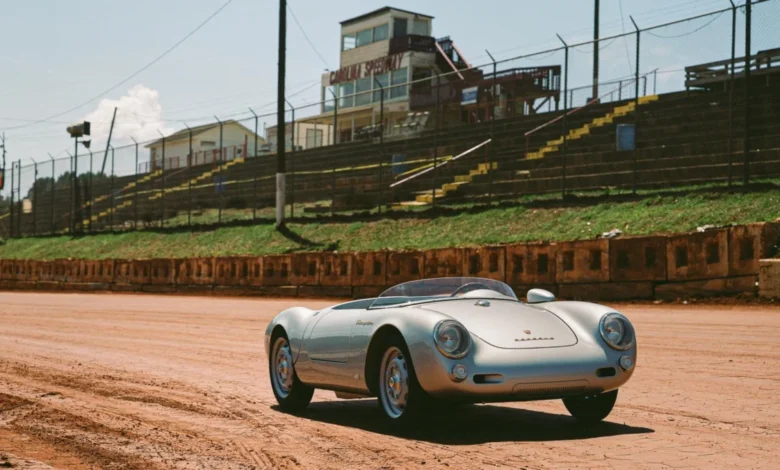
Seventy-five years after the lightweight racing roadster first captured the imagination of the global motorsport community, Porsche is marking the diamond anniversary of the iconic 550 Spyder through a decidedly unconventional tribute. Rather than launching a full-scale continuation vehicle or a traditional concept car, the German sports car manufacturer has partnered with United Kingdom-based Hedley Studios to produce the 550 J—a fully drivable, 80-percent-scale electric replica of the legendary racer.
While the vehicle occupies a unique space between high-end collectible toy and precision-engineered art piece, it nevertheless commands serious engineering credentials. Constructed from more than 1,300 individual components and built using meticulous digital scans of authentic vintage 550 Sypders housed within Porsche’s corporate archives, the 550 J bridges the gap between mid-century racing heritage and modern zero-emission mobility. Limited to an exclusive global production run of just 250 units, the scaled-down roadster underscores how legacy automakers are increasingly leveraging nostalgia, craftsmanship, and bespoke personalization to engage elite collectors.
Anatomy of a Miniature Icon: Engineering and Performance
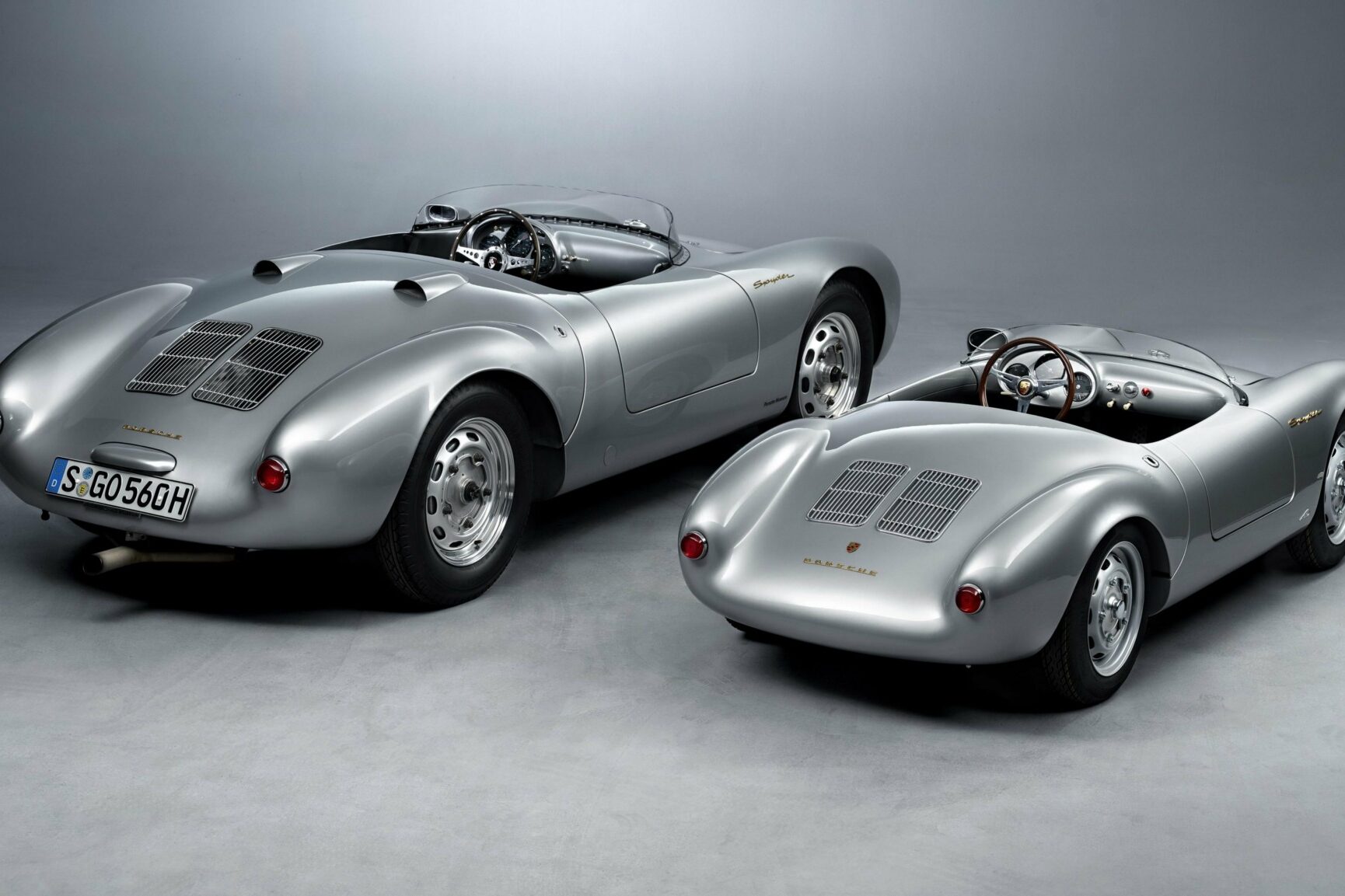
Measuring 80 percent of the original car’s physical dimensions, the 550 J—with the "J" denoting "Junior"—is surprisingly accommodating, designed to comfortably seat two adults despite its compact footprint. While the historic 1950s racer relied on an air-cooled, four-cylinder boxer engine that established Porsche’s reputation for lightweight performance, the modern junior iteration is entirely battery-electric.
The vehicle is offered in two distinct powertrain configurations. The base model features a modest 8-kilowatt electric motor, translating to approximately 11 horsepower, which propels the lightweight carbon-fiber chassis to a top speed of 40 miles per hour. For buyers seeking a more dynamic driving experience, Hedley Studios offers the optional RS Package. This performance upgrade doubles the vehicle’s battery capacity and power output to 16 kilowatts (21 horsepower), raising the top speed to 50 miles per hour.
Because the 550 J is not street-legal—lacking the modern safety equipment, crash structures, and emissions compliance required for public roadways—its performance envelope is purposefully tailored for private estates, closed tracks, and dedicated automotive events. Despite these operational limitations, the vehicle’s dynamic capabilities are matched by rigorous build quality, utilizing a lightweight carbon-fiber monocoque and bespoke suspension components engineered to mimic the handling characteristics of its illustrious forebear.
A Legacy Forged in Competition and Culture

To fully appreciate the significance of the 550 J, one must examine the towering legacy of the vehicle it honors. Introduced internally in the early 1950s and officially unveiled at the 1953 Paris Motor Show, the original Porsche 550 Spyder was purpose-built for motorsport dominance. Designed under the direction of Porsche engineer Ernst Fuhrmann, the car featured a lightweight tubular spaceframe, aerodynamic aluminum bodywork, and a mid-engine layout that offered exceptional balance and cornering agility.
Throughout the decade, the 550 Spyder achieved legendary status on international racing circuits. It claimed class victories at grueling endurance contests such as the 24 Hours of Le Mans, the Mille Miglia, the Nürburgring, and the Carrera Panamericana—a notoriously dangerous open-road rally across Mexico that heavily influenced Porsche’s naming conventions, including the "Carrera" moniker used for decades afterward.
Beyond its competitive racing pedigree, the 550 Spyder secured a permanent, albeit tragic, place in global pop culture as the personal automobile of Hollywood icon and racing enthusiast James Dean. Dean famously dubbed his silver 550 Spyder "Little Bastard" before losing his life in a highway collision behind the wheel of the car on September 30, 1955. This intersection of Hollywood stardom, youthful rebellion, and motorsport danger cemented the 550 as one of the most collectible and recognizable collector cars in automotive history, with surviving original examples regularly commanding millions of dollars at international auction houses.
Historical Chronology: From 1950s Racer to Modern Commemorative Art

The path from the original 1950s competition car to the contemporary 550 J reflects an evolution in how automotive heritage is preserved and celebrated:
- 1953: Porsche formally debuts the 550 Spyder at the Paris Motor Show, signaling the brand’s intent to become a dominant force in international sports car racing.
- 1954–1956: The 550 secures numerous class and overall victories at premier global racing events, establishing the mid-engine layout as a cornerstone of Porsche’s engineering philosophy.
- September 1955: James Dean tragically passes away in a crash involving his personal 550 Spyder, instantly elevating the car into the upper echelons of pop culture mythology.
- 2020s: Hedley Studios establishes a reputation for manufacturing ultra-premium, scaled-down drivable replicas of vintage automotive icons, partnering with historic marques including Bugatti and Ferrari.
- 2026: Marking the 75th anniversary of the 550’s conceptualization and development, Porsche collaborates with Hedley Studios to officially announce the 550 J, bridging archival preservation with modern electric vehicle engineering.
The Art of Bespoke Customization and Manufacturing
True to Porsche’s modern manufacturing ethos, the 550 J is subject to an extensive personalization program that mirrors the options available on the brand’s contemporary street-legal sports cars, such as the 911.
Hedley Studios has integrated Porsche’s extensive historical and modern color palettes into the ordering process. Buyers can select carbon-fiber body finishes ranging from classic factory silver to custom hues derived from Porsche’s famous "Paint-to-Sample" program. The interior cabin can be tailored with a wide variety of premium leather and faux suede upholsteries, while exterior aesthetics can be personalized with historic racing liveries, racing numbers, specific cowl configurations, and miniature windscreen designs. For clients seeking absolute uniqueness, a dedicated Bespoke program allows for one-off modifications, ensuring that no two examples leaving the workshop are identical.

Market Positioning, Pricing, and Availability
With only 250 units planned for global distribution, the 550 J is positioned strictly as a low-volume collector’s item rather than a mass-market toy. According to early industry reports from automotive publications such as Top Gear, the base model carries a starting price of approximately £69,500—translating to roughly $93,000 USD at current exchange rates—before factoring in local taxes, shipping, or the substantial cost of optional bespoke upgrades and performance packages.
This pricing strategy places the miniature Spyder firmly in the realm of high-end luxury goods and blue-chip automotive memorabilia. It appeals directly to affluent automotive enthusiasts, historic Porsche collectors, and motorsport aficionados seeking a functional, conversation-starting art piece for private collections.
Broader Industry Implications and Brand Heritage

The release of the 550 J highlights a broader industry trend where legacy luxury automakers increasingly monetize their historical archives through high-end lifestyle products, continuation models, and scaled collectibles. As the global automotive sector accelerates its transition toward electrification and autonomous software platforms, manufacturers face the challenge of keeping younger or contemporary consumers connected to their internal-combustion heritage.
By utilizing zero-emission electric powertrains in a scaled vintage chassis, Porsche and Hedley Studios have created a product that respects the past while embracing modern technological formats. The collaboration demonstrates how heritage marketing can successfully transcend traditional museum displays and static scale models, offering enthusiasts an interactive, tactile, and deeply customizable driving experience that honors one of the most significant sports cars of the twentieth century.