The Death of the Digital Front Door: Why AI-Driven Discovery is Forcing a Radical Rethink of E-commerce Architecture

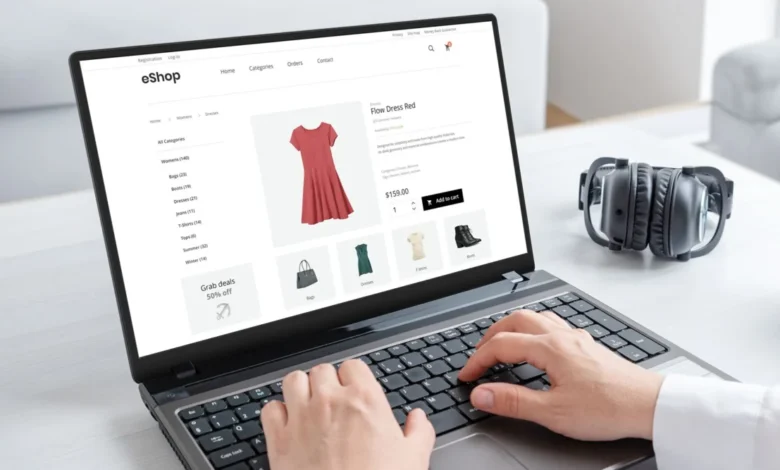
The traditional e-commerce homepage is undergoing a structural obsolescence, as the rise of agentic AI and social-commerce platforms shifts the primary point of entry for online shoppers directly to the product page. Shashank Agrawal, founder and CEO of StarApps, argues that while brands continue to pour vast capital into homepage aesthetics and top-level navigation, the actual customer journey has decoupled from these legacy structures. With more than 50% of AI-referred traffic bypassing the homepage entirely, the industry is facing a critical misalignment between how websites are built and how modern consumers actually shop.
The Shift in Discovery Patterns
For the past two decades, the digital storefront functioned like a brick-and-mortar boutique: the homepage was the window display, and the navigation menu was the floor plan. However, the emergence of generative AI search engines, such as Perplexity, Google’s AI Overviews, and specialized shopping assistants, has fundamentally altered this paradigm. These tools act as digital concierges, synthesizing vast amounts of data to provide users with direct links to specific products that meet their search intent.
This transition is not merely a preference shift; it is a fundamental reconfiguration of the acquisition funnel. In the legacy model, a user would search for a brand, land on the homepage, click a category, and navigate to a product. Today, the "AI layer" performs that heavy lifting, delivering the user to a product page that serves as the first point of contact. This "shortcut" behavior is increasingly mirrored on social platforms. TikTok Shop, for instance, has demonstrated the efficacy of this friction-free model, with global merchandise value (GMV) projected to eclipse $100 billion by 2026. By embedding the checkout and product information directly within a social feed, these platforms ensure that the "homepage" never enters the equation.
A Chronology of the Homepage Decline
The decline of the homepage as the primary traffic anchor did not occur overnight; it has been a gradual erosion driven by three distinct waves of technological advancement:
- The Rise of Targeted Advertising (2010–2018): As performance marketing matured, brands moved away from generic brand awareness campaigns toward direct-response ads. These ads focused on individual product links, training consumers to expect a direct path to the item they clicked on, rather than a generic landing page.
- The Social Commerce Boom (2019–2023): Platforms like Instagram, Pinterest, and TikTok integrated native shopping features. The introduction of "shoppable posts" effectively treated every social interaction as a potential point-of-sale, rendering the homepage an unnecessary detour.
- The Agentic AI Era (2024–Present): The current shift is defined by the automation of the research phase. AI agents now compare specifications, pricing, and reviews in real-time, pulling users toward the pages that provide the most structured, accurate data.
The Readiness Gap and Design Failure
Despite the clear data favoring product-page-first navigation, most retail websites remain stubbornly homepage-centric. Site audits conducted by e-commerce analysts frequently highlight a "readiness gap." While product pages are statistically more reliable at converting visitors than homepages, they are often insufficient for the modern, informed shopper.
The problem lies in the quality of the data presented. Consumers today, particularly those arriving via AI agents, are seeking granular details—material composition, precise sizing, supply chain transparency, and specific use-case scenarios. Generic marketing copy, which was the standard for years, now acts as a barrier to conversion. If a product page does not explicitly answer a user’s specific inquiry, the AI agent is likely to divert the consumer to a competitor’s page that does.
This is where the concept of "structured information" becomes the primary competitive advantage. Brands that map their internal metadata—such as return patterns, customer feedback, and technical specifications—directly onto their product pages are seeing significantly higher recommendation rates from AI search tools. Conversely, companies that keep this data in silos (e.g., in customer service logs or backend databases) are failing to signal their relevance to the AI algorithms governing the new web.
Economic Implications: Reallocating the Budget
The transition to product-page-first shopping has profound implications for how brands allocate their marketing and development budgets. Historically, large portions of digital budgets were dedicated to "acquisition" strategies centered on the homepage experience. As AI intermediaries capture the discovery phase, the return on investment (ROI) for massive homepage redesigns is diminishing.
Industry experts suggest that we are witnessing a pivot toward "retention and loyalty" spending. Because the AI layer is handling the initial brand discovery, the brand’s own website must shift its purpose toward sustaining the relationship after the initial purchase. Consequently, the product page is evolving from a mere sales sheet into a destination for trust-building. This includes integrating dynamic review widgets that specifically address user concerns—such as material texture or fit accuracy—rather than generic five-star ratings.
The Role of Personalization
While many brands look to one-to-one personalization as the "silver bullet" for this new era, the technical reality is that true, real-time, individual personalization remains expensive and difficult to scale. A more pragmatic approach, which is gaining traction among top-tier retailers, is the creation of "intent-based variations."
Instead of trying to build a single page that serves every possible customer, brands are developing a library of product page variations tailored to specific traffic sources or user intent. For example, a customer arriving via a technical forum might see a version of a product page loaded with specifications and diagrams, while a customer arriving via a social media influencer might see a version focused on lifestyle imagery and social proof. This strategy acknowledges that the "homepage" is no longer the anchor, and that the product page must be flexible enough to address the specific context of the user’s arrival.
Future-Proofing the Retail Experience
Looking ahead, the homepage will not disappear, but it will undergo a functional demotion. It will remain a vital space for brand storytelling and for the needs of returning, loyal customers who already have an affinity for the brand. However, for the majority of new customers, it will become a secondary destination rather than the primary point of entry.
For brands, the path forward is clear: audit the website to ensure it is "AI-readable." This means prioritizing structured data, ensuring that technical specifications are accessible to search crawlers, and ensuring that the content on the page provides immediate, concrete answers to potential customer questions.
The "digital front door" has moved. It is now located on the product page, and the brands that succeed in the next decade will be those that recognize this shift, investing in the depth of their product information rather than the breadth of their landing page navigation. As AI continues to refine the path from search to checkout, the winners will be the retailers who understand that every product page is now, effectively, a potential homepage.