The Evolution of Sustainable Luxury and the Rise of the Vintage Jewelry Collector

The modern landscape of personal adornment is undergoing a significant paradigm shift as consumers move away from mass-produced retail jewelry toward the curated, environmentally conscious world of vintage collecting. At the forefront of this movement are individual enthusiasts like Allison, the creative force behind the Instagram account @HollywoodGold, whose personal collection reflects a growing trend in the luxury market: the marriage of historical aesthetic value with sustainable consumption. This evolution is not merely a hobbyist’s pursuit but a reflection of broader economic and environmental shifts in the global jewelry trade.

The Economic Shift Toward Vintage Assets
The vintage jewelry market has experienced consistent growth over the past decade. According to market analysis from Deloitte and various luxury resale platforms, the secondary market for jewelry and watches is projected to reach an estimated $50 billion by 2025. This surge is fueled by a younger demographic—specifically Millennials and Gen Z—who prioritize provenance, sustainability, and unique craftsmanship over the standardized offerings of major retail chains.
For collectors like Allison, the transition to vintage began not as an investment strategy, but as a lifestyle adjustment. "I did not have the financial means to collect jewelry until I got married, and even then, the beautiful pieces I had were gifts," Allison notes. Her journey mirrors that of many in the current marketplace: a pivot from traditional gift-giving to the active, autonomous pursuit of pre-owned pieces. This transition is frequently linked to a desire to reduce one’s carbon footprint. By opting for vintage gold—which is recycled by definition—collectors avoid the significant environmental impact associated with new gold mining, which often involves heavy metal contamination and massive soil displacement.

Historical Context: The 1970s Gold Aesthetic
The preference for 1970s chunky gold, a hallmark of the Hollywood Gold collection, represents a specific cultural moment in design. The 1970s was an era defined by bold, sculptural, and substantial gold jewelry. Following the 1971 collapse of the Bretton Woods system, which ended the direct convertibility of the U.S. dollar to gold, the precious metal became a potent symbol of both style and economic stability.
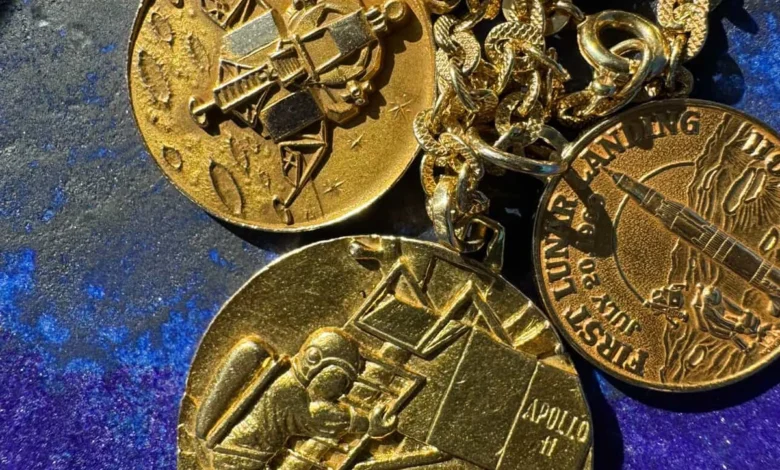
The "chunky gold" trend of the 1970s emphasized weight and volume, often utilizing high-karat alloys that are less common in contemporary, cost-optimized manufacturing. This era also coincided with the height of the Space Race, leading to a surge in celestial-themed jewelry, including lunar landing medals and motifs. These pieces serve as tangible artifacts of a period where human exploration and high fashion intersected. Collectors often treat these items as "wearable history," preserving designs that might otherwise be lost to the melting pot when gold prices fluctuate.

Chronology of a Collection: From Casual Interest to Curated Focus
For the serious collector, the process of assembly often follows a predictable trajectory:
- Exploration Phase: The initial entry into the market, often driven by a desire for better value-for-money compared to new retail prices.
- Educational Phase: The collector begins to understand hallmarks, metal purities, and regional design differences.
- Thematic Specialization: As seen in the Hollywood Gold collection, collectors eventually gravitate toward specific motifs—such as lunar landing commemoratives or personalized signet rings.
- Strategic Procurement: Moving from general browsing to cultivating relationships with specific dealers and tracking auctions, as seen in the utilization of platforms like Pickwick Vintage and A Current Affair.
The Complexity of Sourcing and Sizing
A significant challenge in the vintage market is the disparity between historical sizing standards and modern requirements. Many vintage signet rings, for instance, were originally manufactured for a male demographic, often resulting in standard sizes of 10 or 11. For collectors with smaller hands, this creates an ongoing logistical challenge that defines the pace of their collection growth.

Furthermore, the digital age has democratized the hunt. While traditional brick-and-mortar vintage shows provide the tactile experience necessary for verifying stone quality and setting integrity, the bulk of modern collecting occurs via social media and specialized e-commerce platforms. This shift has enabled a peer-to-peer economy where collectors interact directly with professional dealers like @thefabnab or @a_golden_gem, effectively bypassing traditional retail markups.
Environmental and Ethical Implications
The "environmental lifestyle" motivation mentioned by collectors is supported by data from the World Gold Council. Mining one ounce of gold requires moving approximately 20 tons of rock and earth, a process that is energy-intensive and ecologically disruptive. By contrast, purchasing vintage jewelry utilizes existing gold stocks, effectively removing the piece from the supply chain’s need for new extraction.

This sustainability factor is a critical driver for the "circular economy" in jewelry. When consumers choose to buy vintage, they are engaging in a form of ethical consumption that values the longevity of a product. The craftsmanship of previous eras—often characterized by hand-finished details and superior metal density—is increasingly viewed as a superior alternative to the lightweight, machine-stamped items currently dominating the mass market.
Professional Analysis: The Future of Personal Expression
The rise of the "curator-collector" signals a departure from traditional luxury consumption. Style, in this context, is defined by the ability to curate a narrative through found objects. As Allison observes, "Style is having a perspective. It’s how one lives their life." This philosophy suggests that jewelry is no longer viewed merely as an investment or a status symbol, but as an extension of personal identity and a manifestation of one’s values.

Industry analysts suggest that this trend will continue to exert pressure on traditional retailers to adopt more transparent sourcing and to offer more "pre-loved" or certified vintage options within their own storefronts. The success of independent collectors and their influence on social media platforms indicates that the future of the jewelry industry lies in the hands of the consumer-curator, who prioritizes authenticity and history over the ephemeral trends of modern fashion.
Conclusion
The story of @HollywoodGold serves as a microcosm for a broader, industry-wide shift. As collectors continue to prioritize vintage gold, celestial motifs, and personalized jewelry, they are not only preserving the artistic legacy of the 20th century but are also participating in a necessary transition toward a more sustainable luxury market. Whether it is the search for a rare Van Cleef lunar pendant or the persistent hunt for the perfect initial signet ring, the vintage movement proves that the most valuable jewelry is that which carries a story, a history, and a deliberate, conscious choice.