The Legacy of the Carmen Lúcia Ruby: A Timeless Tribute at the Smithsonian National Museum of Natural History

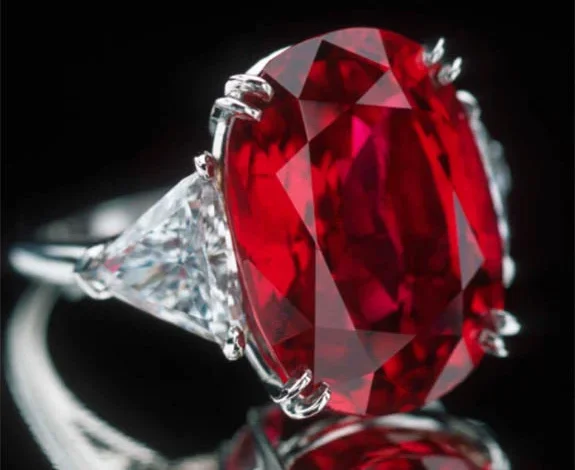
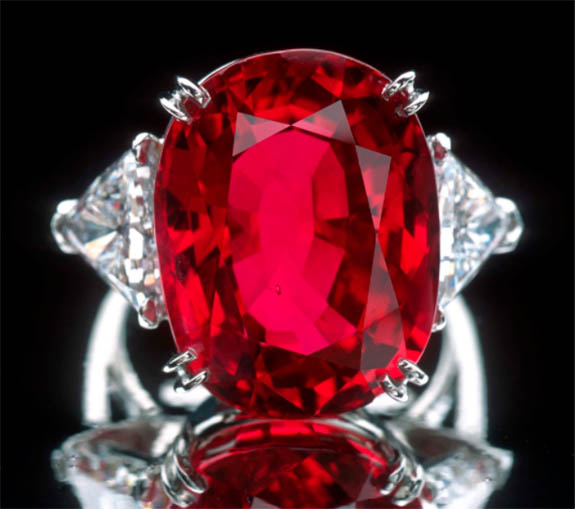
Since its permanent installation in 2004, the Carmen Lúcia Ruby has served as a cornerstone of the National Gem and Mineral Collection at the Smithsonian’s National Museum of Natural History in Washington, D.C. This 23.10-carat gemstone is not merely a marvel of geological rarity; it is a profound monument to personal history, philanthropy, and the enduring nature of human affection. As one of the finest and largest faceted Burmese rubies in existence, it occupies a position of prominence alongside other legendary artifacts, including the Hope Diamond and the Logan Sapphire, within the Janet Annenberg Hooker Hall of Geology, Gems, and Minerals.
Geological Significance and Rarity
To understand the significance of the Carmen Lúcia Ruby, one must first appreciate the scarcity of high-quality rubies of such magnitude. Rubies are a variety of the mineral corundum, colored by the presence of chromium. While corundum is relatively common, the specific geological conditions required to produce a ruby of significant size, exceptional clarity, and a vibrant, uniform red hue are exceedingly rare.
The Carmen Lúcia Ruby is characterized by its "pigeon’s blood" color, a term used in the gem trade to describe the most coveted, highly saturated red with a subtle hint of blue undertones. Sourced from the legendary Mogok region of Burma—now Myanmar—the stone dates back to the 1930s. The Mogok Valley has been the world’s primary source of the finest rubies for centuries, yet large, top-quality specimens exceeding 20 carats are almost never seen on the open market. While diamonds, sapphires, and emeralds can reach weights of hundreds of carats, a 23.10-carat ruby of this caliber represents a singular achievement of nature.
A Chronology of a Gift
The history of this stone is inextricably linked to the lives of Dr. Peter Buck and his late wife, Carmen Lúcia Buck. The narrative of the ruby’s transition from private ownership to a national treasure is a testament to a final act of devotion.
In 2002, as Carmen Lúcia Buck was battling cancer, she became aware that this magnificent, long-hidden ruby was surfacing on the market. Having long admired the stone’s beauty, she expressed a desire to acquire it as a symbol of her recovery. Tragically, she passed away in 2003 before the acquisition could be realized. Dr. Peter Buck, a man whose professional life was defined by calculated risks and brilliant investments, chose to honor his wife’s memory by ensuring the stone would be preserved for public viewing rather than relegated to a private vault.
By 2004, the arrangements were finalized. Dr. Buck provided the funding for the Smithsonian Institution to purchase the ruby, ensuring that it would be named in his wife’s honor and displayed as a gift to the American public. At the time of its unveiling, Dr. Jeffrey Post, the museum’s curator, remarked that the arrival of the Carmen Lúcia Ruby was the most significant acquisition for the collection during his twenty-year tenure, underscoring both the aesthetic quality of the stone and the historical importance of the donation.
The Benefactor: A Study in Innovation
The story of the ruby is also the story of the man who donated it. Dr. Peter Buck, a nuclear physicist by training, is perhaps best known in the business world for his pivotal role in the creation of the Subway restaurant chain. In 1965, he provided a $1,000 loan to Fred DeLuca, a 17-year-old family friend, to help him launch a sandwich shop in Bridgeport, Connecticut, to fund his college education. That single venture, initially dubbed "Pete’s Super Submarines," served as the foundation for a global franchise that would eventually encompass over 44,000 locations across 112 countries.
Dr. Buck’s success allowed him to engage in significant philanthropic endeavors. His decision to purchase the Carmen Lúcia Ruby was not a matter of hoarding wealth, but of public enrichment. In a 2004 interview with The New York Times, Dr. Buck articulated his philosophy on the donation: "She would have really liked that people could see it and know it was the Carmen Lúcia Ruby, and that it wasn’t locked away in a vault somewhere." By choosing the Smithsonian, Buck ensured that the stone became an educational asset, accessible to millions of visitors who walk through the doors of the National Museum of Natural History each year.
Market Context and Valuation
While the exact sum paid for the Carmen Lúcia Ruby remains undisclosed, comparisons to similar market transactions provide a sense of its extraordinary value. The world of high-end gem auctions has seen a meteoric rise in prices for colored gemstones over the last two decades. For example, in May 2015, the 25.59-carat "Sunrise Ruby" set a world record when it fetched $30.3 million at a Sotheby’s auction in Geneva.
The Carmen Lúcia Ruby, despite its slightly smaller carat weight, is often compared to the Sunrise Ruby in terms of color quality and internal clarity. These valuations are driven not only by the physical properties of the stones but by their provenance and rarity. The fact that the Carmen Lúcia was donated to a public institution rather than sold at auction effectively removed it from the speculative market, ensuring that its worth remains a matter of cultural and historical capital rather than liquid asset pricing.
Implications for Public Collections
The presence of the Carmen Lúcia Ruby within the Smithsonian’s National Gem and Mineral Collection highlights the vital role of private-public partnerships in maintaining the world’s most significant cultural repositories. Without the intervention of private benefactors like Dr. Buck, many of the world’s most important geological specimens would remain inaccessible to the public, likely circulating within private collections or hidden in high-security vaults.
Museum professionals often emphasize that the display of such items serves two purposes: scientific study and public inspiration. Gemology students and mineralogists study the stone to better understand the formation of corundum, while the general public gains an appreciation for the beauty and geological diversity of the earth. The Carmen Lúcia Ruby has successfully bridged these interests, becoming a landmark exhibit that provides a touchstone for discussions regarding beauty, history, and the intersection of personal narrative and public legacy.
Conclusion: A Lasting Memorial
The Carmen Lúcia Ruby stands as a permanent, glowing reminder of a life cherished and a legacy preserved. Its placement in the Janet Annenberg Hooker Hall ensures that it remains at the heart of the national museum experience. By choosing to donate this rare artifact, Dr. Peter Buck fulfilled his wife’s wish to see the stone admired by many, rather than sequestered by one.
In the decades since its arrival, the ruby has remained a primary draw for visitors to the Smithsonian. It stands as a testament to the fact that while human life is finite, the artifacts we hold dear—and the acts of generosity we perform in the name of those we love—can endure for generations. The Carmen Lúcia Ruby is, in every sense, a crown jewel of the nation’s collection, representing a unique convergence of high-stakes business success, deep emotional devotion, and the timeless, unyielding beauty of the natural world.