The Rise of the Anti-Blush Trend on TikTok Sparked a Virality Debate and Left MAC Cosmetics’ Film Noir Buff Sold Out

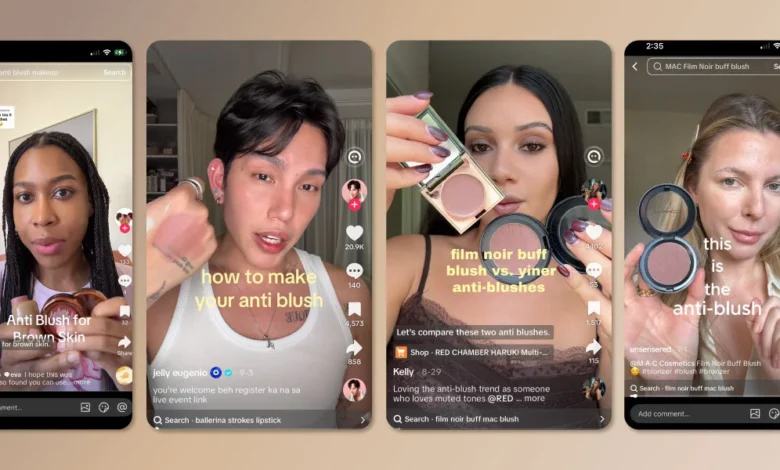
When Los Angeles-based actor and content creator Kim Senser sat down to film a video reviewing MAC’s Film Noir Buff blush in July, she struggled to find the right language to describe the product’s unique appeal. The shade, a rosy brown, broke away from the traditional bright pinks and vibrant peaches that had dominated the cosmetics market for years. Searching for a hook that would resonate with viewers, she rejected her initial thought that it was simply the most interesting blush she had ever used. Instead, she coined a catchier descriptor: the anti-blush.
That single linguistic choice proved to be a turning point. Senser’s TikTok video introducing the term quickly surpassed two million views, while an accompanying post on Instagram crossed the one-million-view threshold. Within a span of two months, the phrase transcended Senser’s audience of roughly 30,000 followers, transforming into a cross-platform phenomenon. Major digital creators, including Aditya Madiraju and Melissa Murdick, adopted the nomenclature, while users across the platform began sharing anti-blush recommendations tailored for deeper skin tones and olive undertones. International style publications, ranging from Vogue Adria to Harper’s Bazaar Singapore, soon picked up the craze for neutral and muted cosmetics. The commercial impact was swift: MAC’s Film Noir Buff completely sold out across major retail partners, including Ulta and Sephora. Yet, beneath the veneer of a quiet, understated beauty trend, the anti-blush movement ignited broader industry conversations regarding the accelerating speed of social media trends, consumer spending habits, and the contentious issue of digital credit in the creator economy.
The Counter-Movement Against Hyper-Saturated Cheeks
The rapid ascension of the anti-blush trend occurs against a backdrop of unprecedented market dominance for traditional blushes. Over the preceding several years, flushed cheeks had established themselves as one of the beauty sector’s primary growth engines. Brands such as Rhode and Rare Beauty capitalized heavily on consumer demand for saturated, high-pigment statement blushes designed to create a vivid, healthy pop of color. According to retail tracking data from Circana, U.S. prestige beauty sales of blushes and bronzers posted strong double-digit gains during the first half of the year, significantly outperforming the broader prestige makeup segment, which saw a modest overall increase of just three percent.
Prominent makeup artists and brand founders have long lauded blush for its ability to instantly revitalize the complexion. Katie Jane Hughes, a professional makeup artist and founder of KJH Brand, noted that traditional blush offers an accessible route to a luminous, healthy glow without appearing muddy or overdone. However, the omnipresence of bright, heavily flushed makeup eventually prompted a counter-reaction. Consumers began pushing back against what beauty commentators dubbed "blush blindness"—a state of over-application where wearers lose perspective on how much product sits on their skin.
In response, the market pivoted toward subtlety. Data compiled in September by trend-forecasting firm Spate indicated that consumer interest in beige and neutral blushes, measured across Google search volumes and social media engagement, skyrocketed by 274.9% compared to the previous year. While neutral cosmetics are a foundational tool long utilized by professional makeup artists to ground editorial looks, the framing of these products under the "anti-blush" banner gave everyday consumers a distinct vocabulary to articulate a shift away from maximalist routines. Hughes contextualized the phenomenon by linking it to broader aesthetic movements, such as the grungy, slightly fatigued, 1990s-inspired minimalism championed by figures like model Gabbriette. In her view, anti-blush represents an existing technique packaged with a fresh, highly marketable moniker.
Viral Recognition and the Creator Credit Debate
As the anti-blush label gained traction, it triggered a familiar digital dispute regarding attribution and compensation. While social media users overwhelmingly credited Senser with originating the phrase in July, the term quickly escaped her direct sphere of influence. By August, MAC Cosmetics incorporated the term directly into an official promotional post on its Instagram account to market its muted blush portfolio.
The brand’s utilization of the phrase without explicitly acknowledging Senser drew immediate scrutiny from her followers and other digital creators. Comment sections on MAC’s official channels filled with users tagging Senser and demanding that the cosmetics giant credit her for coining the viral term. Senser acknowledged that while she appreciated the advocacy from her community, she received no direct communication from MAC despite having shared her original video with the brand via direct message.
In September, Senser published a follow-up video reflecting on the rapid commercialization of her idea. She referenced a parallel viral marketing incident involving wellness brand Lemme, which famously treated content creator Christina Kirkman to an all-expenses-paid trip to Coachella after her video promoting the brand’s sleep gummies went viral. Senser clarified that while the phrase itself belonged to the public domain, she felt a direct acknowledgment from the brand would have been a respectful nod to the organic consumer demand she helped generate. She noted that while legal recourse was neither feasible nor desired—having never trademarked the term—the experience served as a sharp learning curve regarding the power dynamics between independent creators and legacy beauty corporations.
Corporate Response and Industry Implications
When pressed for comment regarding the phenomenon, representatives for MAC Cosmetics pointed to the unprecedented commercial success of the specific product tied to the movement. A brand spokesperson stated that the Skinfinish Colourstruck Blush in Film Noir Buff had overperformed its initial launch projections by a factor of four.
Furthermore, the brand positioned the anti-blush trend as evidence of its alignment with modern beauty consumer habits, which lean toward creativity, collective experimentation, and rule-breaking. In an official statement, the brand emphasized that consumers view MAC as a destination for self-expression and praised the organic convergence of artistic interpretations, explicitly citing Senser’s movement alongside other digital collaborations.
The friction surrounding the anti-blush trend highlights a wider systemic issue within the contemporary beauty industry. The incident follows a similar controversy in May, when makeup artist Patrick Ta faced consumer backlash over his "Transition Blush" launch, with critics accusing the brand of co-opting a technique pioneered by independent makeup artist Ngozi Esther Edeme, widely known as Painted By Esther.
For many aspiring influencers, posting unprompted product reviews and tagging major brands represents a calculated gamble known colloquially in digital marketing circles as "flirting" with brands. Creators often supply free promotional labor in the hopes of securing official paid partnerships, brand trips, or product seeding packages. While occasional collaborations do yield formal financial compensation—such as Vaseline’s decision to fly out early beauty-hack creators Jen Chae and Lauren Luke to Thailand and share a percentage of sales—such outcomes remain the exception rather than the rule.
As social media algorithms continue to reward niche content, enabling micro-influencers and everyday users to achieve unexpected virality overnight, legacy brands increasingly benefit from organic consumer-led movements without needing to engage in costly agency-negotiated talent contracts.
Despite the professional turbulence, the anti-blush look itself requires minimal financial investment, as beauty experts note that consumers can easily replicate the effect using existing cosmetics, such as mixing a touch of nude lipstick with a standard bronzer. For Senser, the experience has left a lingering bittersweet association with the product that launched a movement. While she continues to advocate for understated makeup, she admits that glancing at the Film Noir Buff shade in her kit evokes the memory of an unreciprocated digital romance, prompting her to search the market for an independent dupe while refocusing on her regular content schedule.
Related posts: