Jamie Salter Steps Down as CEO of Authentic Brands Group, Matt Maddox Appointed to Lead Next Phase of Global Growth.

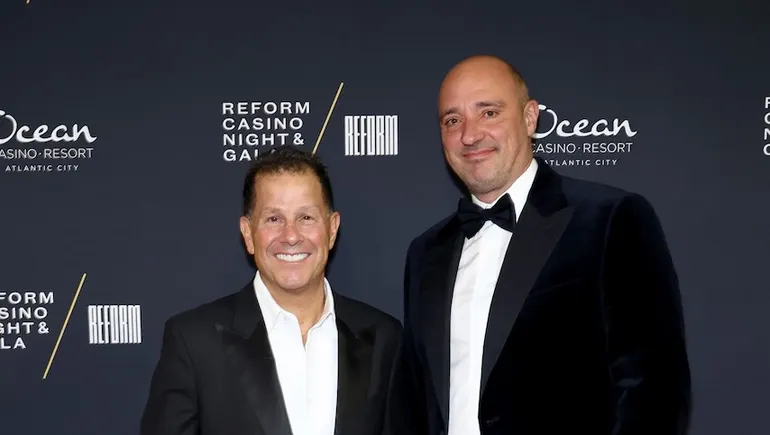
Jamie Salter, the visionary founder who established Authentic Brands Group (ABG) in 2010 and meticulously cultivated it into a global brand management titan, has officially transitioned from his role as chief executive officer. His successor, Matt Maddox, who has served as president for over a year, will now assume the dual responsibilities of president and CEO, taking charge of the company’s day-to-day operational framework. Salter, while relinquishing the CEO title, will remain a profoundly influential figure within the organization, transitioning to the pivotal position of executive chairman of the board. This strategic leadership evolution, announced on Wednesday, signals a calculated move designed to fortify ABG’s trajectory for its ambitious next phase of global expansion and market penetration.
A Strategic Shift in Leadership for Continued Expansion
The announcement underscores a carefully orchestrated succession plan, positioning Maddox to steer the operational helm while Salter dedicates his considerable expertise to overarching strategic initiatives. In his new capacity as executive chairman, Salter will continue to be deeply engaged in the business, specifically overseeing "strategic global growth, including mergers and acquisitions, global partnerships and alliances, and other long-term strategic priorities," as outlined by the company. This division of labor is designed to leverage Salter’s unparalleled acumen in identifying and executing transformative deals, which has been the bedrock of ABG’s meteoric rise, while empowering Maddox to optimize the intricate daily operations of a sprawling brand empire. Maddox will report directly to Salter, ensuring continuity and alignment with the founder’s long-term vision.
The Genesis of a Brand Powerhouse: ABG’s Unique Model
Authentic Brands Group was founded in 2010 with a revolutionary business model centered on the acquisition of intellectual property (IP). Unlike traditional retail conglomerates that manage manufacturing, logistics, and brick-and-mortar operations, ABG’s strategy is largely "asset-light." It focuses on purchasing, revitalizing, and managing the brand equity itself, subsequently licensing out the manufacturing, distribution, and retail operations to a network of specialized partners. This model allows ABG to profit from the inherent value and consumer recognition of brands without shouldering the operational complexities and capital-intensive nature of direct retail.
A significant portion of ABG’s success has stemmed from its ability to acquire distressed brands, often at advantageous valuations through bankruptcy proceedings. This opportunistic approach has seen the company "snag" iconic names that faced financial difficulties but retained significant brand recognition and consumer loyalty. Notable examples include the acquisition of Brooks Brothers in 2020 for $305 million in partnership with Simon Property Group, Aéropostale in 2016 for $243 million via a consortium bid, and Rockport in 2023. By taking these heritage brands under its wing, ABG has demonstrated a remarkable ability to extract value by rejuvenating their image, expanding their reach through new licensing agreements, and tapping into diverse market segments.
Building a Diverse Portfolio: From Fashion to Fandom
Over its fourteen-year history, ABG has meticulously curated an expansive portfolio that now encompasses more than 50 brands across various sectors, demonstrating the versatility of its IP management strategy. Its fashion and lifestyle division boasts household names such as Reebok, Champion, Guess, Nautica, Lucky Brand, Nine West, Juicy Couture, Vince Camuto, Izod, Barneys New York, and Quiksilver. These brands represent a broad spectrum of consumer tastes and price points, from athletic wear to high-fashion accessories.
Beyond traditional retail brands, ABG has also diversified into the entertainment and celebrity IP space, acquiring the rights to market and monetize the legacies of both living and deceased personalities. This unique segment includes sports icons like Shaquille O’Neal and David Beckham, comedic talent Kevin Hart, and timeless legends such as Elvis Presley, Muhammad Ali, and Marilyn Monroe. By managing their images, likenesses, and endorsements, ABG creates new revenue streams through various merchandising, media, and promotional ventures, further solidifying its claim as a comprehensive "brand, marketing, and entertainment platform."
Operational Dynamics and Inherent Challenges
While ABG’s model has largely proven successful, it is not without its operational complexities and occasional setbacks. The company often relies on a network of operating partners, such as Catalyst Brands, which manages J.C. Penney and several other names within ABG’s extensive stable. This decentralized operational structure, while efficient in many respects, also means that ABG’s fortunes are tied to the performance and stability of its licensees.
A recent case in point highlights this dynamic: the Catalyst unit responsible for Eddie Bauer filed for bankruptcy in early 2024. This unfortunate development led to the closure of all Eddie Bauer stores after efforts to find a new buyer for the operational entity proved unsuccessful. Prior to this, ABG had already contracted the brand’s e-commerce operations to another company, illustrating the intricate web of partnerships and the constant need for strategic adjustments within its licensing framework. This incident serves as a stark reminder that even with robust brand IP, the success of a licensed brand is heavily dependent on the operational efficacy and financial health of its partners.
Furthermore, ABG holds a significant stake in the luxury retail sector, owning 77% of an entity that controls a perpetual master license to the intellectual property of iconic luxury stores Saks Fifth Avenue, Neiman Marcus, and Bergdorf Goodman. This move provided ABG with a foothold in the high-end market. However, the parent company of these luxury retailers, Saks Global, also entered bankruptcy proceedings in mid-2024, demonstrating that even premium segments are susceptible to economic pressures and operational challenges, underscoring the pervasive volatility within the retail landscape.
Jamie Salter’s Vision for the Future and IPO Ambitions
Despite the occasional operational turbulence experienced by its licensees, Jamie Salter remains steadfast in his ambitious vision for ABG. "I will continue to do what I’ve always done: being laser-focused on driving strategic, transformational opportunities that will position our peerless company for continued growth," Salter stated on Wednesday. He emphasized his ongoing commitment, adding, "I’ll remain actively involved, partnering closely with Matt and the entire leadership team, as we continue building the world’s leading brand, marketing, and entertainment platform." This statement reinforces the collaborative nature of the new leadership structure, where Salter’s strategic prowess will complement Maddox’s operational focus.
The conversation around ABG’s future often circles back to its long-anticipated initial public offering (IPO). The company has had a complex relationship with the public markets. In 2021, ABG had pulled the plug on an initial public offering after selling "significant" equity stakes to private investment firms CVC Capital Partners and HPS Investment Partners. At that time, market conditions and strategic investor interest led to a deferral of public listing plans. Two years prior, Salter had publicly suggested that ABG was likely to go public within 18 months. Fast forward to Wednesday, and Salter, in an interview with CNBC, updated this timeline, indicating that the company "could IPO within a year." This renewed enthusiasm for a public listing suggests a growing confidence in ABG’s valuation, market readiness, and its ability to attract public investors, possibly as a means to fuel further aggressive acquisitions and global expansion.
Learning from Experience: The Forever 21 Anomaly
Even a seasoned dealmaker like Jamie Salter acknowledges that not every acquisition yields the expected returns. The ABG strategy, while highly effective, is not "bulletproof." Salter openly lamented the acquisition of the Forever 21 brand in 2020, which was undertaken in partnership with mall operators Simon Property Group and Brookfield Property Partners. Reflecting on the deal, Salter candidly called it "probably the biggest mistake I made." This admission highlights the inherent risks in brand turnarounds, particularly in the fast-fashion segment, which is characterized by rapid trend cycles, intense competition from digital-native brands like Shein, and evolving consumer preferences. The challenges associated with revitalizing Forever 21 likely stemmed from its previous bankruptcy, changing retail dynamics, and the difficulties in repositioning a brand that had lost significant market share and relevance among its target demographic. This experience underscores the selective and rigorous approach ABG must maintain in its acquisition strategy, even with a strong track record of success.
Matt Maddox: A New Era of Operational Leadership
Matt Maddox’s promotion to CEO marks a significant milestone in ABG’s corporate evolution. As president for over a year, Maddox has already been deeply entrenched in the company’s operational complexities and strategic direction. His elevation signifies a commitment to strengthening ABG’s internal execution capabilities and optimizing its vast network of brands and licensing partners. In his role, Maddox will be responsible for the day-to-day management of ABG’s global operations, ensuring that the company’s diverse portfolio of brands and personalities continues to thrive under its unique licensing model. His leadership will be crucial in navigating market fluctuations, fostering strong relationships with licensees, and driving operational efficiencies across the entire ABG ecosystem. This structured succession allows Salter to focus on the high-level strategic maneuvers that have defined ABG’s growth, while Maddox concentrates on solidifying the operational foundations necessary for sustained success.
Broader Implications for the Retail and Brand Management Landscape
The leadership transition at Authentic Brands Group carries significant implications not just for the company itself but for the broader retail and brand management sectors. ABG’s pioneering model has fundamentally reshaped how brands are valued, acquired, and managed in the modern economy. By focusing on intellectual property rather than tangible assets, ABG has demonstrated a powerful alternative to traditional retail ownership, especially in an era of digital transformation and shifting consumer habits.
This strategic leadership change, with Salter focusing on M&A and global partnerships and Maddox on operational excellence, positions ABG to further solidify its market dominance. It suggests a dual-pronged approach to growth: continued aggressive external expansion through acquisitions, complemented by a sharpened internal focus on maximizing the value of existing assets and optimizing partner relationships. The potential IPO within the next year, as hinted by Salter, could inject substantial capital, enabling ABG to pursue even larger and more transformative deals, potentially venturing into new categories or geographies.
ABG’s ongoing success and its strategic adjustments, such as this leadership evolution, provide a blueprint for how companies can thrive in a dynamic global marketplace. Its ability to revive struggling brands, cultivate celebrity legacies, and navigate the intricate landscape of licensing and partnerships offers valuable lessons for the industry. As ABG continues its journey to become "the world’s leading brand, marketing, and entertainment platform," its leadership decisions, strategic acquisitions, and operational performance will undoubtedly continue to influence and shape the future of retail and brand management globally. The transition to a dual leadership structure, with the founder remaining deeply engaged in strategy, appears to be a calculated move to ensure both continuity of vision and robust operational execution as ABG embarks on its next ambitious chapter.