Ulta Beauty Enters the Wearable Tech Market Through Oura Partnership and Signals Complete Convergence of Beauty and Wellness Sectors

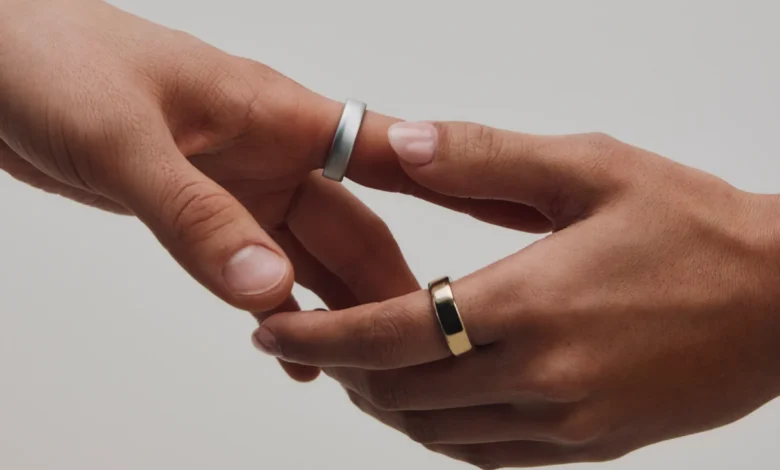
The boundary separating traditional personal care from personal health optimization has officially dissolved, marked by a watershed retail development that is reshaping the multi-billion-dollar wellness landscape. On Monday, Ulta Beauty, the largest specialty beauty retailer in the United States, announced a high-profile strategic partnership with Oura Health, introducing the globally recognized Oura Ring into physical retail for the first time via a specialty beauty channel. The collaboration brings the newly released Oura Ring 5—starting at a retail price of $399—to Ulta’s e-commerce platform immediately, followed by a sweeping physical rollout across 1,000 U.S. brick-and-mortar storefronts on November 22. This commercial maneuver represents much more than a standard retail expansion; it serves as a definitive validation of the convergence between beauty and biometric health tracking, driven by shifting consumer demands for verifiable, data-backed personal care outcomes.
The Strategic Evolution of Ulta Beauty and Oura Health
During a prominent fireside chat at the annual Glossy Beauty and Wellness Summit, Laura Beres, Vice President of Wellness at Ulta Beauty, and Dr. Chris Curry, MD, PhD, Clinical Director of Women’s Health at Oura, detailed the underlying motivations driving this unprecedented retail alliance. According to Beres, the modern consumer approaches self-care through an intensely customized lens, where personalization is no longer merely preferred but actively demanded.
"Personalization is a big deal in wellness. No two individuals’ wellness journeys look the same," Beres stated during the summit discussion. "When you couple that with this desire for really measurable outcomes that our guests are now looking for, and frankly expecting in this space, we couldn’t think of a better partner to bring in as the first wearable."
For Oura Health, which introduced its inaugural health-tracking smart ring to the market in 2015, the partnership represents a crucial geographical and psychological shift. Over the past decade, Oura established a strong presence across mainstream consumer electronics outlets like Best Buy, big-box department stores like Target, and ultra-luxury department stores such as Harrods in London. However, securing shelf space inside specialty beauty retail marks a novel frontier for the biometric technology firm.
Dr. Curry emphasized that placing health technology inside beauty environments targets consumers precisely when they are primed for self-reflection and investment in their physical well-being. "Showing up in retail spaces, showing up in moments of self-investment, is the absolute most magical combination," Dr. Curry explained. "We want to show up where people are taking a beat out of their day to think about their bodies, to think about wellness, to think about their health. We want to be in those moments of pause where you, or a consumer, gives themselves permission to think about themselves, [because] most of the day, they’re not thinking about themselves."
Data-Driven Consumers and the Rise of Measurable Wellness
The macroeconomic backdrop of this partnership reflects an industry undergoing exponential expansion. According to comprehensive market data from McKinsey & Company, the global wellness economy has reached an astonishing $2.7 trillion valuation, with the United States market alone accounting for approximately $700 billion. As the sector matures, consumer behavior is shifting from aspirational marketing claims toward empirical validation.
Dr. Curry noted that today’s shoppers possess significantly higher standards and demand tangible proof that their wellness investments—spanning topical skincare, ingestible supplements, fitness routines, and stress-management practices—are yielding verifiable physiological results. "The tea leaves side of this is that consumers are smarter, they have far higher standards, [and] they want an ability to prove to themselves, or to their partner or to the payer, that the thing is working," Dr. Curry remarked.
This demand for quantifiable physiological feedback is particularly pronounced among specific demographic cohorts navigating complex biological transitions. Dr. Curry highlighted the rapid acceleration of female consumers utilizing advanced health-measurement tools to manage perimenopause and menopause. Members are increasingly turning to wearable technology to monitor whether their hormone therapies, targeted nutritional supplements, and sleep hygiene practices are actually improving their baseline health metrics. "Our members show up looking for a menopause solution, and they want proof that their progesterone is working, their supplement is working, their meditation routine is working," she noted.
A Multi-Year Roadmap for Wearable Integration at Ulta
Ulta Beauty’s commitment to wearable technology extends far beyond its initial integration with Oura. Building upon a retail strategy announced earlier in the month, the beauty giant confirmed that it will further expand its technological footprint by introducing Whoop—the fitness-focused, screenless wrist wearable heavily favored by elite athletes and serious fitness enthusiasts—into its retail ecosystem, with a planned launch slated for March 2027.
This aggressive integration of hardware is underpinned by remarkable engagement metrics from Ulta’s core consumer base. Beres revealed during the summit that Ulta shoppers utilize wellness products more than six days a week, a frequency rate that outpaces every other product category carried by the retailer. This high engagement solidifies the reality that the once-distinct boundaries separating beauty aisles from health clinics have vanished entirely. "The [beauty and wellness] markets have converged. We’ve been talking about convergence… and at this point, it’s done. We’re there," Beres asserted.
Demographic Shifts and the Broadening Wellness Audience
Analyzing the consumer base propelling this unprecedented market growth, Beres pointed out that while millennials and older members of Generation Gen Z continue to spearhead wellness purchasing trends, older demographics are rapidly closing the gap. Gen X and Baby Boomer consumers have dramatically accelerated their spending within Ulta’s wellness category, transforming the profile of the modern wellness shopper into a mirror image of the overall Ulta customer base.
"We’re seeing millennials and the older Gen Z really start to lead the charge," Beres said. "We’ve seen Gen X and Boomers start to take off as well. So really, the wellness shopper is just the Ulta Beauty shopper now, which is really exciting."
Macroeconomic Landscape and Market Implications
The capital flowing into the health and wellness sector reinforces the permanence of this trend. McKinsey’s global market analysis indicates robust long-term growth, noting that the six largest corporate mergers, acquisitions, and investment deals featuring a health and wellness component since 2021 were all officially announced or closed in 2025 or later. These six major transactions boast a combined valuation of nearly $89 billion, illustrating immense investor confidence and providing a sustained runway for ongoing market expansion.
The integration of biometric tracking devices like the Oura Ring into specialty beauty environments signals a fundamental shift in retail merchandising strategy. Beauty retailers are no longer selling superficial enhancements alone; they are positioning themselves as comprehensive hubs for holistic health optimization. By offering consumers the ability to track sleep quality, readiness scores, stress levels, and physiological recovery alongside prestige skincare and wellness supplements, retailers are capturing a larger share of wallet while answering the modern consumer’s demand for absolute transparency, personalization, and measurable self-care outcomes.
Related posts: