The Best Stage Is Before You Launch, Because Nobody Knows You’re Launching: Three of Beauty’s Top Founders Share the Secrets to Building a Brand

The contemporary beauty landscape is undergoing a structural evolution, increasingly defined by professional practitioners transitioning from behind-the-scenes talent to front-facing brand architects. For decades, makeup artists, dermatologists, and celebrity hairstylists served as the foundational pillars of the multi-billion-dollar cosmetic industry, yet rarely captured the direct equity of the brands they helped validate. However, the maturation of social media ecosystems, shifting consumer trust toward authentic expertise, and direct-to-consumer infrastructure have dismantled traditional barriers to entry.
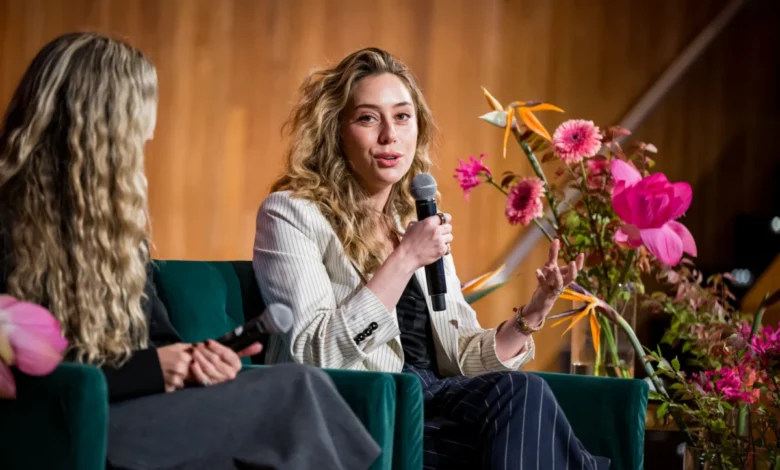
This shift took center stage at Glossy POP NYC, hosted at the Fashion Institute of Technology (FIT), where three of the industry’s most prominent practitioners-turned-founders convened to discuss the arduous journey of scaling beauty empires. Featuring celebrity makeup artist Mary Phillips, dermatologist and Dr. Idriss founder Dr. Shereene Idriss, and editorial hairstylist and Rôz founder Mara Roszak, the panel offered a masterclass in modern brand creation. The discussion illuminated the intersection of professional mastery and entrepreneurial resilience, providing a rare window into the realities of converting niche technical authority into commercially viable, high-growth enterprises.
The Practitioner-to-Founder Pipeline: From Red Carpets to Retail Shelves
The genesis of modern beauty brands increasingly relies on organic digital validation rather than legacy marketing campaigns. Mary Phillips’ transition into brand ownership via the 2025 launch of M.ph Beauty serves as a prime case study. For years, Phillips’ distinct "underpainting" technique—a method of applying contour and highlighter beneath foundation for a seamless, dimensional finish—was an exclusive red-carpet secret utilized by A-list clientele including Jennifer Lopez, Kendall Jenner, and Hailey Bieber.
Despite decades of industry tenure, Phillips’ mainstream household recognition accelerated dramatically in 2023 when digital creator Tara Sigari published a viral tutorial breaking down Phillips’ methodology. The resulting digital saturation fundamentally altered Phillips’ trajectory.
"I was just getting, like, thousands and thousands of videos, and I knew that was the moment," Phillips noted during the FIT panel, highlighting how algorithmic virality can act as an immediate catalyst for commercial expansion. M.ph Beauty subsequently debuted with a targeted product ecosystem featuring foundational lip liners, lipsticks, and the signature underpainting contour and highlighting palette that initially drove her digital renown.
This trajectory reflects a broader market shift: consumers are no longer satisfied with celebrity endorsements rooted purely in celebrity status. Instead, market demand favors functional authority—practitioners whose products solve specific technical problems rooted in years of clinical or backstage experience.
Navigating Solopreneurship and the Myth of the Co-Founder
Building a beauty brand requires navigating a complex operational matrix encompassing supply chain management, regulatory compliance, capital allocation, and digital marketing. For many first-time founders, the prevailing wisdom dictates securing a business-oriented co-founder to balance creative expertise. However, Mara Roszak’s journey with Rôz challenges this conventional narrative.
Drawing from a two-decade career as an elite editorial hairstylist, Roszak possessed a definitive vision for product formulations tailored to hair health and styling integrity. Yet, navigating the corporate and logistical architecture of brand building presented an entirely distinct challenge.
"I had 20 years as a hairstylist as background. So again, product [was] locked. But how to build a business? Not a clue," Roszak explained. "And I thought I needed a partner, like a co-founder, to start. I did end up doing it more on my own. I never found the co-founder. And I feel like that was such a great lesson."
Roszak’s experience underscores an emerging ethos among modern indie beauty founders: resilience often supersedes conventional operational pairing. By leaning on external networks, mentorship, and continuous self-education, solopreneurs are increasingly capable of steering early-stage development without immediate executive stratification. Her advice to aspiring entrepreneurs centers on resourcefulness: "You can do this. When you think you can’t, you can. Just talk to anyone that will pick up the phone that can teach you something."
The Strategic Value of the "Silent Pregnancy" in Product Development
In an industry governed by rapid product cycles and relentless digital content creation, the pressure to maintain constant consumer visibility can compromise product integrity. Dr. Shereene Idriss, founder and CEO of the eponymous Dr. Idriss skin-care line, emphasized the strategic necessity of disciplined pre-launch incubation.
Dr. Idriss advocated for capitalizing on the pre-market phase, describing the prolonged development cycle as a critical operational window. "The best stage is before you launch, because nobody knows you’re launching," Dr. Idriss stated. "So take your time. We were in development for, like, two and a half years, and it just felt like a silent pregnancy. It’s actually the best time, because that’s the time you can really take your time. Once you’re out of gates, you don’t really have that luxury so much, and so really enjoy that quiet time."
This deliberate pacing stands in stark contrast to fast-moving trend brands that prioritize immediate algorithmic capture over rigorous dermatological testing and formulation stability. By insulating the research and development phase from external market pressures, brands led by medical professionals establish long-term clinical credibility, which subsequently drives high customer retention rates in a crowded market.
Democratizing Expertise Versus Intellectual Hoarding
A recurring theme among veteran beauty practitioners is the historical insularity of professional techniques. Before the advent of ubiquitous video platforms and social media tutorials, techniques developed backstage at fashion weeks or within closed clinic doors remained closely guarded industry secrets.
Phillips reflected on this paradigm shift, noting her own transition from private practitioner to public educator. "I was kind of hoarding my techniques for so long," Phillips admitted. "My clients, when I would do underpainting on them, would be like, ‘Oh my gosh, I’ve never had anyone do this before.’ And I was like, ‘Really?’ We don’t see what other artists do. I see what other hair stylists do. I never get to see the makeup artists in action. So, before—and I’m aging myself right now—but before Instagram and the internet, I didn’t really know what other people were doing."
The democratization of these techniques through digital media has not cannibalized the market for professional brands; rather, it has primed a sophisticated consumer base eager to purchase the specific tools required to execute professional methodologies at home. This dynamic forms the commercial bedrock of brands founded by established experts: the consumer is not merely buying a cosmetic or skin-care item, but purchasing the codified expertise of the creator.
Broader Industry Implications: The Institutionalization of Niche Beauty
The insights shared at Glossy POP NYC arrive at a transformative moment for the global beauty sector. As legacy conglomerates increasingly scout and acquire agile, founder-led indie brands—exemplified by Caudalie Group’s recent strategic acquisition moves and Maison Crivelli’s expansion along Paris’s Rue Saint-Honoré—the structural value of authentic brand origin stories has never been higher.
Furthermore, non-endemic luxury and retail giants are aggressively pursuing strategic integrations within cultural touchpoints to capture evolving consumer attention. This is evidenced by Sephora’s landmark debut as the first official beauty retail partner of the U.S. Open Finals Fan Fest, which drew more than 2,000 attendees to its experiential booth. Such activations signal that physical retail and experiential marketing must now operate in tandem with digital storytelling to sustain brand equity.
As the beauty market continues to saturate, the barrier to entry for generic white-label brands has risen sharply. The future belongs to operators who possess deep domain expertise, proprietary methodologies, and the operational patience to build scalable businesses from a foundation of genuine authority. Whether navigating the complexities of solopreneurship like Mara Roszak, executing a meticulous R&D timeline like Dr. Shereene Idriss, or translating viral digital moments into enduring product lines like Mary Phillips, today’s top founders are redefining what it means to build a modern beauty institution from the ground up.
Related posts: