Uster Technologies unveils new Recycled Fiber Matrix to standardize quality assessment for sustainable cotton spinning

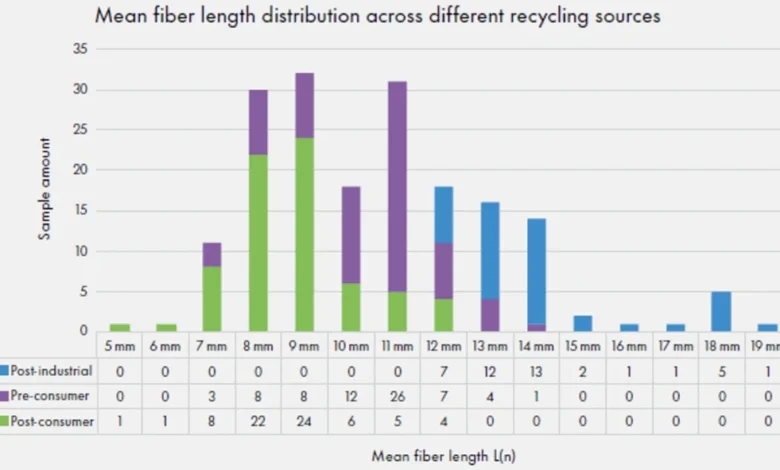
The global textile industry is currently grappling with a fundamental paradox: while the demand for circularity and recycled materials has reached an all-time high, the inherent variability of recycled cotton remains a significant barrier to widespread industrial adoption. On September 10, 2026, Uster, the Switzerland-based leader in textile quality management, introduced a sophisticated, data-driven system designed to demystify this variability. The Uster Recycled Fiber Matrix represents a pivotal shift from subjective assessment to objective, standardized classification, providing spinners and brands with the technical roadmap required to integrate recycled cotton into high-quality yarn production.
The Challenge of Circularity
Mechanically recycled cotton is fundamentally different from virgin fibers. The process of tearing down post-industrial, pre-consumer, and post-consumer textile waste into reusable fiber inherently alters the physical structure of the material. Because the source materials range from high-quality denim offcuts to lower-grade knitwear, the resulting fiber length distribution, short-fiber content, and nep levels are highly unpredictable.
Historically, spinning mills have struggled to maintain consistent yarn quality when blending recycled fibers. When a bale of recycled cotton is introduced into a production line, the lack of standardized data often leads to processing instability, frequent machine stoppages, and degradation of yarn strength. For manufacturers committed to sustainability, this unpredictability has historically necessitated lower blending ratios—often limiting recycled content to avoid compromising final garment durability.

The Uster Recycled Fiber Matrix: A Technical Breakthrough
The Uster Recycled Fiber Matrix functions by moving beyond the traditional reliance on singular measurements. Uster’s extensive research, which involved analyzing samples from major textile manufacturing hubs in China, India, and Europe, revealed that no single parameter—such as mean fiber length—could accurately predict the behavior of a fiber lot during the spinning process.
Instead, the new matrix employs a two-dimensional classification approach. By plotting two interacting properties simultaneously—for example, mean fiber length against short-fiber content or nep count—the system provides a multidimensional map of the fiber’s potential. This is crucial because two fiber lots with identical mean lengths may perform drastically differently on the spinning frame; the lot with a higher concentration of short fibers will inevitably cause more fly, fiber breakage, and end-breaks during high-speed production.
The system leverages the capabilities of the Uster AFIS 6 (Advanced Fiber Information System), which provides high-precision data on fiber length, maturity, and neps. The results are translated into a clear, color-coded quality grade ranging from A to D. These levels correlate the physical fiber characteristics with typical feedstock sources, allowing mills to make informed decisions about whether a specific lot is suitable for fine-count ring spinning, coarse-count open-end spinning, or alternative non-woven applications.
A Chronology of Development
The launch of the Recycled Fiber Matrix is the culmination of several years of intensive research and development aimed at closing the "circularity gap."

- 2023–2024: Uster initiated a global sampling campaign, collecting diverse recycled cotton batches from varied recycling streams. The objective was to catalog the wide spectrum of variability inherent in current mechanical recycling technologies.
- 2025: Throughout the year, the company utilized the AFIS 6 platform to conduct thousands of individual fiber tests, mapping the relationship between mechanical recycling methods and subsequent fiber quality parameters.
- Q1 2026: Beta testing began at selected partner spinning mills in India and Europe, where the matrix was used to optimize blending ratios and machine settings.
- September 2026: The official launch of the Uster Recycled Fiber Matrix, accompanied by a comprehensive technical report and application guide for the industry.
Strategic Implications for Spinning Mills
For the modern spinning mill, the Matrix acts as a vital tool for bale management and process optimization. By categorizing incoming recycled bales into distinct "quality bins," mills can significantly reduce raw material variability. This allows for more precise blending ratios, enabling manufacturers to maximize the percentage of recycled content without sacrificing the structural integrity of the yarn.
Furthermore, the Matrix provides actionable insights for machine maintenance. Recognizing that recycled fibers often carry higher levels of contaminants and shorter fibers, the system allows mill managers to proactively adjust settings such as draft, twist, and machine speed. It also highlights the need for more aggressive cleaning schedules, as higher short-fiber loads often correlate with increased dust and debris accumulation within the spinning machinery.
Broadening the Scope of Sustainable Textiles
The implications of this technology extend far beyond the mill floor. Brands and retailers, often pressured by environmental regulations and consumer demand for "green" products, now have a framework to verify the quality and consistency of the fibers used in their supply chains.
By standardizing the language of recycled fiber quality, Uster is effectively creating a "common currency" for the market. Recyclers can use these metrics to provide quality certifications for their output, while brands can set specific quality requirements for their suppliers, ensuring that the push for sustainability does not lead to a decline in product quality or an increase in manufacturing waste.

Future Evolution and Database Expansion
Uster has explicitly stated that the Recycled Fiber Matrix is not a static tool. As mechanical recycling technology evolves—and as chemical recycling processes begin to scale—the database will continue to expand. The company intends to incorporate new data points as they become available, ensuring the system remains relevant in an industry undergoing rapid technological change.
Current research efforts are already underway to establish rigorous benchmarks for various blend levels. For instance, determining the "tipping point" where the addition of 20% versus 40% recycled cotton impacts yarn strength and elongation is a key area of focus. By providing these benchmarks, Uster aims to assist mills in navigating the trade-off between sustainability targets and technical performance.
Industry Reaction and Expert Analysis
Industry analysts have noted that the lack of standardized testing has been one of the primary "hidden" costs in the transition to a circular economy. Prior to the introduction of this matrix, many mills operated on a "trial and error" basis, which is inherently inefficient and costly.
"The ability to categorize recycled fiber by its actual performance potential rather than just its source is a game-changer," said one industry observer. "It turns recycled cotton from a ‘risky’ commodity into a manageable raw material."

By democratizing this knowledge through its published application reports and accessible data frameworks, Uster is positioning itself as the arbiter of quality in the circular textile market. For the industry at large, this represents a transition from the experimental phase of textile recycling into a mature, data-driven industrial process.
Moving Toward a Data-Driven Circularity
As the textile industry continues to face intense scrutiny regarding its environmental footprint, the Uster Recycled Fiber Matrix offers a tangible solution to a complex technical problem. It does not replace the need for quality fiber preparation, but it provides the necessary transparency to ensure that recycled cotton can compete on a level playing field with virgin materials.
Mills and manufacturers interested in adopting these standards are encouraged to consult the detailed technical documentation provided by Uster. By integrating the Matrix into daily operations, companies can better manage their raw material risks, optimize their production efficiency, and ultimately contribute to a more stable and reliable circular textile ecosystem. As the database grows and the industry matures, the Uster Recycled Fiber Matrix is expected to become an essential standard for any facility engaged in the processing of sustainable fibers.