Where are we now: Market opportunities for bio-based alternatives to fur, leather and wool (online expert panel) : Fashion Revolution

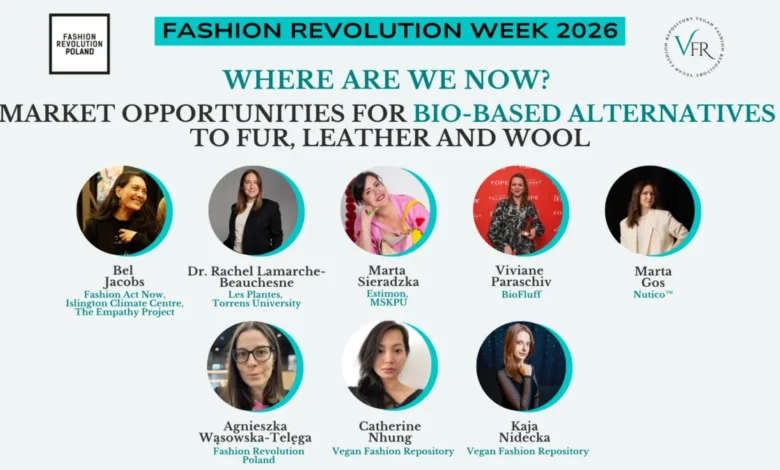
During Fashion Revolution Week 2026, a groundbreaking collaborative panel, co-hosted by Fashion Revolution Poland and the Vegan Fashion Repository, convened to meticulously examine the burgeoning landscape of bio-based alternative materials in the fashion industry. The discourse transcended mere innovation, delving into the multifaceted opportunities and significant challenges that define the future of these sustainable textiles, with a particular emphasis on dismantling antiquated perceptions surrounding vegan fashion. This pivotal event, available for online viewing, served as a crucial platform for stakeholders across the entire value chain, fostering a dialogue aimed at accelerating the industry’s transition towards more ethical and environmentally sound practices.
The panel brought together a diverse consortium of experts, including pioneering material innovators, established and emerging brands, visionary designers, and dedicated advocates for sustainability and animal welfare. The conversation was meticulously structured to explore the entire lifecycle of next-generation materials, from their conceptualization and development by cutting-edge scientists and researchers to their practical application by designers and brands. Crucially, the discussion also illuminated the efforts of those championing empathy and sustainability, working to embed these principles deeply within the industry’s ethos. Through this comprehensive approach, participants collectively endeavored to dissect the true catalysts of change, identifying forces ranging from sophisticated technological advancements and scientific breakthroughs to the seismic shifts in global consumer values. The analysis spanned both the supply side, where new materials are engineered and produced, and the demand side, where consumer preferences and purchasing decisions are increasingly shaping market dynamics.
The Genesis of a Movement: Fashion Revolution Week and Its Enduring Legacy
Fashion Revolution Week, an annual global campaign, stands as a poignant reminder of the human and environmental costs embedded within the fashion supply chain. Its origins trace back to the tragic Rana Plaza garment factory collapse in Bangladesh on April 24, 2013, an event that claimed the lives of 1,138 workers and injured thousands more. This catastrophe served as a stark, undeniable illustration of the perilous working conditions and systemic exploitation prevalent in the fast fashion industry. In response, Fashion Revolution was founded by Carry Somers and Orsola de Castro with a singular, powerful question: #WhoMadeMyClothes? This question became the rallying cry for a global movement demanding greater transparency, accountability, and ethical conduct from fashion brands.
Since its inception, Fashion Revolution has expanded its mandate beyond labor rights to encompass a broader spectrum of environmental and social justice issues within fashion. It advocates for a fundamental overhaul of the industry, promoting a vision where clothing is made in a safe, clean, and fair manner. Fashion Revolution Poland, as a national chapter of this international movement, plays a vital role in localizing these global objectives. It engages with Polish consumers, brands, policymakers, and educational institutions to raise awareness, foster critical thinking, and drive tangible change within the domestic fashion landscape. Their involvement in co-hosting this panel underscores their commitment to pushing the boundaries of sustainable fashion, recognizing that material innovation is a cornerstone of a truly revolutionary transformation.
Championing Ethical Innovation: The Role of the Vegan Fashion Repository
Complementing Fashion Revolution Poland’s broad advocacy, the Vegan Fashion Repository emerges as a specialized platform dedicated to the advancement and promotion of cruelty-free and sustainable fashion. Its mission centers on providing a comprehensive resource for information on vegan materials, ethical brands, and innovative technologies that eliminate animal exploitation from the supply chain. The Repository serves as a bridge between consumers seeking ethical alternatives and businesses committed to producing them, offering guidance, research, and a curated selection of products that align with vegan principles.
The collaboration between Fashion Revolution Poland and the Vegan Fashion Repository for this panel highlights a powerful synergy. While Fashion Revolution champions systemic change across labor and environmental dimensions, the Vegan Fashion Repository brings a focused expertise on animal welfare and the material science behind ethical alternatives. Together, they address the multi-faceted challenges of sustainability, demonstrating that a truly responsible fashion industry must consider its impact on all living beings and the planet. Their joint effort signifies a mature understanding that "vegan fashion" is no longer merely an ethical niche but a rapidly evolving sector ripe with technological potential and market opportunities, directly addressing the environmental footprint of traditional animal-derived materials.
The Urgent Imperative: Environmental and Ethical Costs of Traditional Materials
The urgency driving the exploration of bio-based alternatives stems from the profound environmental and ethical toll exacted by conventional materials such as fur, leather, and wool. The production of traditional leather, for instance, is notoriously resource-intensive. It requires vast tracts of land for livestock grazing, leading to deforestation and habitat destruction. The tanning process, essential for preserving animal hides, is often a highly polluting activity, involving a cocktail of toxic chemicals including chromium, formaldehyde, and cyanide. These chemicals, if not properly managed, contaminate water sources, soil, and air, posing severe health risks to workers and surrounding communities. The Food and Agriculture Organization (FAO) estimates that livestock farming contributes significantly to greenhouse gas emissions, with cattle rearing alone responsible for a substantial portion of methane, a potent greenhouse gas.
Similarly, the fur industry faces intense scrutiny not only for its ethical implications regarding animal cruelty but also for its environmental footprint. Fur farms generate considerable waste, and the processing of pelts often involves harsh chemicals. While wool is frequently perceived as a natural and sustainable fiber, conventional sheep farming practices can contribute to land degradation, water pollution from pesticide use, and significant methane emissions. Furthermore, the ethical treatment of animals in large-scale wool production has been a consistent point of contention for animal welfare advocates.
These environmental and ethical concerns have catalyzed a significant shift in consumer consciousness. A growing segment of the global population, particularly younger demographics like Gen Z and millennials, is increasingly prioritizing sustainability, ethics, and animal welfare in their purchasing decisions. Data from various market research firms consistently indicates a rising demand for products that are transparently sourced, environmentally benign, and cruelty-free. This consumer-driven momentum provides a powerful impetus for brands and innovators to explore and adopt alternatives that align with these evolving values.
A New Horizon: The Evolution and Promise of Bio-Based Materials
The journey towards truly sustainable and ethical materials has been one of continuous innovation. Early iterations of "vegan leather" often relied on synthetic plastics like polyurethane (PU) and polyvinyl chloride (PVC). While these materials avoided animal cruelty, their petroleum-derived nature raised significant environmental concerns regarding their production, non-biodegradability, and potential for microplastic pollution. The panel aimed to move "beyond outdated perceptions of vegan fashion," acknowledging these earlier limitations while highlighting the dramatic advancements in material science.
Today, the landscape of bio-based alternatives is characterized by astonishing ingenuity. Scientists and innovators are harnessing the power of nature to create materials that mimic the aesthetic and performance qualities of traditional animal products, often with a vastly reduced environmental footprint.
- Mycelium-based materials (Mushroom Leather): Companies like MycoWorks and Bolt Threads have successfully engineered materials from the root structure of fungi (mycelium). These materials can be grown rapidly, require minimal water and land, and offer a luxurious feel similar to animal leather. They are often biodegradable, representing a significant leap towards circularity.
- Fruit and Plant Waste Derivatives:
- Piñatex (Pineapple Leaf Fiber): Developed by Ananas Anam, Piñatex utilizes waste pineapple leaves from existing agricultural harvests. This repurposes agricultural waste into a durable, versatile material, providing additional income for farming communities and reducing waste.
- Apple Leather: Made from apple pomace, a byproduct of the fruit juice industry, this material offers another innovative way to utilize waste streams.
- Grape Leather: Utilizing grape marc from winemaking, this material further exemplifies the potential of agricultural waste valorization.
- Algae-based Materials: Researchers are exploring the use of algae to create textiles and foams. Algae grows quickly, requires no land, and can even sequester carbon dioxide, offering a highly sustainable feedstock.
- Lab-Grown Silks and Leathers: Advances in biotechnology allow for the creation of materials like spider silk proteins (e.g., AMSilk) or collagen (e.g., VitroLabs) through fermentation processes, entirely circumventing animal involvement. These biomimicry approaches promise materials with superior performance and controlled properties.
The chronology of these innovations demonstrates a rapid acceleration in research and development, particularly over the last decade. Initial investments were often speculative, but as technologies mature and consumer demand solidifies, venture capital and corporate investments are increasingly flowing into the bio-material sector. This signifies a growing confidence in the commercial viability and scalability of these next-generation alternatives. However, challenges remain in achieving cost parity with conventional materials, ensuring consistent quality and durability across diverse applications, and establishing robust supply chains capable of meeting large-scale industry demand.
Unpacking the Drivers of Change: From Lab to Market
The panel’s discussion on what truly drives change — from technological innovation to shifting consumer values — highlighted the interconnectedness of supply and demand dynamics. On the supply side, the focus was squarely on the ingenuity of material innovators. These pioneers are not just creating alternatives; they are designing materials with inherent sustainability, often aiming for circularity from conception. Their work involves complex biochemical engineering, advanced manufacturing techniques, and rigorous testing to ensure performance, aesthetics, and environmental integrity. Scaling these innovations from laboratory prototypes to industrial production remains a critical hurdle, requiring substantial investment in infrastructure, talent, and sustainable energy solutions.
On the demand side, the conversation revolved around the evolving consumer landscape. The digital age has empowered consumers with unprecedented access to information, fostering a more informed and ethically conscious buyer. Social media platforms and independent media outlets play a significant role in exposing unsustainable practices and promoting ethical alternatives. Brands and designers are increasingly recognizing that catering to these values is not just a moral imperative but a strategic business advantage. This shift necessitates a re-evaluation of marketing strategies, supply chain transparency, and product development processes to genuinely meet consumer expectations for sustainability and ethics. The panel underscored the importance of clear communication to avoid "greenwashing" and to build genuine trust with consumers.
Market Opportunities and Supporting Data: A Landscape of Growth
The market for sustainable fashion, particularly within the bio-based alternatives segment, is experiencing robust growth. Recent market analyses project the global sustainable fashion market to reach significant valuations, with compound annual growth rates (CAGRs) indicating a rapid expansion over the coming decade. For instance, reports by firms like Grand View Research and Allied Market Research suggest the global sustainable fashion market could exceed hundreds of billions of dollars by the mid-2030s, driven largely by increasing environmental awareness and ethical consumerism.
Within this broader trend, bio-based materials are carving out a substantial niche. While specific market figures for bio-based fashion materials are still emerging, related sectors like the bio-plastics market are already valued in the tens of billions, demonstrating the industrial capacity and demand for naturally derived polymers. Projections for the bio-based leather alternatives market, for example, show significant growth, with some analyses forecasting it to grow at a CAGR of over 20% in the next five to ten years, outpacing traditional leather.
Major brands, recognizing this shift, are increasingly investing in and integrating these materials into their collections. Luxury brands, once hesitant, are now showcasing mycelium leather handbags and pineapple fiber accessories, signaling a mainstream acceptance that was unimaginable a decade ago. Investment in sustainable textile innovation has also surged, with venture capital firms pouring millions into biotech startups focused on novel material development. This financial backing is critical for enabling research, scaling production, and bringing these innovative materials to a wider market.
Despite the promising data, challenges persist. The cost of novel bio-based materials can still be higher than conventional alternatives, posing a barrier for mass-market adoption. Performance parity, especially concerning durability and longevity for certain applications, is an ongoing area of research. Moreover, the industry faces the complex task of developing robust recycling and composting infrastructure for these new materials to ensure true circularity at their end-of-life.
Inferred Statements and Industry Reactions
While specific speakers were not listed, the nature of the panel and its hosts allows for logical inferences regarding the perspectives articulated:
- From Fashion Revolution Representatives: A key message would likely revolve around the necessity of systemic change. They would emphasize that material innovation, while crucial, must be coupled with transparency across the supply chain, fair labor practices, and a reduction in overall consumption. "Bio-based materials offer incredible promise, but we must ensure their production is also ethical, workers are paid living wages, and brands commit to genuine circularity rather than simply swapping one problematic material for another without addressing underlying systemic issues," a representative might state.
- From Vegan Fashion Repository Representatives: Their statements would underscore the ethical imperative of animal-free fashion and highlight the advanced capabilities of new bio-based materials. "The perception that vegan fashion means compromising on quality or style is fundamentally outdated. Today’s bio-based alternatives demonstrate that luxury, performance, and ethical sourcing can coexist, offering consumers truly compassionate choices that don’t harm animals or the planet," they might assert, advocating for greater consumer education.
- From Material Innovators: These experts would likely express optimism about scientific breakthroughs but also realism about the journey ahead. "We’re pushing the boundaries of what’s possible, growing materials in labs and from agricultural waste that outperform traditional options in many respects. The challenge now is scaling production sustainably, driving down costs, and educating the industry on how to best utilize these revolutionary materials," an innovator might explain, perhaps emphasizing the need for collaborative R&D and investment.
- From Brands and Designers: Their input would likely focus on the practicalities of integration and market response. "Consumers are demanding sustainable options, and bio-based materials offer an exciting pathway to meet that demand without compromising on our design aesthetic or brand values. Integrating these new materials requires adapting our supply chains, educating our design teams, and communicating their benefits clearly to our customers," a brand representative might comment, highlighting the balance between innovation, cost, and consumer appeal.
Broader Impact and Future Implications
The shift towards bio-based alternatives in fashion carries profound implications across environmental, economic, and social dimensions.
- Environmental Impact: A widespread adoption of bio-based materials promises a significant reduction in the fashion industry’s ecological footprint. This includes decreased greenhouse gas emissions, lower water consumption, reduced land use for animal agriculture, and a dramatic cut in chemical pollution associated with processing traditional materials. Many bio-based materials also offer the potential for biodegradability or compostability at their end-of-life, contributing to a truly circular economy and mitigating the plastic waste crisis.
- Economic Impact: This burgeoning sector is fostering the creation of new industries, generating green jobs in biotech, material science, and sustainable manufacturing. It offers new revenue streams for agricultural waste valorization and provides a competitive advantage for brands that prioritize innovation and sustainability. Investment in this area positions regions and nations as leaders in the green economy.
- Social and Ethical Impact: Beyond animal welfare, the promotion of bio-based materials can contribute to improved working conditions if their supply chains are transparent and ethically managed, aligning with Fashion Revolution’s broader mission. It empowers consumers to make choices that align with their values, fostering a sense of collective responsibility for environmental stewardship and ethical consumption. The panel’s emphasis on challenging "outdated perceptions" contributes to a more informed public discourse, helping to overcome biases and accelerate adoption.
Looking ahead, the successful integration of bio-based materials into mainstream fashion will require continued collaboration between scientists, industry leaders, policymakers, and consumers. Policy support, through incentives for sustainable innovation and regulations against unsustainable practices, will be crucial. Developing robust infrastructure for material collection, recycling, and composting will be essential to realize the full circular potential of these materials. Education, from fashion schools to consumer awareness campaigns, will remain vital in fostering a comprehensive understanding of the benefits and complexities of this transformative shift. The Fashion Revolution Week 2026 panel thus served not just as a discussion but as a powerful catalyst, charting a clear course towards a more sustainable, ethical, and innovative future for the global fashion industry.