Yellowstone Tourists Risk Lives and Ecosystem by Walking on Grand Prismatic Spring

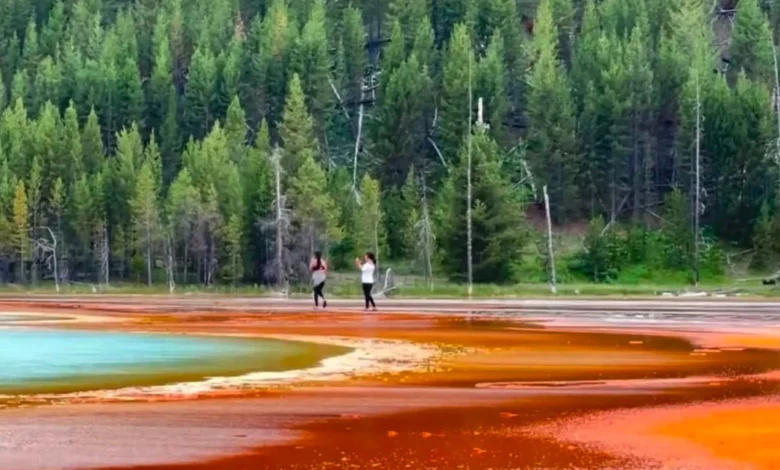
Two tourists have ignited widespread outrage after deliberately venturing onto the delicate and dangerously hot surface of the Grand Prismatic Spring in Yellowstone National Park, seemingly in pursuit of photographs. The reckless act, which defied explicit warning signs and disregarded the severe risks involved, not only endangered the individuals but also threatened the unique microbial ecosystems that paint the spring with its iconic vibrant colors.
Witnesses described the alarming scene unfolding around 7 P.M. on Sunday evening. Tanya Saueressig, who was present on the designated boardwalk overlooking the Grand Prismatic, recounted her disbelief. "I stopped in my tracks and was like, ‘Is that people? That can’t be people. Nobody’s that dumb,’" Saueressig told Cowboy State Daily. From her vantage point, the two women were observed casually walking onto the spring’s edge, seemingly unfazed by the inherent dangers.
The incident has drawn sharp criticism from park visitors, environmental advocates, and park officials alike, highlighting a persistent issue of visitor safety and environmental stewardship within the national park system. The Grand Prismatic Spring, a jewel of Yellowstone’s geothermal features, is a fragile environment where extreme temperatures and highly acidic conditions create a hostile habitat for most life forms, yet support thermophilic microorganisms that produce the dazzling spectrum of colors.
A Reckless Foray into a Deadly Landscape
The danger posed by the Grand Prismatic Spring cannot be overstated. The water temperature can reach a scalding 188 degrees Fahrenheit (87 degrees Celsius), capable of causing severe burns and even death within moments of contact. Warning signs are prominently posted throughout the area, explicitly detailing the extreme hazards and urging visitors to remain on designated boardwalks and pathways.
Saueressig and other onlookers expressed palpable fear, anticipating a tragic outcome. The memory of a recent incident, approximately a year prior, where a bison tragically fell into the Grand Prismatic and perished, was still fresh in many minds. This event underscored the unforgiving nature of the park’s thermal features and the fatal consequences of straying from safe zones.
The two women, reportedly equipped with their phones, were seen pausing to take selfies and photographs, a stark contrast to the perilous environment they had entered. Their actions suggest a profound disconnect from the reality of the danger and the ecological significance of the area. Saueressig described their demeanor as "totally oblivious to what was right under their feet," emphasizing the damage inflicted with every step. "You’re causing so much damage with every step you take, and you don’t care," she lamented, her voice conveying a mixture of anger and bewilderment.
Ecological Devastation and Unseen Damage
Beyond the immediate threat to human life, the women’s trespass posed a significant threat to the microbial mats that are responsible for the Grand Prismatic Spring’s breathtaking coloration. These mats are complex communities of thermophilic bacteria and archaea, each thriving at different temperature gradients and producing pigments that create the vivid blues, greens, yellows, oranges, and reds. Walking on these mats disrupts their delicate structure, potentially killing them and altering the spring’s appearance for years to come.
The Grand Prismatic Spring is renowned for its vivid hues, a direct result of these specialized microorganisms. The deep blue center is due to the pure water, while the vibrant rings of color are produced by different species of thermophiles. For instance, orange and red colors are often associated with carotenoids produced by certain bacteria, while green and yellow hues can be attributed to chlorophyll and other pigments. The disturbance caused by human footprints can irrevocably damage these microscopic life forms, leading to a loss of biodiversity and a diminished aesthetic appeal of this natural wonder.
A Pattern of Disregard and the Role of "Thermal Trespassers"
This incident is not an isolated occurrence. Yellowstone National Park, with its myriad geothermal wonders, frequently grapples with visitors who disregard safety regulations and exhibit a lack of respect for the natural environment. Park officials have identified a specific type of behavior, often termed "thermal trespass," where individuals intentionally venture into hazardous thermal areas.
Greg Jackson, a former deputy chief of enforcement and security at the National Park Service, offered insight into the mindset of those who engage in such behavior. "Some people see the world differently than the mainstream," Jackson explained to Cowboy State Daily. "You build an infrastructure that’s dedicated to the 99.9% of people that don’t do this, and then you get people who don’t see that infrastructure or decide it doesn’t apply to them." This perspective suggests a fundamental disconnect or a perceived immunity from the rules and consequences that govern the majority.
The penalties for thermal trespass in Yellowstone are severe, reflecting the gravity of the offense. These can include substantial fines, a ban from entering the park, and even jail time. Despite these deterrents, the allure of a unique photograph or an ill-advised dare seems to compel some individuals to take extreme risks.
A Timeline of Incidents and Growing Concerns
The Grand Prismatic Spring has been the site of several concerning incidents in recent years, underscoring the ongoing challenge of visitor safety. While the exact date of the bison’s fall is not specified in the initial report, it occurred approximately a year prior to the current incident. This event, where a large animal succumbed to the thermal waters, served as a stark, albeit tragic, reminder of the spring’s lethal nature.
More recently, earlier in the month of July, a separate incident at Yellowstone garnered significant attention. A grandfather was filmed being violently tossed several feet into the air by a bison. The footage showed the man pausing to take a photograph moments before the encounter, highlighting a disturbing trend of individuals prioritizing photographic opportunities over situational awareness and personal safety in wildlife-rich environments.
These recurring events paint a concerning picture of visitor behavior within Yellowstone and other national parks. The park’s popularity, while beneficial for tourism and appreciation of natural beauty, also presents a continuous challenge in managing visitor access and ensuring adherence to safety protocols.
Official Responses and Broader Implications
While the initial report from Cowboy State Daily did not specify whether the two women were identified or reported to park rangers, it is highly probable that park authorities are investigating the incident. Yellowstone National Park Service typically employs a combination of law enforcement rangers, interpretive rangers, and volunteer patrols to monitor visitor behavior and enforce regulations.
The implications of such disregard for park rules extend beyond the immediate safety risks. The damage to the microbial mats at the Grand Prismatic Spring could have long-term ecological consequences, potentially altering the visual appeal and scientific value of this iconic landmark. Furthermore, these incidents can foster a sense of frustration and disappointment among responsible visitors who are committed to preserving the park’s natural and cultural heritage.
The constant need for enhanced enforcement, public education campaigns, and visitor management strategies within national parks like Yellowstone is evident. The park’s infrastructure, including boardwalks and viewing platforms, is designed to provide safe access to its most spectacular features. When these are circumvented, it not only endangers individuals but also undermines the efforts to protect these fragile environments for future generations.
The Grand Prismatic Spring, a testament to the Earth’s dynamic geological processes and the resilience of life in extreme conditions, deserves the utmost respect and careful observation. The actions of these two tourists serve as a potent reminder that the pursuit of a photograph should never supersede the preservation of life and the integrity of our natural world. As Yellowstone continues to draw millions of visitors each year, the challenge remains to strike a balance between accessibility and conservation, ensuring that these invaluable landscapes are protected for all to appreciate responsibly.