Demystifying the Phenomenon of Angel Numbers: History, Meaning, and Cultural Impact

The modern digital landscape has given rise to a myriad of esoteric trends, yet few have integrated themselves quite as seamlessly into daily modern life as the phenomenon of "angel numbers." From receipts totaling $11.11 to digital clocks flashing 3:33, recurring numerical sequences have captured the public imagination. Far from being restricted to esoteric bookshops or fringe spirituality, these repeating patterns—often encountered on license plates, phone numbers, and street signs—are increasingly discussed across mainstream social media platforms as markers of mindfulness and divine communication.
To understand the current cultural footprint of angel numbers, experts point to a blend of ancient numerological traditions, modern self-help publishing, and contemporary psychological concepts of synchronicity. While skeptics attribute the frequent noticing of these sequences to cognitive biases, millions of practitioners find profound personal meaning, comfort, and a heightened sense of self-awareness within these numerical coincidences.
Historical Evolution: From Pythagorean Mysticism to Modern Metaphysics
The human impulse to assign meaning to numbers is hardly a recent invention. Historical records trace the formal study of numerology back to ancient Greece and the followers of the philosopher and mathematician Pythagoras. Pythagorean numerology was rooted in the belief that the universe operates according to mathematical laws and that numbers possess inherent spiritual, moral, and metaphysical properties. In this early framework, even numbers were traditionally categorized as feminine and odd numbers as masculine, while specific integers held distinct cosmic responsibilities, such as the number four representing justice and the number ten symbolizing ultimate perfection.
Over subsequent centuries, various cultures developed their own systems of number symbolism, intersecting with traditions such as the Jewish Kabbalah (gematria) and various astrological systems. However, the contemporary vernacular of "angel numbers" stems from a distinct late-20th-century spiritual movement.
The term and its modern interpretations were popularized primarily by author Doreen Virtue in a series of spiritual guidebooks published during the late 1990s and early 2000s, including Angel Numbers, Angels 101, and Messages from Your Angels. Virtue’s work synthesized traditional numerology with contemporary angelology, proposing that celestial beings use repetitive number sequences as a subtle, non-intrusive method to communicate guidance, reassurance, and warnings to humanity. Though Virtue later stepped away from the new-age publishing industry, her taxonomy of numerical meanings laid the foundational framework for how millions interpret these sequences today.
The Psychology of Synchronicity and Pattern Recognition
To comprehend why angel numbers resonate so deeply, contemporary spiritual practitioners and researchers often reference the concept of "synchronicity," a term coined by Swiss psychiatrist Carl Jung. Synchronicity describes circumstances that appear meaningfully related yet lack a causal connection.
Renowned author and holistic health advocate Deepak Chopra has frequently addressed this phenomenon, noting that synchronicity implies a higher intelligence organizing events so that unexpected meaning emerges. "If you think of a word and the next minute someone on TV says the word, you didn’t create the coincidence, but something did," Chopra observed in his analysis of meaningful coincidences.
From a cognitive science perspective, however, the human brain is naturally hardwired for pattern recognition—a survival mechanism known as apophenia, or the tendency to perceive meaningful connections between unrelated things. Psychologists point to the Baader-Meinhof phenomenon, or frequency illusion, to explain why an individual who begins noticing the number 777 will suddenly see it everywhere. Once the brain is primed to look for a specific sequence, it filters out mundane numerical data and highlights instances of the target sequence, creating a powerful illusion of omnipresent messaging.
Despite these psychological explanations, proponents argue that the scientific mechanism behind how the brain notices the numbers does not invalidate the subjective utility of the practice. For many, noticing an angel number functions as an organic prompt for mindfulness—a moment to pause, assess one’s current emotional state, and reflect on personal intentions.
Decoding the Sequences: Common Angel Numbers and Their Traditional Meanings
Within contemporary numerology, different multi-digit sequences are believed to carry distinct vibrations and specific messages. While interpretations vary slightly depending on the practitioner, several consensus meanings have emerged regarding the most common sequences:
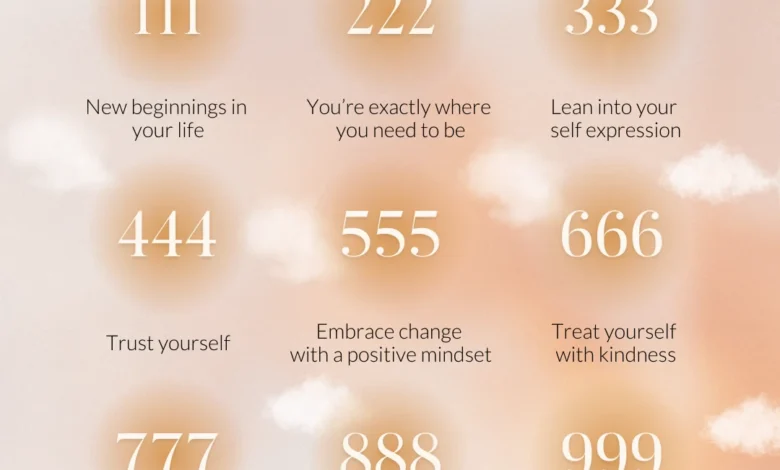
- 111: Widely interpreted as a green light from the universe, this sequence signifies new beginnings and encourages individuals to step into their self-confidence, set clear intentions, and focus on personal growth.
- 222: Associated with balance, harmony, and alignment, seeing this sequence is often viewed as reassurance that an individual is exactly where they need to be, emphasizing trust in oneself and interpersonal relationships.
- 333: Tied to creativity and self-expression, the number three serves as a prompt to lean into collaborative energy, embrace unique talents, and think unconventionally.
- 444: Representing stability and inner wisdom, sequences of fours suggest that hard work is paying off and that a solid foundation is being built for future endeavors.
- 555: Often viewed as a harbinger of change, this sequence indicates that a curveball or turning point is approaching, encouraging individuals to embrace disruption with a positive mindset.
- 666: Far from carrying traditional superstitious dread in modern angel number contexts, this sequence emphasizes emotional support, empathy, and self-kindness, encouraging individuals to reframe negative thoughts and seek comfort.
- 777: Linked to intuition and spiritual alignment, sevens suggest that it is time to let go of future anxieties and trust one’s instincts, frequently associated with upcoming good fortune.
- 888: Resembling the infinity symbol, eights represent an endless flow of abundance and monetary wealth, making it a favored sequence for manifestation practices.
- 999: As the final single digit, nines signify completion, signaling that a chapter, relationship, or job is drawing to a close, thereby clearing the path for fresh starts.
Integration Into Modern Wellness Culture
The resurgence of angel numbers aligns with a broader cultural shift toward holistic wellness, mental health awareness, and esoteric practices such as tarot reading and astrology. As younger demographics increasingly seek out personalized frameworks for meaning-making outside of traditional institutional religion, numerology offers an accessible, highly customizable tool for introspection.
Experts in cultural trends note that practices like journaling and meditation frequently intersect with angel number observation. When individuals repeatedly encounter a specific sequence, wellness practitioners often recommend recording the time, emotional context, and surrounding events in a journal. This meditative pause allows individuals to anchor themselves in the present moment, transforming a casual numerical sighting into an exercise in self-reflection.
Broader Implications and Sociological Impact
While some critics dismiss angel numbers as harmless confirmation bias or commercialized spirituality, sociologists view the trend as a symptom of a larger desire for agency and connection in an increasingly automated world. In an era dominated by algorithms, data points, and digital clocks, reclaiming numbers as spiritual signposts allows individuals to humanize their daily routines.
Ultimately, the enduring appeal of angel numbers lies in their inherent subjectivity. Whether viewed as divine messages from a higher power, psychological prompts for mindfulness, or simple instances of serendipity, the practice requires no formal initiation or specialized expertise. By encouraging individuals to pause, reflect, and center their intentions amidst the rush of daily life, angel numbers continue to serve as a modern anchor for introspection and personal growth.