3D Weaving Revolution: unspun’s Vega Platform Poised to Transform Global Apparel Manufacturing, Bringing Production Back Home


The global apparel industry stands on the precipice of a significant transformation, driven by technological innovation, shifting geopolitical landscapes, and an urgent demand for sustainability. At the forefront of this impending shift is unspun, a deep-tech company whose pioneering 3D weaving technology, the Vega platform, promises to fundamentally alter how woven garments are produced. Spearheaded by CEO Arne Arens, a seasoned executive from leading brands like The North Face and Boardriders, unspun is not merely introducing a new machine but proposing a paradigm shift towards localized, on-demand manufacturing that dramatically reduces waste, lead times, and environmental impact.
The Global Apparel Crisis: A Call for Innovation

For decades, the apparel industry has operated on a deeply entrenched model characterized by long lead times, massive overproduction, and an increasingly fragmented global supply chain. Brands typically place orders 9 to 12 months in advance, relying on speculative forecasts that often miss the mark, leading to significant financial and environmental waste. This system, largely driven by the pursuit of low-cost labor in Asia, has resulted in a staggering amount of unsold inventory and textile waste. Industry reports estimate that as much as 30% of all clothing produced globally is never sold, contributing to landfills and incinerators. Furthermore, the traditional flat-fabric weaving process, followed by cutting and sewing, generates an average of 15-20% fabric waste on the cutting room floor alone.
The inherent fragility of this model has been exposed and exacerbated by recent global events. Geopolitical tensions, such as escalating tariffs and trade disputes, coupled with disruptions like the COVID-19 pandemic and ongoing conflicts, have highlighted the risks associated with distant and complex supply chains. Brands face increased shipping costs, unpredictable delays, and heightened regulatory scrutiny regarding ethical labor practices and environmental footprints. These conditions have created a strong mandate for state-level investment in domestic manufacturing infrastructure, compelling companies to reconsider their production strategies and seek more resilient, agile, and sustainable alternatives.
unspun’s Genesis: From Custom Jeans to Industrial Revolution

unspun’s journey began with a bold vision: to produce garments only when a customer desired them, eliminating the costly and wasteful cycle of overproduction. In its nascent stages, the company operated as a direct-to-consumer brand, offering custom-fit jeans. This consumer-facing initiative, launched several years prior to the current developments, served as a crucial proving ground for its underlying technology. The original premise was simple yet radical: by making a pair of custom-made jeans only after an order was placed, unspun demonstrated the viability of an on-demand model. This initial experiment allowed the company to validate its core conviction that manufacturing should be demand-driven, not speculative.
The evolution from a niche D2C brand to a technology company poised for industrial-scale disruption marks a critical turning point. Arne Arens’s arrival as CEO in early 2026, following a distinguished career as Global Brand President at The North Face (2017-2021) and CEO of Boardriders (owner of Quiksilver, Billabong, Roxy, and DC Shoes), signaled a strategic pivot. Arens’s extensive experience on the brand side of the apparel industry provided him with an intimate understanding of the systemic inefficiencies and challenges that unspun’s technology aims to resolve. His transition from leading global brands to steering a deep-tech startup underscores the transformative potential he sees in 3D weaving, moving from product design and marketing to the very heart of production innovation.
Vega: The Core of 3D Weaving Technology

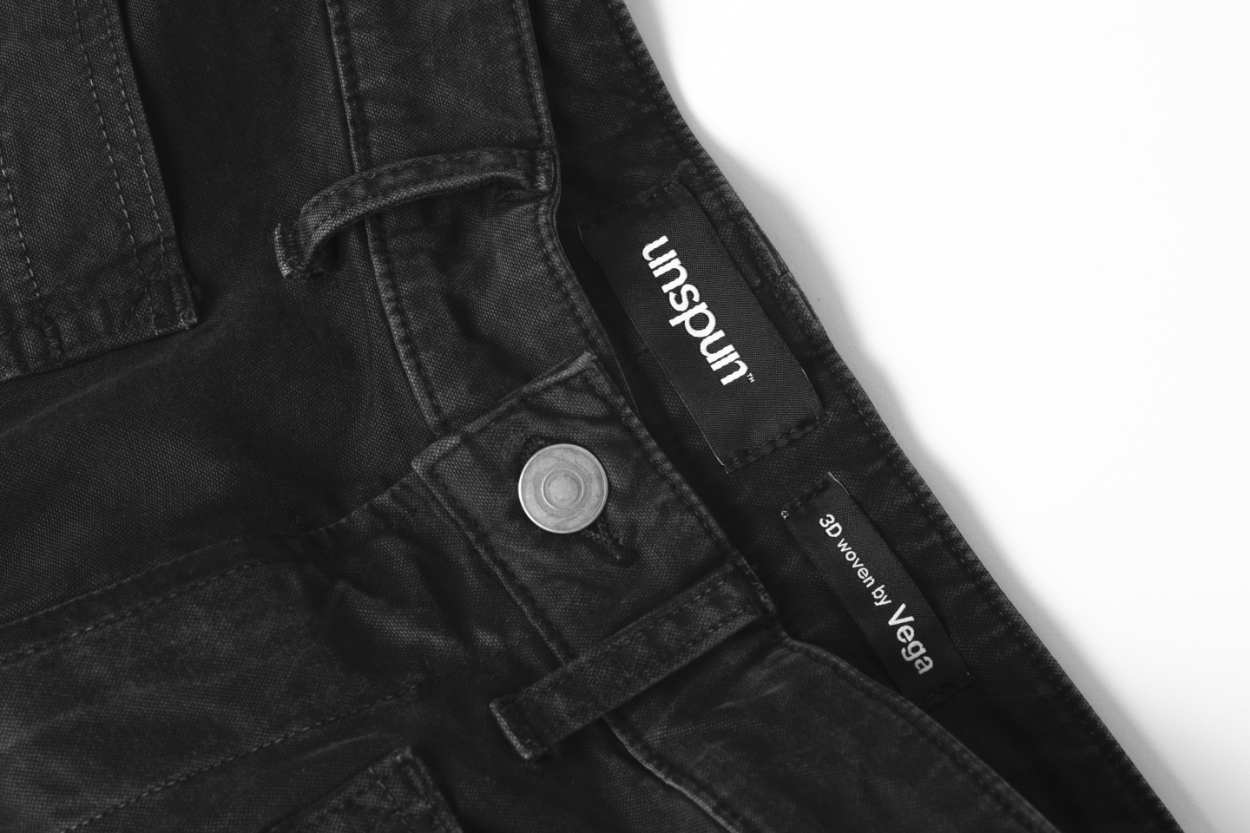
At the heart of unspun’s offering is the Vega platform, a revolutionary 3D weaving machine that redefines the production of woven garments. Unlike traditional weaving, which produces flat fabric that is then cut and sewn into shapes, Vega directly weaves three-dimensional garment components, such as a trouser leg, from yarn. This "yarn-to-fabric-to-shape" process is a significant departure from conventional methods.
The Vega machine utilizes thousands of individual yarns, interlacing warp and weft directly into a seamless tubular structure. Crucially, this circular weaving motion allows for dynamic changes in geometry and diameter during the process – widening where needed, tapering where appropriate. This eliminates the need for pattern cutting, a major source of material waste in conventional apparel manufacturing. The result is a truly seamless woven garment, a feat previously unachieved at scale for woven fabrics.
One of Vega’s most compelling attributes is its speed and cost-effectiveness. While 3D knitting technologies, such as those used for seamless knit constructions like Nike Flyknit uppers, have demonstrated the potential of direct-to-shape production, they have historically been slower and confined to higher price points, limiting their broader commercial adoption. unspun’s Vega, by contrast, can produce a pair of trouser legs in approximately eight minutes. This rapid production capability positions 3D weaving as a scalable and economically viable alternative for mass-market applications, not just premium products. This high speed, combined with automation, fundamentally challenges the labor arbitrage model that has long favored offshore manufacturing.

Economic & Environmental Imperatives: A Compelling Business Case
The implications of unspun’s technology extend far beyond mere manufacturing efficiency, offering substantial economic and environmental benefits.
From an economic standpoint, the reduction in lead times is paramount. By compressing the production cycle from 9-12 months to 1-2 months, unspun’s model drastically improves forecasting accuracy. This directly translates into a significant reduction in overproduction and, consequently, fewer markdowns. Industry data suggests that an average apparel retailer discounts around 40% of its seasonal units. With unspun’s model, brands can achieve forecasting accuracy closer to industry bests, such as Zara’s reported 15% discount rate on its European-produced inventory. This shift alone can yield a 400-500 basis point improvement in gross margin for brands. Additional savings accrue from the elimination of tariffs and reduced transportation costs associated with localized production.

For manufacturers, the financial upside is equally compelling. The automation inherent in the Vega platform collapses multiple production steps – from flat fabric weaving to cutting and sewing – into a single, streamlined process. This not only reduces labor dependency but also significantly cuts material costs by 50-60%, as there is no cutting waste. Over a four-to-five-year period, manufacturers adopting unspun’s technology could potentially double their operating margins compared to the legacy supply chain.
Beyond the financial gains, the environmental impact is profound. By eliminating cutting waste, drastically reducing overproduction, and minimizing long-distance transportation, unspun’s system is projected to halve the carbon footprint of the traditional apparel supply chain. This aligns with growing consumer demand for sustainable products and helps brands meet increasingly stringent environmental regulations, positioning them as leaders in responsible manufacturing.
Building a New Supply Chain: Partnerships and Deployment

unspun is actively working to overcome the "chicken-and-egg" dilemma that often plagues new manufacturing technologies: manufacturers are hesitant to invest without guaranteed demand, while brands are reluctant to commit without established infrastructure. To address this, unspun is forging strategic partnerships across the supply chain, creating a "triangle" of collaboration between itself, brands, and manufacturers.
The company has garnered significant traction, securing letters of support from major retailers like REI Co-op and Walmart in the United States. These commitments signal a strong industry interest in reshoring and modernizing apparel production. Inferred statements from these retailers suggest their motivation stems from a desire for greater supply chain resilience, faster speed-to-market, reduced costs, and enhanced sustainability credentials, all of which resonate with their corporate values and consumer expectations.
Internationally, unspun is in advanced conversations with Arvind, a vertically integrated apparel manufacturer in India known for working with global brands like Gap, Levi’s, and PVH. Arvind’s interest underscores the technology’s global applicability, even in regions traditionally dominant in conventional manufacturing. Similarly, Japanese brand Muji has engaged in advanced sample development with unspun, indicating a readiness to integrate 3D weaving into its product lines.

Domestically, unspun is making tangible strides. The company has announced its intent to build a manufacturing facility in New Mexico, leveraging state government support for advanced manufacturing initiatives. This demonstrates how government subsidies can play a crucial role in de-risking initial investments and fostering the rebirth of domestic industrial capabilities. Furthermore, unspun is conducting pilots from its micro-factory in Emeryville, California, which houses seven Vega machines. These pilots, involving brands such as Filson, Patagonia, J.Crew, and Banana Republic, offer a low-risk entry point for brands to test the technology, evaluate product quality, and gauge consumer uptake before committing to larger orders. This multi-pronged approach is essential for building the confidence and infrastructure needed for widespread adoption.
The Future Workforce: Redefining Manufacturing Jobs
A critical aspect of unspun’s vision involves the creation of skilled manufacturing jobs in Western markets, countering the decades-long trend of offshore production. While automation inevitably changes the nature of work, unspun argues that its technology will lead to a net positive impact on job creation in these regions. The jobs being created are fundamentally different from the entry-level sewing positions that left decades ago. Instead, they are higher-skilled industrial roles, commanding competitive wages, focusing on textile technicians, maintenance engineers, and quality control specialists.

Concerns about automation replacing human jobs are valid, as highlighted by recent industry surveys indicating headcount reductions in areas like pattern-making due to AI investments. However, unspun’s model actually elevates the importance of certain specialized skills. Every garment produced by the Vega machine requires meticulous digital engineering beforehand, encompassing 3D geometry, weave structure, and construction. This means that pattern-making and 3D design expertise do not disappear; rather, they become more critical and valuable. The product file, created by these skilled professionals, effectively becomes the machine’s instruction set. This shift transforms design from a mere aesthetic pursuit to a direct driver of automated production, ensuring these specialized skills remain integral to the evolving manufacturing ecosystem.
Vision for 2036: A Decentralized, On-Demand Future
Looking a decade ahead, Arne Arens envisions a radical transformation of apparel production for woven garments. The single most significant metric to change will be the elimination of overproduction. The industry will move towards an on-demand, custom-made manufacturing model. This future integrates unspun’s core innovation – direct 3D weaving – with the original premise of personalized fit, leading to a system where garments are produced precisely when and where they are needed, tailored to individual consumer preferences.
This paradigm shift implies a decentralized manufacturing landscape. Instead of a few massive, distant factories, the future could see a network of smaller, regional hubs strategically located closer to consumer markets. While the notion of a 3D printer in every home, as once imagined for other technologies, might be a step too far for apparel, a highly distributed model with micro-factories or production nodes throughout countries like the US and Europe is entirely plausible. These hubs would enable rapid response to market trends, significantly reduce inventory risk, and foster a more sustainable and economically resilient industry. unspun’s technology is positioned as a key facilitator of this fundamental change, offering a tangible path from a wasteful mass-manufacturing past to an agile, custom, and sustainable future.
The journey to this future is complex, requiring continued collaboration between technology innovators, brands, manufacturers, and government entities. However, with compelling economic incentives, profound environmental benefits, and a clear path to reshoring skilled jobs, unspun’s 3D weaving technology represents a powerful force for change in an industry long overdue for disruption. The discussions currently underway with global brands and manufacturers, coupled with strategic governmental support, suggest that the foundations for this new era of apparel production are already being laid. The coming years will reveal the extent to which this vision transforms the fabric of global commerce and consumption.