Freudenberg Apparel expands manufacturing capabilities in Vietnam with local interlining production in Long Thanh

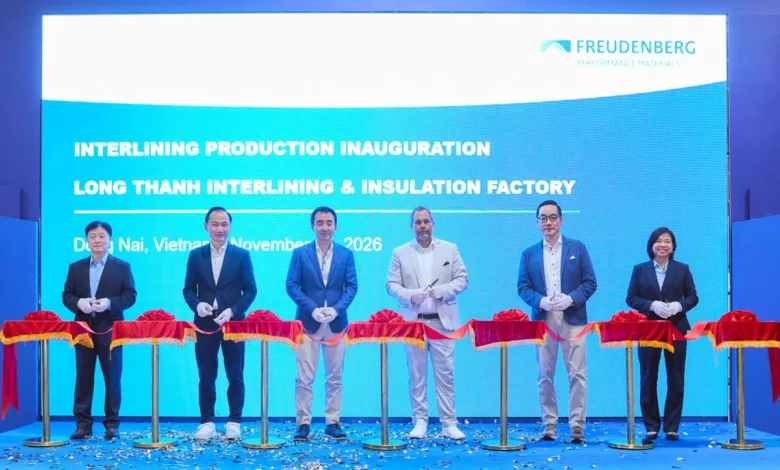
Freudenberg Apparel has officially marked a significant milestone in its regional strategy by inaugurating a new local interlining production line at its existing manufacturing facility in Long Thanh, Dong Nai, Vietnam. This expansion, announced on November 23, 2026, represents a strategic move to localize supply chains for apparel manufacturers operating in Southeast Asia. By integrating the production of polyester bi-elastic woven interlinings and weft-inserted interlinings directly into its Vietnamese hub, the company aims to slash lead times for regional clients to approximately one week, effectively bypassing the logistical complexities associated with trans-border shipments.
A Strategic Pivot Toward Regional Autonomy
The decision to enhance the Long Thanh facility comes at a time when the global apparel supply chain is undergoing a profound transformation. Historically, Southeast Asian manufacturers relied heavily on imported components from major hubs in China, South Korea, and Taiwan. However, the volatility of global shipping, fluctuating energy costs, and the increasing demand for "speed-to-market" in the fashion sector have forced companies to rethink their geographical dependencies.
By establishing a full-service production site near Ho Chi Minh City, Freudenberg is aligning itself with the current industry trend of near-shoring. This facility will serve as a dual-purpose center, producing not only the essential interlinings required for structure and durability in formalwear, sportswear, and uniforms but also the company’s comfortemp line of loose-fill and fiberball thermal insulation.
The Chronology of Expansion
Freudenberg’s investment in Vietnam did not happen in a vacuum. The company has spent the better part of the last decade systematically building out its Asian manufacturing footprint.
- Early 2010s: Freudenberg established its initial presence in Vietnam, primarily focusing on distribution and basic assembly to support the growing garment export sector in the region.
- 2018–2022: The company began scaling its technical capabilities in the country, recognizing that Vietnam was emerging as a primary alternative to China for global garment brands seeking diversification.
- 2024: Planning for the expansion of the Long Thanh plant began in earnest, with feasibility studies conducted to assess the technical requirements for weaving and coating specialized interlinings.
- November 2026: The official inauguration of the new production lines takes place, marking the transition from a logistics and storage hub to a comprehensive manufacturing powerhouse.
Technical Specifications and Product Portfolio
The Long Thanh facility is engineered to produce high-performance textiles that meet global standards. The interlinings manufactured at this site are specifically designed for a wide range of applications, including:

- Business and Formalwear: Providing structural integrity, crisp lapels, and shape retention that survive repeated cleaning cycles.
- Casual and Premium Fashion: Offering soft, bi-elastic properties that allow for comfort without sacrificing the intended drape of the garment.
- Sportswear: Utilizing weft-inserted technology to provide the stability required for high-motion clothing without compromising the elasticity of synthetic performance fabrics.
Beyond interlinings, the inclusion of the comfortemp insulation line represents a shift toward vertical integration within the facility. By producing these materials in-house, Freudenberg ensures that the harmonized quality standards seen in their Chinese or Indian facilities are replicated identically in Vietnam, reducing the risk of batch-to-batch variation.
Industry Implications and Supply Chain Resilience
The impact of this expansion on the Southeast Asian textile landscape is significant. For local manufacturers, the "one-week lead time" promise is a transformative metric. In an industry where fashion cycles are compressed—sometimes moving from design to retail shelf in under six weeks—a delay in raw materials can be catastrophic.
Freudenberg’s move also serves as a hedge against geopolitical instability. By creating a self-sustaining network of regional hubs, the company is insulating its customers from regional trade disruptions. Jonathan Oh, the Senior Vice President and General Manager of Freudenberg Apparel, emphasized this during the inauguration: “Vietnam has become one of the apparel industry’s key manufacturing hubs, and many of our customers produce there. By manufacturing interlinings locally, we are closer to our customers and can supply them faster and strengthen supply chain resilience.”
This strategy of "localized manufacturing within a global network" allows Freudenberg to leverage the economies of scale inherent in their global research and development while maintaining the agility of a local supplier.
Supporting Data and Market Context
The Vietnamese apparel market has been one of the fastest-growing sectors in the national economy. According to recent trade data, Vietnam is currently the world’s second-largest exporter of apparel, trailing only China. In 2025 alone, the country saw a record volume of textile exports to the United States and the European Union, driven by free trade agreements and a shift in sourcing strategies by major global brands.
However, the industry has historically struggled with a high dependency on imported raw materials. Estimates suggest that up to 60% of fabric and component inputs for Vietnamese garments are imported. Freudenberg’s investment directly addresses this "raw material gap," providing a domestic solution that reduces the carbon footprint associated with long-distance shipping and supports the country’s push toward more sustainable, integrated manufacturing.

Perspectives from the Leadership Team
The inauguration ceremony was attended by a high-level delegation from both the Vietnamese operations and the German headquarters, signaling the importance of this project to the parent company. Management team members present—including Kwangwoo Han, Edmond Ng, Masahiro Nakano, Andreas Raps, Jonathan Oh, and Duyen Tran—underscored the company’s commitment to "Global Expertise, Local Action."
For these leaders, the Long Thanh plant is not just a factory; it is a laboratory for quality assurance. The insistence on "harmonized specifications" means that a garment brand sourcing from the Vietnam plant receives the exact same physical performance—stretch, recovery, and wash-fastness—as they would if they were sourcing the material from a Freudenberg facility in South Korea or Germany. This consistency is the primary value proposition for global brands that rely on multi-country manufacturing to fill their global inventory.
Future Outlook and Challenges
While the expansion is a positive development, the facility will face challenges in maintaining its growth trajectory. These include the rising cost of labor in Vietnam’s industrial zones and the increasing regulatory pressure regarding environmental sustainability in the textile sector.
Freudenberg appears to be accounting for these factors by investing in high-efficiency, automated machinery that reduces waste and energy consumption. As the global textile industry moves toward a "circular economy" model, the longevity of these interlinings—which extend the life of garments—will likely become an even more attractive selling point for environmentally conscious consumers.
In conclusion, the expansion of the Long Thanh facility marks a turning point in the professionalization of Vietnam’s textile supply chain. By positioning itself at the intersection of local proximity and global technical standards, Freudenberg Apparel has solidified its role as an indispensable partner for the next generation of garment manufacturers in Southeast Asia. As the facility hits full operational capacity, the ripple effects on lead times and supply chain stability will likely set a new benchmark for other raw material suppliers in the region.