Victoria’s Secret Has a 2030 Climate Target Its Suppliers Hold the Plan

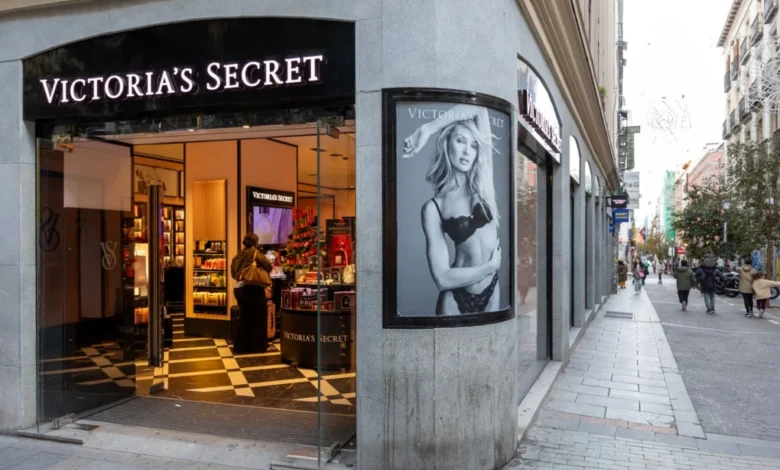
Victoria’s Secret & Co., one of the world’s most recognizable intimate apparel and beauty retailers, faces a critical juncture in its corporate sustainability journey. Having established an ambitious baseline goal to significantly reduce its greenhouse gas (GHG) emissions by the end of the decade, the company’s executive leadership has increasingly pivoted toward supply chain accountability. While the brand can directly manage emissions generated by its corporate offices and directly operated retail stores—accounting for a fraction of its total footprint—the vast majority of its environmental impact is embedded deep within its manufacturing and supply chain network. Consequently, achieving the corporate 2030 climate targets is no longer merely a public relations or compliance objective; it is an operational challenge whose success depends entirely on the actions, investments, and cooperation of its global supplier base.
The evolution of Victoria’s Secret into an independent, publicly traded entity in 2021—following its spin-off from L Brands—coincided with a broader corporate reckoning regarding environmental, social, and governance (ESG) standards within the fashion industry. Investors, consumers, and regulatory bodies are increasingly holding fashion brands accountable for their entire value chains, particularly Scope 3 emissions, which encompass all indirect emissions that occur in a company’s value chain, including upstream manufacturing, raw material processing, and transportation. For intimate apparel brands, the production of synthetic fibers, textile dyeing, finishing processes, and assembly operations are remarkably energy-intensive. As Victoria’s Secret maps out its trajectory toward 2030, the company’s environmental strategy highlights a stark reality of modern retail: a brand’s sustainability commitments are only as credible as the factories that manufacture its goods.
Understanding the Genesis of Victoria’s Secret 2030 Climate Commitments
The framework of Victoria’s Secret’s environmental targets was developed in alignment with global scientific consensus and frameworks such as the Science Based Targets initiative (SBTi). When the company formalized its sustainability strategy post-spin-off, it joined a growing cohort of retail giants committing to limiting global warming to 1.5°C above pre-industrial levels, in line with the Paris Agreement. The core of the strategy centers on absolute reductions in greenhouse gas emissions across Scope 1 (direct operations), Scope 2 (purchased electricity and energy), and Scope 3 (supply chain and product lifecycle).
While Scope 1 and Scope 2 emissions are addressed through energy-efficient corporate headquarters, LED retrofitting in retail locations, and procurement of renewable energy certificates, they represent a minor percentage of the brand’s total carbon footprint. The overwhelming majority—frequently cited by apparel industry analysts as exceeding 90% for intimate apparel brands—resides in Scope 3. Within this category, Tier 1 suppliers (finished goods assembly) and Tier 2 suppliers (textile mills, dyeing, and printing facilities) are the primary sources of thermal energy consumption and electricity usage.
To meet the 2030 target, Victoria’s Secret established baseline measurements in the early 2020s, identifying key geographical hubs where its manufacturing operations are concentrated. These hubs span regions across Asia and Central America, where local energy grids historically rely heavily on fossil fuels such as coal and natural gas. Transitioning these localized industrial ecosystems toward low-carbon operations requires a massive coordinated effort, substantial capital allocation, and technical expertise that individual suppliers may lack without direct brand partnership and intervention.
The Crucial Role of Suppliers: Translating Policy into Practice
The phrase "suppliers hold the plan" accurately describes the operational dependency defining modern corporate climate strategies. Victoria’s Secret cannot unilaterally alter the energy matrices of foreign manufacturing facilities, nor can it force factory owners to adopt capital-intensive green technologies without aligning economic incentives. For the 2030 targets to move from theoretical models on corporate slide decks to measurable reductions in carbon output, suppliers must actively participate in decarbonization initiatives.
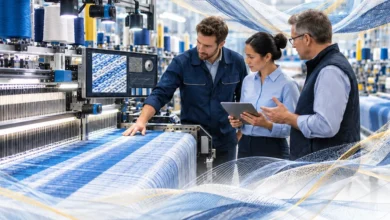
Primary drivers of supplier-led climate action include energy efficiency audits, the upgrading of legacy machinery to modern, energy-efficient alternatives, and the transition to renewable thermal energy sources. In textile manufacturing, wet processing—which includes bleaching, dyeing, and washing—requires significant thermal energy, typically generated via on-site coal or gas boilers. Encouraging suppliers to replace these systems with biomass, electrification, or high-efficiency heat pumps is paramount. However, these upgrades require substantial upfront capital expenditures (CapEx).
Many suppliers within the global apparel supply chain operate on thin profit margins, making discretionary investments in green technology difficult to justify without financial backing, favorable loan terms, or guaranteed long-term contracts from buyers like Victoria’s Secret. Consequently, the brand’s strategy relies heavily on capacity building, financial incentives, and collaborative educational programs. By providing technical assistance and facilitating access to green financing mechanisms, Victoria’s Secret aims to lower the barrier to entry for suppliers willing to overhaul their operations.
Chronology of Sustainability Integration at Victoria’s Secret
The trajectory of Victoria’s Secret’s environmental accountability has evolved through distinct phases over the past decade, shaped by shifting consumer expectations and regulatory landscapes.
2016–2019: The Pre-Spin-Off Era
Operating under L Brands, Victoria’s Secret primarily focused on basic compliance, waste reduction in packaging, and localized energy-saving measures in stores. Scope 3 emissions reporting was rudimentary, and supply chain transparency was limited primarily to labor standards and basic social compliance audits, with environmental metrics playing a secondary role.
2021: Corporate Independence and Strategic Reset
Following its separation from L Brands, the newly independent Victoria’s Secret & Co. established an independent ESG governance structure. Leadership recognized that institutional investors increasingly view robust climate targets as a prerequisite for capital allocation. The company initiated comprehensive baseline carbon accounting across all operational tiers.
2022–2023: Setting the 2030 Roadmap
Victoria’s Secret formally articulated its sustainability strategy, aligning its emissions reduction targets with science-based methodologies. During this period, the company mapped its supply chain emissions, identifying Tier 1 and Tier 2 manufacturing partners with the highest carbon intensity. Engagement programs were launched to educate suppliers on greenhouse gas accounting and reporting protocols.
2024–2025: Implementation and Supplier Engagement
The focus shifted from target-setting to execution. The brand began introducing supplier engagement frameworks, offering resources, workshops, and collaborative platforms to help key manufacturing partners develop facility-level decarbonization roadmaps. Accountability mechanisms were integrated into vendor codes of conduct and procurement evaluations.
2026 and Beyond: The Race to the 2030 Milestone
As the midpoint of the decade approaches, Victoria’s Secret faces the ultimate test of its strategy. The remaining years require accelerated adoption of renewable energy across manufacturing hubs, verifiable reductions in Scope 3 emissions, and transparent reporting to satisfy external watchdogs and regulatory mandates.
Data and Industry Context: The Scope 3 Challenge in Intimate Apparel
To understand the magnitude of Victoria’s Secret’s challenge, one must examine the broader data landscape of the global apparel and textile industry. According to industry analyses by organizations such as the World Resources Institute and the Ellen MacArthur Foundation, the fashion sector accounts for approximately 2% to 8% of global greenhouse gas emissions. Within this footprint, material production and preparation—specifically polyester, nylon, and cotton cultivation and processing—generate the lion’s share of emissions.
Intimate apparel relies heavily on synthetic materials like elastane (spandex), nylon, and polyester to achieve stretch, durability, and comfort. The synthesis of these petrochemical-based fibers is inherently energy-intensive. Furthermore, the manufacturing of lace, microfiber, and molded foam cups involves complex multi-step chemical and mechanical processes housed across fragmented supply chains.
Data compiled from corporate sustainability disclosures across the retail sector indicates that brands failing to engage their top 20 emitting suppliers typically miss their Scope 3 reduction targets by wide margins. For Victoria’s Secret, which partners with dozens of major manufacturing conglomerates operating scores of individual factories, targeted intervention is not optional. Industry benchmarks suggest that achieving a 40% to 50% reduction in absolute Scope 3 emissions by 2030 requires:
- A transition of at least 30% of supplier factory energy sources to renewables by 2027.
- Comprehensive energy management systems installed across 80% of Tier 1 and Tier 2 facilities.
- Elimination of coal-fired boilers within the primary manufacturing partner network by no later than 2028.
These figures underscore why industry analysts maintain that the success of Victoria’s Secret’s climate plan resides almost entirely within the operational decisions of its manufacturing partners.
Stakeholder Perspectives: Brand Ambitions Versus Supplier Realities
The dynamic between global fashion brands and their manufacturing suppliers is complex and often fraught with competing economic pressures. While consumer-facing brands set ambitious public climate goals to satisfy regulatory pressures and changing consumer demographics, suppliers must navigate the immediate financial realities of factory floor operations.
From the perspective of Victoria’s Secret corporate leadership, establishing clear, science-based targets is essential for maintaining brand equity, complying with emerging legislative requirements in jurisdictions like the European Union (such as the Corporate Sustainability Due Diligence Directive), and mitigating long-term climate-related risks to raw material availability and supply chain stability. Leadership contends that sustainability and profitability must go hand-in-hand, positioning energy efficiency as a long-term cost-saving mechanism for suppliers rather than an added financial burden.
Conversely, manufacturing partners often voice pragmatic concerns regarding the pace and cost of transition. Many suppliers operate in developing economies where local infrastructure may not support a rapid transition to renewable energy—such as inadequate local grid capacity for solar or wind power procurement, or a lack of government subsidies for green technology upgrades. Suppliers frequently argue that if brands demand stringent environmental compliance, they must also provide commercial support, such as longer-term contracts, co-investments in green infrastructure, or pricing structures that absorb a portion of sustainable production costs.
Industry experts note that bridging this gap requires moving away from traditional, transactional buyer-supplier relationships toward deeply integrated strategic partnerships. Brands that successfully support their supply chains typically offer financial incentives, such as preferential ordering terms or direct financing partnerships with green funds, ensuring that the financial risk of decarbonization is shared equitably rather than shifted entirely downstream.
Broader Implications and Strategic Outlook for Victoria’s Secret
The implications of Victoria’s Secret’s 2030 climate strategy extend far beyond corporate compliance; they serve as a litmus test for the viability of sustainability commitments across the broader retail and intimate apparel sectors. As regulatory frameworks around the globe mandate stricter environmental transparency—penalizing greenwashing and requiring verified Scope 3 disclosures—companies that successfully empower their suppliers will secure a distinct competitive advantage.
Failure to meet these targets, however, carries significant risks. Beyond potential regulatory penalties and investor divestment, public scrutiny from non-governmental organizations (NGOs) and environmental watchdogs poses a constant reputational threat. In an era where modern consumers increasingly scrutinize the environmental credentials of their purchases, any perceived discrepancy between public climate pledges and actual supply chain performance can result in immediate brand damage and erosion of market share.
For Victoria’s Secret, the path forward requires sustained collaboration, rigorous data verification, and tangible economic support for its manufacturing partners. The 2030 climate target is an ambitious destination, but the roadmap is clear: the corporate office may set the vision, design the policies, and report the progress, but the ultimate architects of success are the factories, mill operators, and workers embedded deep within the supply chain. How effectively Victoria’s Secret can align its commercial relationships with its environmental ambitions will ultimately determine whether its 2030 climate goals become a realized achievement or a missed opportunity.