The Guardians of History Inside the Curated Antique Jewelry Collection of Andrea and La Plus Charmante

The intersection of personal heritage and professional curation has given rise to a unique niche in the global luxury market: the antique jewelry specialist who views themselves as a temporary custodian rather than a mere merchant. Andrea, the founder and curator behind the widely followed digital boutique La Plus Charmante, represents a growing movement of collectors who prioritize historical narrative, craftsmanship, and the preservation of rare artifacts over contemporary mass-market jewelry. Her collection, which spans from Georgian-era "Lover’s Eyes" to specialized French protection amulets, serves as a testament to the enduring value of tangible history in an increasingly digital world. This shift toward antique acquisition is not merely a matter of aesthetic preference but reflects a broader economic and cultural trend where consumers seek out assets with inherent scarcity and provenanced longevity.

The origins of Andrea’s immersion in the world of gemstones and precious metals can be traced to a dual influence within her family structure. Her mother’s advocacy for Native American rights led to an early exposure to the artistry and socio-political significance of indigenous jewelry makers, while her father’s interest in gemstone collecting provided a foundational education in mineralogy and the raw materials of the trade. This upbringing established a lifelong trajectory toward the appreciation of jewelry as more than ornamentation. For Andrea, jewelry was never a static object; it was a medium for storytelling and a repository of cultural values. This early exposure has culminated in a professional career characterized by a rigorous selection process that favors pieces that are "prohibitively expensive to make" by modern manufacturing standards, thereby emphasizing the technical superiority of historical goldsmithing and lapidary work.

A significant portion of Andrea’s collection is dedicated to specific historical motifs that require both an eye for detail and a deep understanding of Victorian and Georgian social customs. Among these, "Lover’s Eyes" hold a prominent place. These rare miniatures, which gained popularity in the late 18th and early 19th centuries, typically feature a single eye of a spouse, lover, or child painted on ivory and set into a brooch, ring, or locket. Historically, they allowed the wearer to carry a secret token of affection that remained anonymous to the casual observer. The presence of these items in a modern collection highlights a sophisticated level of connoisseurship, as authentic Lover’s Eyes are increasingly rare and subject to significant forgery in the secondary market. By focusing on such niche categories, Andrea positions her collection at the vanguard of historical preservation.

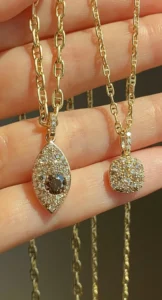
In addition to sentimental miniatures, the collection features a robust selection of "hand" motifs and French baby brooches. The hand motif, often referred to as the "Mano Figa" or the Victorian "hand of friendship," carried various meanings depending on the gesture or the items held by the hand (such as a flower or a ring). In the 19th century, jewelry was a complex language of symbols, and Andrea’s curation serves to decode these messages for a modern audience. Similarly, her interest in French baby brooches—traditionally used both as functional fasteners for bibs and as protective amulets to ward off the "evil eye"—points to a fascination with the domestic history of jewelry. These pieces represent a time when fine jewelry was integrated into the most mundane aspects of life, yet was crafted with a level of care that contemporary "fast fashion" cannot replicate.

The methodology of acquisition is a critical component of the La Plus Charmante narrative. Andrea identifies Paris as her primary "treasure hunting" ground, a choice supported by the city’s status as the historic heart of the European jewelry trade. The Marché aux Puces de Saint-Ouen and various specialized dealers in the 1st and 9th arrondissements offer access to inventory that has often remained within European families for generations. The logistical and expertise-based barriers to entry in these markets are high, requiring a nuanced understanding of French hallmarks, maker’s marks, and the specific alloys used in different eras. The choice of Paris also underscores the importance of "knowledgeable dealers" in the provenance chain, ensuring that the transition from one "guardian" to the next is documented and verified.

From an economic perspective, the rise of curators like Andrea coincides with a robust performance in the antique jewelry sector. According to market data from major auction houses such as Sotheby’s and Christie’s, the demand for "signed" period pieces and high-quality antique jewelry has seen a steady increase in value over the last decade. Investors are increasingly looking toward "portable wealth"—items that hold intrinsic value through their materials (gold, diamonds, precious stones) but also carry a "premium of rarity" due to their age and craftsmanship. Andrea’s philosophy of "finding new guardians for old treasures" aligns with this investment mindset, where the buyer is not just a consumer but a stakeholder in the preservation of an irreplaceable asset.

The transition from a corporate career to a full-time jewelry curator is another defining chapter in the chronology of La Plus Charmante. Andrea’s early professional years at the German media conglomerate Bertelsmann left a lasting impression on her collecting habits. This is most evident in her "most sentimental piece": an antique signet ring featuring a hand-carved hardstone intaglio with the German script for "Forget Me Not." The ring serves as a bridge between her past professional life and her current passion, illustrating how jewelry can trigger "happy nostalgia" and serve as a chronological marker for one’s own life stages. This emotional connection is a recurring theme among high-level collectors, who often cite the "soul" of an antique piece as its most compelling attribute.

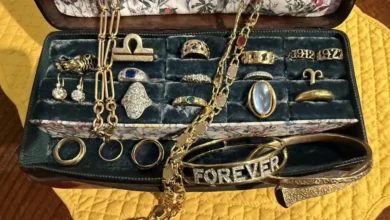
The practicalities of maintaining a high-value collection also present unique challenges, particularly regarding security and storage. Andrea refers to storage as her "bête noire," a common sentiment among collectors of high-value assets. The evolution of her storage strategy—from home-based boxes to professional bank vaults—reflects the increasing value and scale of her holdings. This "split" storage method, where a small selection of "everyday" jewelry is kept at home while the bulk of the collection is secured off-site, is a standard practice for serious collectors. It highlights the tension between the desire to wear and enjoy these historical pieces and the necessity of protecting them as financial and historical investments.

The broader implications of Andrea’s work extend into the realm of sustainability. The jewelry industry has faced significant scrutiny over the environmental and ethical impact of mining. By focusing on the secondary market and the "guardianship" of existing pieces, antique jewelry curators offer a sustainable alternative to the production of new luxury goods. This "circular economy" model in the jewelry sector is gaining traction among younger, environmentally conscious consumers who value the fact that antique pieces have a zero-carbon footprint in terms of modern mining and manufacturing. Furthermore, the durability of these items—exemplified by Andrea wearing her wedding set while surfing—demonstrates the superior build quality of historical craftsmanship compared to modern, mass-produced alternatives.

Analysis of the antique jewelry market suggests that the "curated" approach taken by individuals like Andrea is reshaping how consumers interact with history. Rather than visiting traditional, often intimidating brick-and-mortar antique shops, modern buyers are engaging with curators through social media platforms like Instagram. This democratization of expertise allows for a more personal and educational buying experience. Andrea’s tagline, "finding new guardians for old treasures," encapsulates this shift. It replaces the transactional nature of "buying and selling" with a sense of duty and continuity.

In conclusion, the story of Andrea and La Plus Charmante is more than a profile of a successful jewelry dealer; it is a case study in the modern valuation of history. Through her focus on specific motifs like Lover’s Eyes and French amulets, her commitment to sourcing from the historic markets of Paris, and her philosophy of guardianship, Andrea has built a collection that functions as a living archive. As the global market continues to move toward unique, sustainable, and story-driven assets, the role of the curator-guardian will likely become even more central to the luxury landscape. Her collection stands as a reminder that while the owners of these pieces are temporary, the stories and craftsmanship they represent are intended to endure for centuries. The antique signet ring, the Victorian hand, and the Georgian eye are not just accessories; they are "history you can hold in your hand," preserved for the next generation of guardians.
Related posts: