Eames Pavilion System Debuts at Triennale Milano as a Modern Evolution of Prefabricated Design

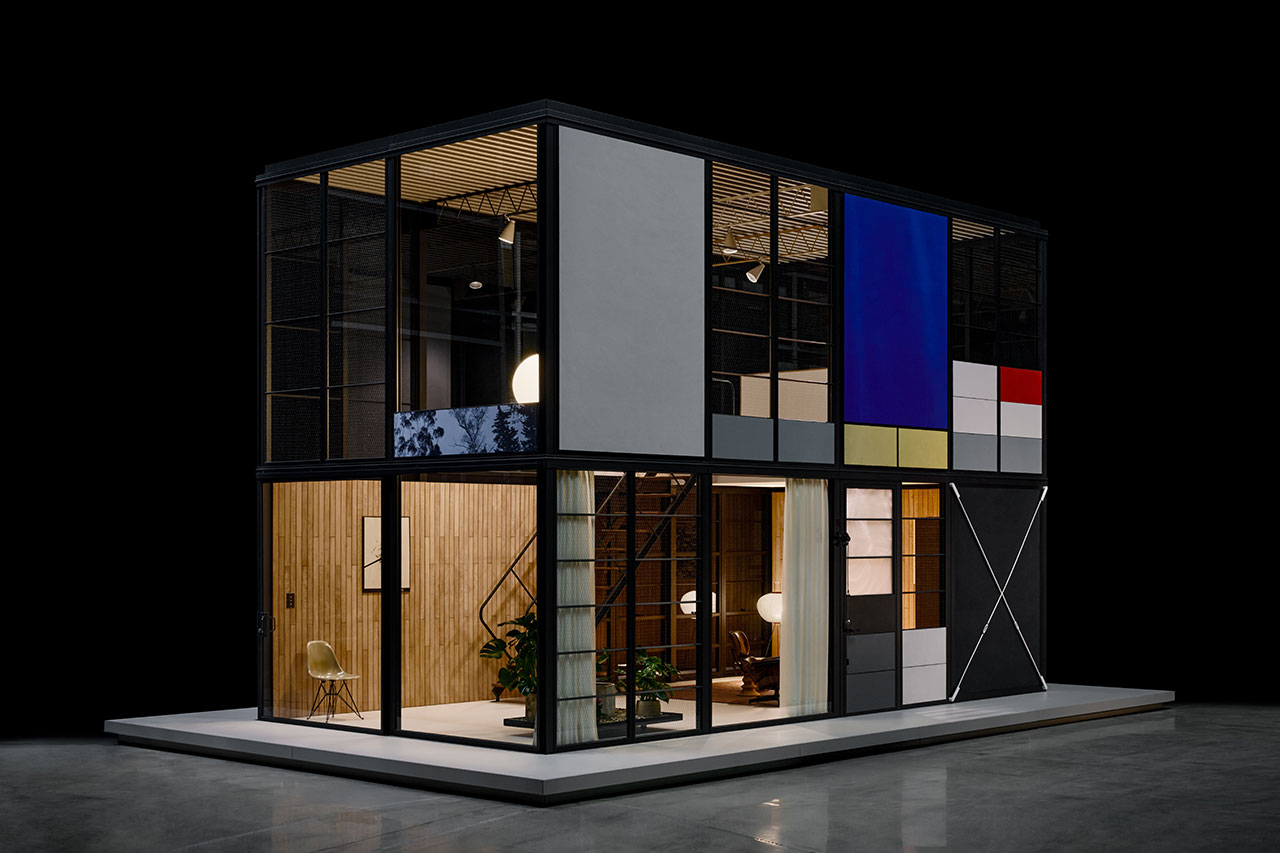
The Eames Pavilion System, a monumental collaboration between the Eames Office and the Spanish design firm Kettal, has officially premiered at the Triennale Milano, marking a transformative moment in the legacy of mid-century modernism. This architectural ecosystem represents the culmination of decades of theoretical work by Charles and Ray Eames, shifting their visionary concepts of prefabricated housing from experimental prototypes into a fully realized, scalable commercial product. By merging the Eameses’ historical focus on industrial materials with Kettal’s contemporary manufacturing prowess, the system offers a modular solution for human habitation that is as functional as it is aesthetically significant.
The Convergence of Heritage and Innovation
Charles and Ray Eames are names synonymous with the birth of modern ergonomics and the democratization of high design. Their work for Herman Miller, most notably the 1956 Eames Lounge Chair and Ottoman, established a precedent for how industrial processes could be harnessed to create objects of profound comfort and beauty. However, their ambitions often extended far beyond furniture. For the Eameses, the domestic environment was the ultimate design problem—a puzzle that required the structural rigor of Charles’s architectural training and the nuanced, artistic eye of Ray’s background in painting.
The Eames Pavilion System is the spiritual successor to the Case Study House program of the 1940s and 50s. While the Eames House (Case Study House No. 8) in Pacific Palisades remains a landmark of 20th-century architecture, it was always intended to be a prototype for a broader system of mass-produced housing. The debut at Triennale Milano brings this vision to the 21st century, offering a modular framework that utilizes traditionally industrial parts to create a cohesive, humane living or working environment.

Technical Specifications and Modular Philosophy
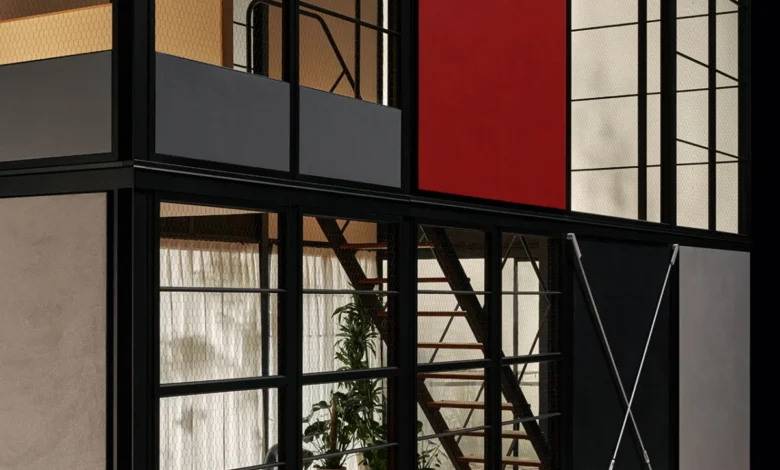
The system is designed as a series of "containers for life," utilizing a kit-of-parts approach that allows for near-infinite configurations. The structure is defined by a balance of transparency and privacy, featuring floor-to-ceiling glass panels interspersed with vibrant, solid inserts. These panels are available in custom configurations, allowing users to dictate the flow of light and the level of visibility according to the site’s requirements.
A key feature of the facade is its responsiveness to natural cycles. The windows are engineered to open wide, facilitating natural ventilation and a seamless connection between the interior and the external environment. This emphasis on "natural flows" ensures that the industrial aesthetic does not come at the cost of human comfort. The palette—a signature Eames combination of primary blues and yellows set against industrial blacks and greys—serves to soften the coldness of the metal framing, imbuing the structure with the "painterly" sensibility that Ray Eames championed throughout her career.

A Chronology of the Eames Prefabricated Vision
To understand the significance of the Eames Pavilion System, one must look at the timeline of the Eameses’ architectural exploration:
- 1945: The launch of the Case Study House program by Arts & Architecture magazine. Charles and Ray Eames begin designing a home that utilizes off-the-shelf industrial components.
- 1949: Completion of the Eames House (Case Study House No. 8). Originally designed as a bridge-like structure, it was reconfigured into the iconic dual-pavilion layout to better preserve the meadow on the site.
- 1950s-1970s: The Eames Office produces numerous unbuilt architectural studies, focusing on how modular systems could solve the post-war housing crisis. These designs emphasized the "system" over the individual "building."
- 1988: Eames Demetrios becomes the Director of the Eames Office, beginning a decades-long mission to preserve the archive while finding new ways to bring unreleased designs to life.
- 2020-2023: A strategic partnership is formed with Kettal, a brand known for its expertise in high-end outdoor structures and modular office systems.
- 2024: The Eames Pavilion System is unveiled at Triennale Milano, transitioning from a historical concept to a modern architectural product.
The Director’s Perspective: From Prototype to Product
Eames Demetrios, the grandson of Charles and Ray Eames and the Director of the Eames Office, has spent nearly 40 years managing the duo’s vast design estate. In his statement regarding the launch, Demetrios emphasized that this project is not a simple exercise in nostalgia or the creation of a "collector’s edition" facsimile.

"In the almost 40 years I have been Director of the Eames Office, I have been asked time and again whether it is possible to purchase a reproduction of the Eames House," Demetrios stated. "One-to-one replicas can be interesting, yet we were always holding out for something else—a true systems approach that was also international in its solution."
Demetrios noted that the writings of his grandparents clearly indicated that even when they designed for a specific site, their ultimate intent was the series production of human habitation. The collaboration with Kettal fulfills this intent by providing a fully engineered architectural ecosystem. This evolution ensures that the Eameses’ architectural legacy is not confined to a single hillside in California but is instead a living, breathing tool for modern living.

The Role of Kettal in Modern Engineering
The realization of the Pavilion System would not have been possible without the technical expertise of Kettal. Based in Barcelona, Kettal has spent decades specializing in outdoor furniture and modular architecture. Their manufacturing facilities provided the precision required to execute the Eameses’ vision using contemporary materials that meet today’s rigorous building codes and sustainability standards.
Kettal’s contribution involves the integration of advanced weatherproofing, structural integrity for diverse climates, and a sophisticated assembly process that allows the pavilions to be deployed globally. By treating the house as a "design problem" to be solved through engineering, Kettal has successfully translated the Eameses’ 1940s logic into a 2024 reality.

Analysis of Broader Implications and Market Impact
The introduction of the Eames Pavilion System comes at a time when the global architecture industry is increasingly looking toward prefabrication to address issues of sustainability, rising construction costs, and the need for flexible urban spaces. The system sits at the intersection of several growing trends:
- The Rise of the "ADU" (Accessory Dwelling Unit): As housing density becomes a priority in major cities, high-design modular pavilions offer a way to add living or working space to existing properties without the disruption of traditional construction.
- Workplace Flexibility: The pavilions are uniquely suited for the "hybrid work" era, providing self-contained, aesthetically pleasing office environments that can be placed in gardens, on rooftops, or within larger industrial shells.
- Sustainable Design: Prefabrication significantly reduces material waste. By using durable, recyclable materials like aluminum and glass, the Eames Pavilion System aligns with modern circular economy goals.
- Cultural Value: For the high-end residential and commercial markets, the system offers the prestige of an Eames design. It is an "occupiable artwork" that functions as a high-performance building.
A Humane Approach to Industrialization
One of the most striking aspects of the system is its commitment to being "humane." In the mid-20th century, industrialization was often seen as cold or impersonal. Charles and Ray Eames fought against this perception, believing that the "machine age" could actually enhance the human experience if guided by a "painter’s eye."

The Pavilion System achieves this through its attention to the small details of human movement—what the designers referred to as the "trajectory of life." The layout considers the gathering points of a home, such as the kitchen counter, and the transition zones, such as the entry hallway where shoes might be piled. By acknowledging these mundane but essential aspects of existence, the design transcends its metal and glass components to become a true home.
Conclusion: A Living Legacy
The premiere of the Eames Pavilion System at Triennale Milano is more than a product launch; it is a validation of a design philosophy that has waited 75 years for the technology to catch up with its ambition. By moving beyond the "museum piece" and into the realm of "series production," the Eames Office and Kettal have ensured that the principles of Charles and Ray Eames remain relevant to a new generation of inhabitants.

As the world continues to grapple with the challenges of the built environment, the Eames Pavilion System stands as a reminder that the most effective solutions are often those that balance technical innovation with a deep, unwavering understanding of human nature. The system is now available for specification through Kettal, bringing the dream of owning an Eames-designed home closer to reality for design enthusiasts and architects worldwide.