Majid Al Futtaim Closes THAT Concept Store Amid $1.3 Billion Mall of the Emirates Overhaul and Shifting Retail Landscape

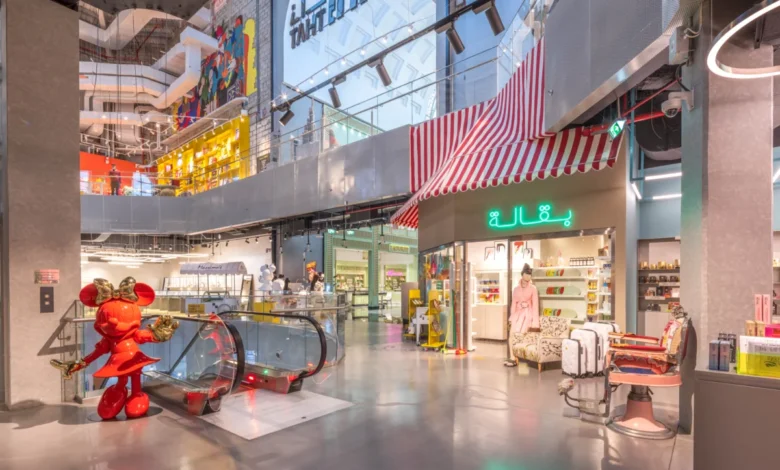
DUBAI – Majid Al Futtaim (MAF), the leading diversified lifestyle conglomerate in the Middle East, Africa, and Asia, has announced the closure of THAT Concept Store, its homegrown multibrand retail venture launched in 2021 at the Mall of the Emirates. The decision comes as part of a comprehensive $1.3 billion strategic overhaul of the iconic Dubai shopping center, signaling a significant pivot towards an elevated luxury footprint and new experience-led concepts. The space currently occupied by THAT will be redeployed to facilitate this ambitious transformation, which Majid Al Futtaim frames not as a retreat, but as a strategic reset designed to reimagine the Mall of the Emirates as a next-generation lifestyle destination.
The final closing date for THAT Concept Store has not yet been determined, allowing for a phased transition. This move, while strategic, unfolds against a backdrop of unprecedented economic turbulence impacting the Gulf’s tourism-dependent retail sector, adding another layer of complexity to what is an already significant repositioning for one of the region’s retail giants.
The Genesis and Vision of THAT Concept Store
THAT Concept Store was unveiled in January 2021 as Majid Al Futtaim’s pioneering foray into a homegrown, curated retail experience. Spanning an expansive 48,000 square feet across two floors within the mall’s prestigious Via Rodeo luxury wing, THAT was designed to be more than just a retail space; it was envisioned as a destination. Its mission was to fill a nascent niche in Dubai’s competitive retail landscape, offering a discovery-led alternative to traditional department stores.
The store meticulously curated a collection of over 150 international and regional labels, encompassing a broad spectrum of categories including fashion, fine jewelry, beauty, interiors, and art. A key differentiator for THAT was its focus on designer names that were often hard to find elsewhere in the region. Its racks and display cases showcased a dynamic mix of global cult brands such as JW Anderson, Simone Rocha, and Marni, alongside celebrated regional talent like Bil Arabi and Azza Fahmy. This unique blend aimed to bridge the gap between established international luxury and burgeoning Middle Eastern creativity, fostering an environment of discovery and exclusivity for discerning shoppers.
Beyond its retail offerings, THAT Concept Store embraced a holistic lifestyle approach. It integrated a dedicated beauty and grooming hub, a state-of-the-art fitness studio, and an art space, transforming the shopping experience into an immersive journey. This innovative model resonated with a growing segment of consumers seeking authenticity, curation, and experiential engagement, positioning THAT as a forward-thinking retail concept at its inception.
Mall of the Emirates’ $1.3 Billion Transformation
Majid Al Futtaim’s decision to close THAT Concept Store is intrinsically linked to the monumental $1.3 billion investment earmarked for the Mall of the Emirates. This extensive overhaul, initially unveiled with a view towards the mall’s 20th anniversary in 2025, represents one of the largest retail enhancement projects in the region. The core objective is to cement the Mall of the Emirates’ status as a premier global shopping, leisure, and entertainment destination, adapting to evolving consumer preferences and the shifting dynamics of luxury retail.
The transformation plans include the addition of approximately 100 new stores, a significant expansion of the mall’s luxury footprint, and the introduction of a plethora of new experience-led concepts. While details on specific new tenants are still emerging, the overarching strategy is to enhance the overall customer journey through innovative design, advanced technology integration, and an even more refined selection of international and regional brands. This strategic direction aligns with global trends where physical retail spaces are increasingly becoming hubs for entertainment, personalized services, and community engagement, rather than mere transactional points.
The redeployment of THAT’s significant 48,000-square-foot space underscores the magnitude of this transformation. It suggests that Majid Al Futtaim is preparing to house larger, more prominent flagship stores for international luxury brands or to develop new, proprietary experiential offerings that align more closely with the "next-generation lifestyle destination" vision. The company’s statement emphasized honoring THAT’s legacy by delivering "a sharper luxury proposition, stronger global brand partnerships, and a truly immersive destination experience," indicating a clear focus on elevating the mall’s premium appeal through direct partnerships with global powerhouses.
A Turbulent Economic Backdrop for Gulf Retail
The announcement of THAT Concept Store’s closure, while framed as a strategic evolution, arrives at a particularly challenging juncture for the Gulf retail sector. Recent months have witnessed unprecedented strain on the UAE’s tourism-dependent retail economy, primarily triggered by geopolitical tensions in the wider Middle East. Following the U.S.-Israeli strikes on Iran in late February, a palpable shift in consumer confidence and tourist arrivals has been observed, casting a shadow over what was previously a robust market.
Economic indicators underscore the severity of the situation. Dubai, a global tourism magnet, experienced a dramatic drop in hotel occupancy rates. Data from CoStar revealed that hotel occupancy plummeted from a healthy 84.7 percent in February to a stark 33.1 percent in March. Furthermore, Moody’s Analytics issued a cautionary forecast, warning that occupancy rates could slide further, potentially reaching as low as 10 percent in the second quarter of the year if the regional instability persists.
This downturn directly impacts the luxury fashion segment, which is heavily reliant on international tourism. According to analysis by Morgan Stanley, tourists account for an estimated 60 percent of luxury spending in the UAE. The broader Gulf region itself contributes a significant 5 to 10 percent of global luxury sales, highlighting its importance to international brands. With long-haul arrivals stalling and a general sense of caution among travelers, luxury retailers have felt the immediate repercussions.
Several high-profile examples illustrate the acute stress on the market. Major luxury groups like Chalhoub Group and Kering, which operate extensive portfolios of international brands across the region, have temporarily thinned their operations or adjusted inventory levels in response to reduced foot traffic and sales. Beyond luxury, other retailers have also made significant shifts: Debenhams, a long-standing anchor, has exited its physical presence at Dubai Mall, transitioning to an online-only model. Similarly, popular home furnishing brands West Elm and Pottery Barn are reportedly winding down their operations in the region. Even marquee hospitality establishments, including the ultra-luxury Armani Hotel Dubai and the iconic Burj Al Arab, have reportedly gone dark for extended refurbishment periods, reflecting a broader slowdown in the high-end tourism and hospitality sectors.
This turbulent economic environment inevitably influences strategic decisions within the retail industry. While Majid Al Futtaim’s $1.3 billion overhaul and the subsequent closure of THAT Concept Store are long-term strategic plays, the current market conditions undeniably provide a potent backdrop, potentially accelerating or influencing the timing of such significant real estate repositioning efforts.
Implications and Broader Market Analysis
The closure of THAT Concept Store and the subsequent redeployment of its space carry significant implications for Majid Al Futtaim, Dubai’s retail landscape, and the future of concept stores in the region.
For Majid Al Futtaim: This strategic pivot reinforces the conglomerate’s commitment to adapting to evolving market demands and maintaining its competitive edge. By focusing on a "sharper luxury proposition" and "stronger global brand partnerships," MAF aims to maximize the profitability and prestige of Mall of the Emirates. The move suggests a preference for direct relationships with established international luxury brands, potentially through larger flagship stores, over nurturing a homegrown multi-brand concept, especially one that required significant curation and operational overhead. While this might mean losing a unique, experimental retail identity, it positions the mall for higher-yield tenants and a more globally aligned luxury offering. The fact that the group is simultaneously adding retail weight with first-to-market openings like Ulta Beauty underscores a nuanced strategy: shedding internal concepts to make way for high-performing external brands.
For Dubai’s Retail Landscape: The shift signals a continued trajectory towards ultra-luxury and highly curated experiential retail. Dubai remains a magnet for global brands, but the bar for entry and success is continually being raised. The emphasis on "immersive destination experiences" suggests that future retail offerings will need to integrate entertainment, technology, and personalized services to capture and retain discerning consumers. This might intensify competition among global luxury brands vying for prime locations and could pose challenges for smaller, independent, or regional multi-brand concepts that lack the scale or direct brand appeal to compete effectively with major international players. The resilience of Dubai as a retail hub is not in question, but its strategies are clearly evolving to cater to a more sophisticated, experience-driven consumer base.
For Concept Stores in the Region: THAT Concept Store was an ambitious experiment, lauded for its innovative approach to blending global and regional talent within a lifestyle-oriented space. Its closure raises questions about the long-term viability of multi-brand concept stores in a market increasingly dominated by individual luxury brand flagships and e-commerce. While the closure is framed as a strategic redeployment rather than a failure of the concept itself, it highlights the inherent difficulties in sustaining such a model, particularly when competing with the direct-to-consumer strategies of major brands and during periods of economic uncertainty. Future concept stores in the region may need to be even more agile, niche-focused, or deeply integrated with digital platforms to thrive.
Consumer Impact: For consumers, the closure of THAT will mean the loss of a distinctive shopping destination that offered a carefully curated selection of unique brands and a holistic lifestyle experience. However, the $1.3 billion overhaul promises an enhanced luxury offering and new experiential concepts, which could ultimately lead to a more diverse and immersive retail environment overall. The balance between offering global luxury and supporting regional design talent will be a key dynamic to watch in Dubai’s evolving retail scene.
Conclusion: A Strategic Evolution in a Shifting Market
The decision by Majid Al Futtaim to close THAT Concept Store is a multifaceted development, emblematic of the strategic evolutions underway within the global retail industry, intensified by the unique pressures of the current geopolitical and economic climate in the Gulf. While THAT represented an innovative homegrown venture, its space is now being reallocated to support a broader, more ambitious vision for the Mall of the Emirates: a future defined by elevated luxury, robust global brand partnerships, and immersive, experience-led retail.
This move underscores Majid Al Futtaim’s agility and its unwavering commitment to maintaining the Mall of the Emirates’ position as a world-class destination. The $1.3 billion investment signifies a proactive approach to reshaping the retail landscape, ensuring that Dubai continues to lead in luxury and experiential offerings. The closure of THAT, therefore, marks not an end to innovation, but the conclusion of one experimental chapter, paving the way for a redefined, more intensely focused luxury retail future in one of the world’s most dynamic markets. As the mall prepares for its 20th anniversary, its transformation reflects a strategic recalibration aimed at long-term growth and resilience, even as it navigates short-term market turbulence.