Oceanzyme Project Pioneers Enzymatic Recycling for Deep-Sea Marine Litter

Valencia, Spain – The groundbreaking Oceanzyme project, spearheaded by the Valencia-based research center AIMPLAS, is charting a new course in the battle against marine pollution by developing innovative enzymatic recycling solutions for plastic waste recovered from the ocean depths. This ambitious initiative aims to transform challenging marine litter, often degraded and unsuitable for conventional recycling, into valuable resources. The project, scheduled to run until 2028, unites leading Spanish research institutions to tackle the pervasive issue of plastic accumulation in the world’s oceans.
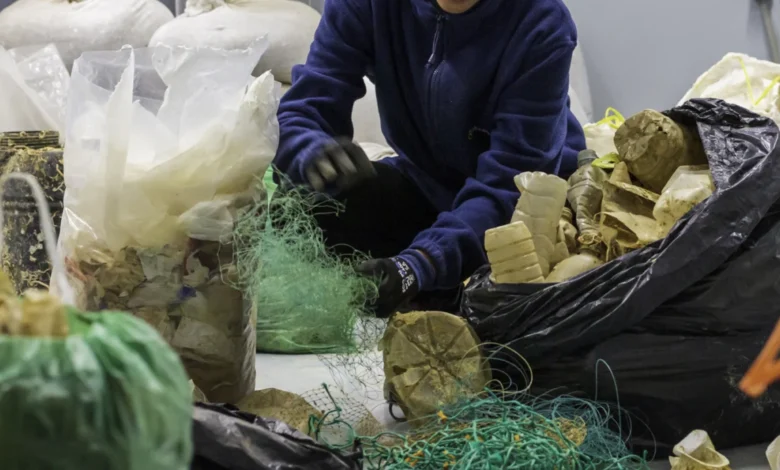
The primary focus of Oceanzyme is to address the unique challenges posed by marine waste, particularly plastics like nylon netting and discarded bottles that have been subjected to prolonged exposure in deep-sea environments. This extended submersion leads to significant degradation, compromising their original physico-mechanical properties. Consequently, these materials become exceedingly difficult to recycle using traditional mechanical methods, effectively removing them from the circular economy and contributing to their persistent presence in marine ecosystems.
A Multi-Pronged Approach to Marine Waste Valorization
AIMPLAS, in collaboration with key partners such as Spain’s Institute of Marine Sciences (ICM-CSIC) and the Institute of Advanced Chemistry of Catalonia (IQAC-CSIC), is implementing a comprehensive, integrated strategy. This approach combines advanced scientific disciplines, including metagenomic analyses to understand the microbial communities present in marine waste, detailed enzymatic characterization to identify potential plastic-degrading enzymes, and sophisticated molecular simulations to predict and optimize enzyme-substrate interactions. A crucial component of this strategy involves the isolation and cultivation of bacteria that possess inherent functional degradation capabilities for various plastic compounds.
The overarching goal of Oceanzome is not merely to remove plastic from the oceans but to actively valorize this recovered material through enzymatic recycling. This means breaking down the plastics into their constituent monomers or smaller molecular units, which can then be used to create new, high-value products. The project is particularly keen to explore applications for these recycled materials within sectors that have a direct connection to the marine environment, such as fisheries and aquaculture, thereby creating a closed-loop system that benefits both industry and the environment.
Targeted Collection Campaigns and Scientific Investigation
As a critical phase of the Oceanzyme project, extensive collection campaigns are being organized in two key marine regions: the North Atlantic and the Levantine-Balearic Sea. These areas have been selected based on existing data indicating significant concentrations of marine waste. Studies have shown that average densities in these regions can range from 40 to as high as 300 items of plastic debris per square kilometer, highlighting the urgency of intervention.
The plastic waste collected during these expeditions will undergo rigorous characterization. This process will involve analyzing the associated microbial communities using metagenomics. Metagenomics, the study of genetic material recovered directly from environmental samples, will provide invaluable insights into the microorganisms that have colonized and potentially begun to degrade the plastic over time. This understanding is fundamental to identifying naturally occurring biological solutions.

Simultaneously, researchers will undertake pure culture isolations of bacteria exhibiting the potential to degrade different plastic polymers. This involves cultivating specific bacterial strains in laboratory settings and testing their ability to break down various types of plastic. The ultimate aim is to pinpoint bacterial strains that are particularly effective and efficient in their degradation processes.
Further to isolating and characterizing whole bacteria, the project will focus on identifying specific enzymes produced by these microorganisms that are responsible for plastic degradation. These enzymes will be meticulously studied, including their three-dimensional structures through advanced modeling techniques. This detailed molecular understanding is vital for optimizing their activity and for designing future biocatalytic processes. Following enzyme identification and modeling, researchers will produce specific plastic substrates and conduct extensive testing to validate the potential use of these enzymes in effective and scalable enzymatic recycling applications.
A Collaborative Endeavor with Far-Reaching Expertise
The Oceanzome project represents a significant collaborative effort, bringing together a diverse range of expertise from its participating organizations. This consortium boasts comprehensive knowledge in several critical areas:
- Waste Removal Protocols: Ensuring efficient and environmentally sound methods for collecting marine debris.
- Marine Microorganism Studies: Deep understanding of the biodiversity and ecological roles of marine microbes.
- Molecular Simulations: Advanced computational tools to predict and model complex biological and chemical interactions.
- Plastic Recycling: Expertise in both conventional and emerging recycling technologies, with a focus on chemical and enzymatic approaches.
This multidisciplinary approach is essential for addressing the multifaceted challenges of marine plastic pollution and for developing truly innovative and sustainable solutions. The project’s timeline, extending until 2028, allows for thorough research, development, and validation of the proposed enzymatic recycling technologies.
Background and Context: The Growing Crisis of Marine Plastic Pollution
The issue of marine plastic pollution has escalated into a global environmental crisis. An estimated 8 million metric tons of plastic enter the oceans each year, posing severe threats to marine life, ecosystems, and human health. This plastic debris fragments into microplastics, which infiltrate the food chain, and larger items can entangle and suffocate marine animals. The economic impact is also substantial, affecting industries such as tourism, fishing, and shipping through damage to infrastructure and reduced resource availability.
Traditional mechanical recycling methods, which involve shredding and melting plastic, are often ineffective for plastics that have been exposed to harsh marine conditions. UV radiation, saltwater, and physical abrasion degrade the polymer chains, altering their molecular structure and making them brittle or brittle. This degradation results in a significant loss of mechanical strength, making the recycled material unsuitable for many applications and thus contributing to landfill or continued environmental pollution.
Chemical recycling, which breaks down plastics into their basic chemical components, offers a more promising avenue for highly degraded plastics. Enzymatic recycling, as pursued by Oceanzome, represents a subset of chemical recycling that leverages the specificity and efficiency of biological catalysts – enzymes – to depolymerize plastics. This approach is often lauded for its potential to operate under milder conditions (lower temperatures and pressures), leading to lower energy consumption and potentially reducing the generation of harmful byproducts compared to some other chemical recycling methods.

Early Indicators and Potential Implications
While the Oceanzome project is still in its developmental stages, the scientific approach being employed is robust and aligned with cutting-edge research in bioremediation and sustainable materials. The success of isolating bacteria with functional degradation capabilities and identifying effective enzymes would represent a significant breakthrough.
The implications of successful enzymatic recycling of marine litter are far-reaching:
- Reduced Ocean Pollution: A viable method for processing recovered marine plastics would incentivize collection efforts and reduce the accumulation of persistent pollutants.
- Resource Recovery: Transforming waste into valuable feedstock for new products would create economic opportunities and reduce reliance on virgin fossil-fuel-based plastics.
- Circular Economy Advancement: This project directly contributes to the principles of a circular economy by closing material loops and minimizing waste.
- Innovation in Sustainable Materials: The development of novel enzymes and bioprocesses could have applications beyond marine waste, potentially enabling the recycling of other difficult-to-process plastic streams.
- Support for Marine Industries: The potential application of recycled materials in fisheries and aquaculture could lead to more sustainable practices within these sectors, such as the production of eco-friendly fishing gear or aquaculture infrastructure.
The project’s focus on specific regions like the North Atlantic and the Levantine-Balearic Sea allows for targeted research and the potential to develop region-specific solutions, while the overall methodology is designed to be scalable and adaptable to other marine environments. The collaboration between research institutions with diverse specializations is a testament to the complexity of the problem and the need for an integrated, multi-disciplinary response.
The Path Forward: From Lab to Real-World Application
The Oceanzome project represents a critical step in harnessing the power of biotechnology to address one of the most pressing environmental challenges of our time. By moving beyond conventional recycling limitations and focusing on the enzymatic breakdown of degraded marine plastics, AIMPLAS and its partners are paving the way for a more sustainable future where ocean waste can be transformed into valuable resources, contributing to a healthier planet and a more robust circular economy. The continued progress and eventual success of this project will be closely watched by environmental scientists, industry leaders, and policymakers worldwide.
For further information, the research centre AIMPLAS can be contacted via their website: www.aimplas.net.