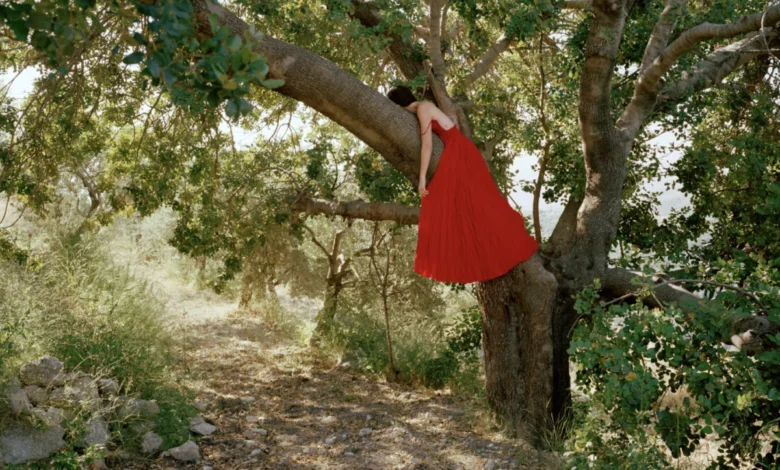
The question, starkly scrawled on a wall in Beirut, "Where do I go?" serves as the profound emotional anchor for Rania Matar’s compelling new body of photographic work. Her solo exhibition, "50 Years Later – Where Do I Go?", currently on display at the Sidney and Lois Eskenazi Museum of Art and running through August 2, 2026, is accompanied by a photobook of the same title. The project presents approximately 128 color portraits of young women navigating life in contemporary Lebanon, delving deeply into themes of identity, belonging, and the profound weight of critical decisions.
Matar’s evocative and layered images are the result of a deeply collaborative process, wherein each participant actively shapes her own representation. For many of the women featured, the central question is not an abstract philosophical inquiry but an immediate, pressing reality as they confront the multifaceted pressures of ongoing conflict, pervasive economic instability, and an increasingly uncertain future. The exhibition’s concurrent release with the photobook underscores the urgency and relevance of Matar’s artistic exploration.
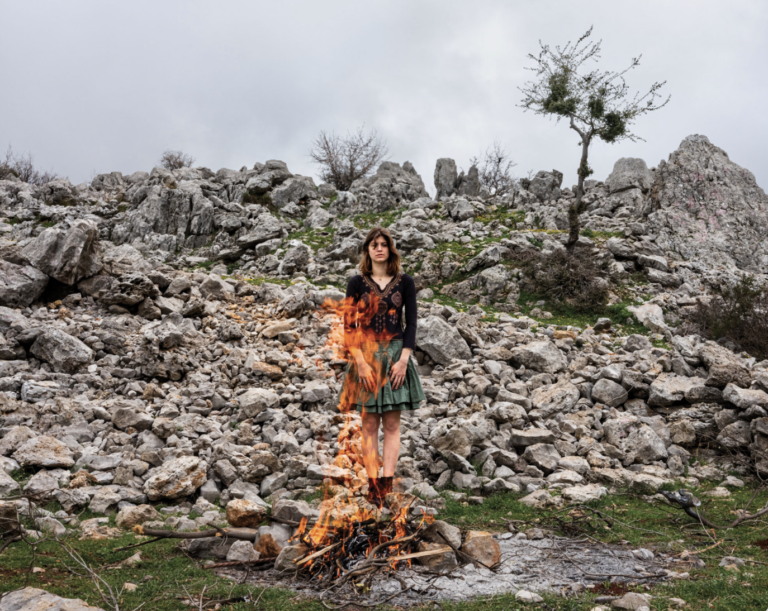
Rania Matar, in a recent interview, elaborated on her creative process and the striking timeliness of this project’s emergence. "The women in this project are of a similar age, generally, and that was entirely intentional," Matar explained. "In 1984, I was their age when I left Lebanon and faced one of the most wrenching decisions of my life: to leave, or to stay. These women stand at that same crossroads. One path leads away from family, home, and everything familiar; the other means remaining in a country of fractured hope. All these years later, I saw myself in each of them, and with that came a painful understanding that history keeps repeating itself."
Matar further articulated the personal resonance of her subjects’ age: "These women are also the ages of my daughters. Had I stayed in Lebanon, my daughters might literally be them: standing where I once stood, facing the same impossible question that I never thought the next generation would have to answer." This generational echo imbues the work with a palpable sense of inherited experience and a collective grappling with recurring national crises.
The Crossroads of Adulthood in a Fractured Lebanon
The period of life depicted in Matar’s portraits is a critical juncture for young women in Lebanon, characterized by complex decisions stemming from a nation perpetually teetering on the brink. "Generally speaking, young women in Lebanon aren’t so different from young women anywhere else in the United States or elsewhere," Matar stated. "They worry about education, career, finding their path, falling in love, and life in general. But in Lebanon, sadly, they sometimes also have to carry an extra burden: the burden of survival and war."

This project’s genesis was significantly shaped by a pivotal event: the catastrophic explosions at the Port of Beirut in August 2020. "This project grew out of a very specific moment that threw these young women into adulthood much faster: the explosions at the Port of Beirut in August 2020," Matar revealed. "That event shattered so many lives in such a massive way that it forced a generation of young women into an impossible crossroads: do they stay, or do they leave? What comes next?"
The ramifications of this event, coupled with long-standing political and economic instability, have created a landscape where emigration is a constant consideration. "And those questions are not simple," Matar emphasized. "Leaving home and family to go into the unknown is not an easy decision to make. And if they stay, how do they begin to build something new out of the rubble, literally and figuratively? Many stayed; some left and came back; others left, but they never really left. I know that firsthand. And as I mentioned earlier, I viscerally felt their dilemma, their shattered hopes, their dreams, their pain, and I wanted to give them a platform to tell their story and the story of their relationship to this beautiful and fractured country."
Matar’s personal history mirrors the experiences of her subjects. "In 1984, when things in Lebanon got very bad, I faced the same decision," she recalled. "That’s when I came to the United States, thinking it would be for a couple of years. And here I am, so many years later." This deep personal connection informs her empathetic approach and the authenticity of the portraits.

A Collaborative Vision: Agency and Empowerment
Matar prioritizes giving her subjects a profound sense of agency throughout the photographic process. "I give the women agency over the process, and they’re deeply involved in every decision we make," she explained. "Before any shoot, I always try to schedule a phone call first. I want to hear their story, what Lebanon means to them, where they’re from, and what relationship they have with a particular place."
The creative process is characterized by spontaneity and mutual inspiration. "We plan the shoot together from the very beginning. We don’t scout the location in advance, and we don’t stage anything," Matar said. "I either pick the young woman up or we meet there, and from that point on, it’s pure creation, experimentation, and collaboration. We start feeding off each other – her ideas, my ideas, bouncing back and forth – and together we make something beautiful and meaningful happen. I make sure to establish a relationship of trust and respect throughout the collaboration. I want the session to be enjoyable and empowering."
The resulting images are a testament to this collaborative spirit. "None of these pictures could have been made without the specific person standing in front of me," Matar asserted. "Each image exists because of who she is, what she brought to that moment, and what we created together. It’s a beautiful collaboration which, for me, is the heart of the project. If I get a picture I love, it’s the ultimate reward."

Finding the Faces of Resilience
Matar’s method for finding her subjects is organic and relies on a network of connections and open calls. "I often find the women by putting out a call on Instagram before I travel to Lebanon. I describe the project and ask who would like to collaborate. I was grateful and humbled to have received such a large response," she shared. "We then schedule a phone call to get to know each other and discuss where to go from there. There was no scouting involved, and I never asked anyone to send me photos or anything like that."
This inclusive approach allows for serendipitous encounters and a genuine connection with her subjects. "My thinking was simple: anyone who responds is going to be interesting, creative, and exciting to work with," Matar noted. "Eventually, the circle grows from there: I collaborate with someone, and she recommends a friend, a cousin, or an acquaintance. I also often meet people in other settings, really anywhere, and I approach them and invite them to be part of this series, then we take it from there."
The common thread among these women, according to Matar, is their courage and resilience. "I have to emphasize that I owe so much to every one of these women. Their willingness to put themselves out there takes courage and grit. Maybe this is what they ultimately have in common," she said. "It’s always a little tentative at first. But then something beautiful happens as we begin to discover each other, as the ideas start flowing between us. That connection is really where the work comes alive."

Motifs of Hope and Resilience Amidst Ruin
The visual language of Matar’s work is rich with symbolism, reflecting the dualities of destruction and enduring hope. "I’m glad you raised that, because hope is absolutely central to this project," Matar affirmed. "It all began after the Port of Beirut explosions in 2020, when I discovered that these young women were out there: working in the reconstruction, clearing the debris. They inspired me profoundly. I was in awe of them. And from that moment, the idea of hope and rebirth became inseparable from the work."
Matar deliberately sought to move beyond mere documentary representation. "It was important to me that the images feel metaphorical rather than documentary," she stated. "Some reflect the architectural wounds of the city, the destruction, the layers upon layers of it. But others reach toward something else entirely: the beauty of Lebanon, the Mediterranean light, the flowers, the mountains. I wanted to hold both truths at once."
The recurring motifs of light, mirrors, and natural elements are not arbitrary but serve specific thematic purposes. "The mirrors and the light are very deliberate," Matar explained. "For me, they speak to duality. There are always two sides being revealed at the same time. The light shining through a woman, the mirror reflecting something just out of frame. It’s that constant tension between devastation and resilience, between what has been lost and what is still possible."

Ultimately, the project is a testament to the enduring spirit of the Lebanese people. "And ultimately, that generation gives me genuine hope for Lebanon, in so many ways," Matar concluded. "I wanted that hope to live in every image, even the difficult ones. Especially the difficult ones."
Eerie Resonance: The Present Crisis and the Portraits’ Evolving Meaning
The timing of Matar’s exhibition and photobook launch, coinciding with renewed conflict and widespread displacement in Lebanon, lends an almost prescient gravity to the work. "The timing feels almost eerie, and sadly, incredibly relevant," Matar stated, her voice tinged with sorrow. "The question at the heart of this project, ‘Where do I go?’ – the title of the book and the exhibition – is being raised again and again as a quarter of Lebanon’s population is currently displaced."
Matar had initially intended the project to commemorate the 50th anniversary of the Lebanese Civil War (1975-2025). "When I was working on this book and the exhibition was being planned, my goal was to commemorate the 50th anniversary of the Lebanese Civil War (1975 – 2025)," she said. "Little did I know that a year later, we would be living through something like it all over again, or even something worse. I am heartbroken."

The exhibition serves as a vital counterpoint to the often depersonalized nature of news coverage. "And yet I am grateful that this exhibition is happening now," Matar continued. "The news cycle talks about numbers, statistics, the price of gas, etc., none of which bring you close to the human reality. What I hope this work does is put a face on these women, many of whom are from South Lebanon, from areas that are currently being bombed and occupied. They deserve to be seen as individuals, as full human beings, not as abstractions in a headline."
The portraits have undeniably taken on a new, heightened significance in light of current events. "Do the portraits take on a different meaning now? Absolutely," Matar affirmed. "They have become the face of hope against what feels quite bleak at this moment. And for me, that is everything: to be able to show the world the beauty of my people, and of this country that refuses, generation after generation, to stop believing in itself."
Sustaining Connection: The Models in the Face of Adversity
Matar remains deeply connected to the women she photographed, closely following their experiences amidst the escalating crisis. "Yes, I am very much in touch with them," she confirmed. "Some have been displaced and are sheltering with their families in different parts of the country. A few of them are from South Lebanon, so it has been an incredibly difficult time for them."

Despite the immense challenges, Matar expresses profound admiration for their resilience and continued efforts to support their communities. "But I am also in awe of them, truly," she stated. "Just as they rose to the occasion after the port explosions, so many of them are doing it again right now. They are raising funds, sourcing mattresses, cooking meals, and distributing food to the people who have been made homeless by this war. They are showing up in the most concrete and human ways possible. I am grateful to every single one of them."
This unwavering spirit brings Matar back to the core message of her project. "It brings me back, again, to the heart of this project, and that question: ‘Where do I go?’ It felt urgent when I began this work. Sadly, it feels just as urgent today," she reflected. "And these women, in everything they are doing right now, are the most honest and beautiful answer I know."
Her work stands as a powerful testament to their strength and the enduring spirit of Lebanon. "These images are my love letters to them," Matar concluded. "This project is for us all: the ones who stayed and the ones who have left but can never leave."
Related posts: