Chester Higgins: Shared Memories Exhibition Explores Six Decades of Photographic Vision

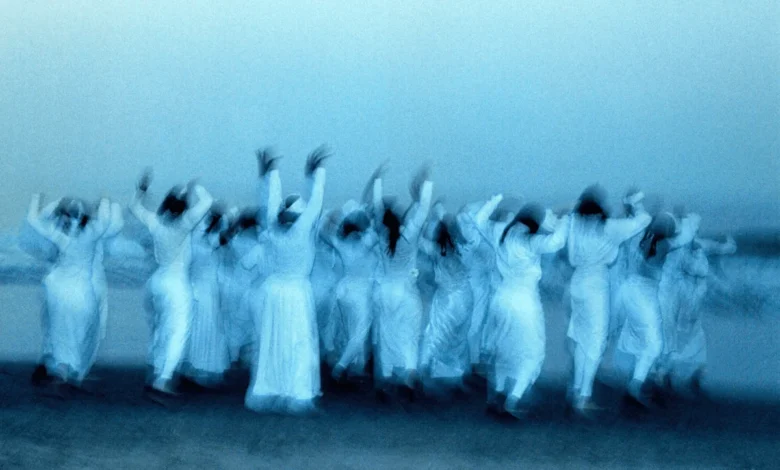
An extensive exhibition, "Chester Higgins: Shared Memories," is currently captivating audiences at the Bruce Silverstein Gallery in New York, running through June 20, 2026. This significant retrospective offers a profound journey through over six decades of photographic work by Chester Higgins, an artist renowned for his unwavering dedication to capturing the presence, history, and achievements of people of African descent. Higgins, whose formative years were shaped by the Civil Rights Movement in rural southern Alabama, discovered his artistic calling in photography while a student at Tuskegee University. This pivotal moment launched a distinguished nearly four-decade career as a staff photographer for The New York Times, a tenure that profoundly influenced visual representations of Black Americans in mainstream media.

The exhibition, curated to showcase the breadth and depth of Higgins’s oeuvre, serves as a powerful testament to his philosophy of photography. In an interview discussing the exhibition, Higgins articulated his core approach: "Fundamentally, my work is about identity and celebrating the search for my own African Spirit, the Spirit in life, and sharing that with others. For most people, my view of African people is unique, embracing, and nonjudgmental. A positive and loving message about any people is a balm to the daily confusion and miseducation we are subjected to." This sentiment underscores the exhibition’s contemporary relevance, resonating in a period where nuanced and respectful portrayals of identity are more crucial than ever.
A Legacy of Shifting Perspectives
Higgins’s nearly forty-year tenure at The New York Times marked a significant turning point in how Black Americans were visually documented. He recognized the pervasive negativity that often characterized media portrayals and actively sought to counteract this with a more balanced and humanistic perspective. "The reason that I became a publishing photographer was because I wanted to change the visual diet from exclusive negativity when the subject is my people to include a more balanced human personality," Higgins explained. "I’d like to think that my daily visual representation of my people broadened the way they were perceived."

His approach to photographing subjects, particularly those facing economic and social challenges, transcended simplistic narratives of poverty. Higgins consistently focused on the universal aspects of human experience, aiming to capture the inherent dignity and resilience of his subjects. "I tried to look at poverty differently, without the lens of class, pity, or exclusion," he stated. "In all of my images, regardless of their economic and social situation, I try to focus on something much larger, like their humanity." This commitment to revealing shared desires for happiness, family, celebration, and the universal experience of aging allowed his photographs to connect with a broad audience, fostering empathy and understanding.
The Power of the Photographer’s Gaze
A cornerstone of Higgins’s photographic philosophy is the belief that "the photograph never lies about the photographer." This statement highlights the profound connection between the artist’s inner world and the images they create. Higgins elaborated on this principle: "My statement is all about sentiment. As social beings, we process current reality through our lens of prior experiences, which determines our level of comfort with new information. If the new information facing us provokes fear or comfort, then that will color our decision of acceptance or rejection. If a photographer loves their subject, it is almost impossible to make a demeaning image of that subject. The reverse is also true. The photographer leaves their sociological contract in their photographs."

This realization was deeply ingrained in Higgins from his student days. He recalled a pivotal moment after participating in a protest against segregationist policies at the State Capitol in Montgomery, Alabama. The subsequent newspaper photographs depicted the student protestors not as citizens exercising their right to petition the government, but rather as a menacing mob. "To me, that was an important lesson on how what’s in the heart of the photographer can emerge in the flavor of their message about their subject," Higgins reflected. This experience solidified his commitment to approaching his subjects with respect, love, and an understanding of their inherent humanity, ensuring his photographs conveyed a truthful and compassionate portrayal.
Visualizing the "Signature of the Spirit"
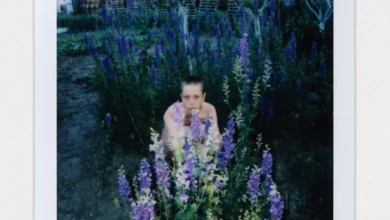
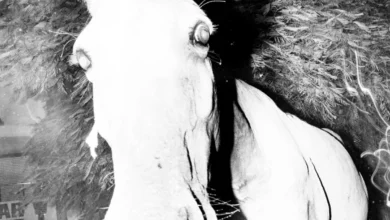
Higgins’s artistic vision extends beyond documentary realism, delving into a more profound exploration of existence and perception. He describes his work as visualizing "the Signature of the Spirit as I look for the marriage between Nature and life." This quest for the "Signature of the Spirit" is rooted in a profound personal experience from his youth. An out-of-body experience at a young age fundamentally altered his perception of reality, leading him to understand life as multi-layered and governed by invisible forces.

"I came away with the feeling that life or reality travels in parallels and is multi-layered," Higgins explained. "To me, this construction of Nature is supported by invisible forces with a constantly shifting quality. It made me conscious of the fact that most of the forces in Nature that we experience, we have no name for, and the presence of those underlying forces is not obvious and below the radar of our senses." This awareness fuels his photographic process, where he seeks to capture the subtle manifestations of these unseen forces.
His approach to "looking" for these signatures is an intuitive and deeply spiritual one. "As an ortovert, I’ve harnessed my ego. In many ways, I accept that the Spirit is in charge and that the reality we experience is akin to a Marionette performance," he shared. "In acknowledging natural behavior and appreciating that performance, I tend to look for the behind-the-scenes effects driving our visual reality. It is in the transitions between the Spirit world and the world of reality that I search for Signature of the Spirit where it reveals itself." This process of observation and capture is not solely confined to the moment of taking a photograph but is also an integral part of his ongoing engagement with his work during the editing process, where the deeper meanings and spiritual connections can be further revealed and refined.

Broader Impact and Ongoing Relevance
The "Chester Higgins: Shared Memories" exhibition arrives at a critical juncture, offering a much-needed counter-narrative to prevailing societal discourse. In an era marked by ongoing discussions about representation, identity, and social justice, Higgins’s work provides a powerful visual language for understanding and appreciating the richness and complexity of African diasporic experiences. His nearly four-decade career at The New York Times, a publication historically shaping American public opinion, was instrumental in expanding the visual vocabulary used to depict Black individuals, moving away from stereotypes towards a more holistic and dignified portrayal.
The exhibition’s curator noted that upon Higgins’s retirement, the Managing Editor acknowledged his significant contribution, stating that Higgins "had changed the way the newspaper (meaning mostly white staffers) see Black people, that I expanded everyone’s horizon." This statement underscores the profound impact of Higgins’s visual storytelling. He viewed his role as an "agent of expansion," leveraging the platform of a major newspaper to present images that were not part of the typical experience of its decision-makers and readership. By artfully packaging societal information into digestible visual data, he facilitated a deeper understanding and empathy among diverse audiences.

The enduring legacy of Chester Higgins lies in his unwavering commitment to honoring the "universal experiences such as celebrations, ceremonies, families, struggles, enjoyment, and aging." His photographs serve as a powerful reminder that beneath surface-level differences, humanity shares fundamental desires and experiences. The "Chester Higgins: Shared Memories" exhibition not only celebrates a lifetime of artistic achievement but also continues to inspire dialogue and foster a more inclusive and compassionate understanding of the world through the profound and resonant lens of Chester Higgins.