Panama Canal Braces for Extreme El Niño, Intensifying Shipping Restrictions and Global Surcharges

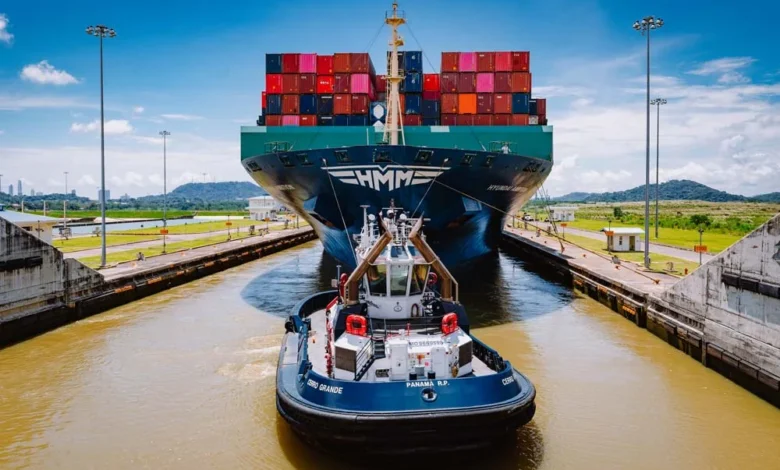
The Panama Canal, a linchpin of global maritime trade, is making urgent preparations for what forecasters predict could be an extreme El Niño weather phenomenon this year. This looming threat carries the potential for significantly drier-than-normal conditions, risking a severe reprise of the 2023-2024 drought that drastically curtailed shipping capacity through the vital interoceanic conduit. As the prospect of diminished water levels at the canal’s intricate lock systems grows, major ocean carriers are proactively moving to mitigate impending cost increases by announcing surcharges on their customers, signalling a new wave of logistical and financial challenges for global supply chains.
Further complicating the operational landscape, reports suggest the Panama Canal Authority (ACP), the autonomous government agency responsible for the canal’s management, may be forced to suspend a portion of its critical booking system for vessels seeking passage. According to an advisory from shipping agent Norton Lilly, the daily auctions for "Period 3" Panamax-class lock slots are slated for suspension from July 25 until further notice. This measure would effectively reduce the daily booking capacity from 36 to 34 vessels. Period 3 slots are particularly crucial for ships operating on tight schedules without a pre-arranged slot, as they are offered merely 96 to 48 hours before transit time, making them typically the most competitive and sought-after allocations. While the ACP has not officially confirmed this advisory, the industry is already bracing for its potential implementation.
The Escalating El Niño Threat and NOAA Warnings
These precautionary measures from both the carriers and the reported actions by the canal authority follow a series of increasingly stark warnings from the National Oceanic and Atmospheric Administration (NOAA). The U.S. federal agency has consistently cautioned that the recurring El Niño weather phenomenon is expected to strengthen considerably throughout the remainder of the year and could persist well into 2027, indicating a prolonged period of climatic instability.
In June, NOAA initially projected that El Niño would intensify to a "moderate or strong level" by the fall. However, a subsequent update on July 9 painted a more concerning picture, indicating an 81 percent chance of a "very strong" occurrence during the season. Such an event, if it materializes, would rank among the largest El Niño events in the historical record, dating back to 1950, underscoring the gravity of the current forecasts. Historically, strong El Niño events have been correlated with significant rainfall deficits in Central America, directly impacting the water-dependent operations of the Panama Canal. For instance, the 1997-1998 El Niño, considered one of the strongest on record, led to substantial drought conditions across the region, prompting similar, albeit less severe, restrictions at the canal.
Ocean Carriers Respond with Surcharges
The operational constraints and the associated increase in costs for transiting the canal are prompting swift reactions from the world’s leading ocean carriers. Mediterranean Shipping Company (MSC), one of the largest container shipping lines globally, announced on Monday that it would implement a surcharge of $100 per 20-foot equivalent unit (TEU) on shipments traversing between Asia and the U.S. East and Gulf Coasts. This fee is slated to take effect on any shipment gated into a port as of August 19.
MSC’s announcement follows similar moves made earlier in the month by other major players in the shipping industry. French carrier CMA CGM introduced a $320 per TEU surcharge for cargo destined for the U.S. East and Gulf Coasts, alongside a $100 per TEU charge for shipments traveling to the Central American East Coast and Caribbean islands. These charges from CMA CGM are set to become effective on July 25. German shipping giant Hapag-Lloyd also declared its intention to charge an additional $130 per TEU for cargo originating from the Far East and bound for North America via the Panama Canal. This surcharge will be applicable to all equipment types for sailings commencing on August 15.
These surcharges are designed to offset the increased operational expenditures incurred by carriers due to canal restrictions. Reduced draft limits mean vessels cannot carry a full load, forcing them to either lighten their cargo, which incurs additional costs for transshipment or delayed delivery, or use more vessels to transport the same volume of goods, thereby increasing fuel and operational expenses. The cumulative effect is passed down to shippers and, ultimately, consumers, contributing to potential inflationary pressures on goods transported through this crucial corridor.
Panama Canal’s Operational Dynamics and Draft Restrictions
The expected operational changes and surcharges come as the ACP is poised to implement a second round of draft restrictions this Friday. These restrictions are primarily aimed at conserving water in Gatún Lake, the expansive man-made, rainfall-fed reservoir that forms the hydrological heart of the canal. Gatún Lake not only feeds the canal’s complex lock system, which lifts and lowers vessels across the continental divide, but also helps float the vessels through the roughly 50-mile waterway.
The first set of restrictions saw the maximum authorized draft for Neopanamax vessels, which are larger ships capable of carrying up to 14,000 TEUs and exceeding 966 feet in length, cut from 50 feet to 49.5 feet on July 3. This Friday, the authority will further reduce this limit to a 49-foot depth. Looking ahead, a third restriction is slated for August 15, when the ACP will implement a maximum draft of 48.5 feet for Neopanamax vessels. These ships were specifically designed to navigate the expanded Panama Canal, which saw the addition of two new sets of locks in 2016, significantly increasing the canal’s capacity for larger vessels. Each foot of draft reduction can translate to a loss of hundreds, if not thousands, of tons of cargo capacity for these massive ships, directly impacting the efficiency and cost-effectiveness of their voyages.
Gatún Lake Water Levels: A Critical Indicator
The health of Gatún Lake is the paramount indicator of the canal’s operational capacity. As of Wednesday, the lake’s depth stood at 84.7 feet, which aligns precisely with the average 84.7-foot depth recorded for July over the past five years. While this might appear stable, the ACP’s forecasts paint a more concerning picture for the near future. The authority predicts that the lake’s depth could drop by almost more than a foot to 83.5 feet by late September. This projected level would be nearly two feet below the 85.2-foot depth averaged since 2021, signaling a significant deviation from recent norms and highlighting the immediate impact of reduced rainfall and increased evaporation.
The average July-through-September figures for Gatún Lake are significantly skewed by the severe lows experienced in 2023. That year, a months-long drought persisted throughout the latter half of the year and extended into the early winter of 2024, pushing the lake to historically low levels. At the nadir of Gatún Lake’s water levels during that drought, drafts for Neopanamax ships were severely restricted to 44 feet. This drastic reduction in draft limited the amount of TEUs these vessels could carry by as much as 40 percent, forcing many to offload cargo onto smaller feeder ships or reroute, incurring substantial delays and costs. Smaller Panamax ships, which navigate the original locks, have maintained a 39.5-foot draft since the mid-2023 restrictions were first implemented, indicating their relative resilience but still highlighting the pervasive nature of the water scarcity.
Broader Implications for Global Trade and Supply Chains
The Panama Canal’s strategic importance cannot be overstated. Handling approximately 6% of global maritime trade and a significant portion of cargo moving between Asia and the U.S. East Coast, its smooth operation is critical for international commerce. The current and anticipated restrictions carry profound implications:
- Increased Shipping Costs and Inflationary Pressure: Surcharges directly raise the cost of goods. For industries relying heavily on imported raw materials or exporting finished products through the canal, these additional costs can erode profit margins or be passed on to consumers, potentially fueling inflation.
- Supply Chain Disruptions: Reduced capacity and longer transit times can lead to delays in product delivery, impacting manufacturing schedules, retail inventory management, and consumer availability. Companies might need to diversify their shipping strategies, explore alternative routes, or increase buffer stocks, all of which incur additional costs.
- Route Diversion and Alternative Pathways: In severe scenarios, carriers may opt for alternative routes, such as the Suez Canal or the longer journey around the Cape of Good Hope. While these offer alternatives, they come with their own set of challenges, including increased fuel consumption, longer transit times (adding weeks to a journey), and, in the case of the Suez Canal, geopolitical risks. The Cape of Good Hope route, for instance, can add 7-14 days to a journey from Asia to the U.S. East Coast compared to the Panama Canal, translating to significant operational costs and schedule disruptions.
- Economic Impact on Panama: The canal is a major revenue generator for Panama. Prolonged restrictions can reduce transit fees and overall economic activity associated with port services, pilotage, and bunkering, impacting the nation’s fiscal health.
- Long-term Planning and Resilience: The recurring nature of El Niño and the increasing frequency of extreme weather events underscore the need for long-term strategies for canal management and global supply chain resilience. This includes investment in water conservation technologies, reservoir expansion, and perhaps even exploring new engineering solutions to reduce reliance on rainfall.
ACP’s Ongoing Maintenance and Future Adaptations
Beyond immediate drought management, the ACP continues with its routine and strategic maintenance operations to ensure the canal’s long-term viability. On Tuesday and Wednesday, the authority conducted crucial dry chamber maintenance on the west lane of the Gatún Locks. This essential work, while necessary for the locks’ structural integrity and operational efficiency, temporarily reduced the number of available slots for Panamax ships, adding another layer of constraint during this challenging period. A similar maintenance operation was recently performed at the Pedro Miguel Locks, carried out over five days in May, demonstrating the continuous effort required to maintain this complex engineering marvel.
In a forward-looking move, the ACP also released a statement on Tuesday indicating it is actively studying the feasibility of the Neopanamax locks eventually accommodating vessels up to 53 meters (173.9 feet) wide, compared with the current maximum of 51.25 meters (168.1 feet). This potential expansion in width capacity reflects the ongoing evolution of global shipping and the canal’s commitment to adapting to larger vessels, even as it grapples with the immediate environmental challenges posed by climate change and El Niño.
The confluence of a predicted "very strong" El Niño, escalating draft restrictions, and the imposition of surcharges by major shipping lines paints a challenging picture for the Panama Canal and, by extension, for global trade. The ability of the ACP to manage its finite water resources, coupled with the resilience of international supply chains, will be rigorously tested in the coming months as the world watches whether this El Niño lives up to its formidable forecast. The lessons learned from the 2023-2024 drought are fresh in memory, and stakeholders across the globe are keenly aware that the implications of another severe dry season could be far-reaching and substantial.