Queen Letizia Leads Royal Family in Resplendent Red at World Cup Finals, Showcasing National Unity and Modern Royal Engagement

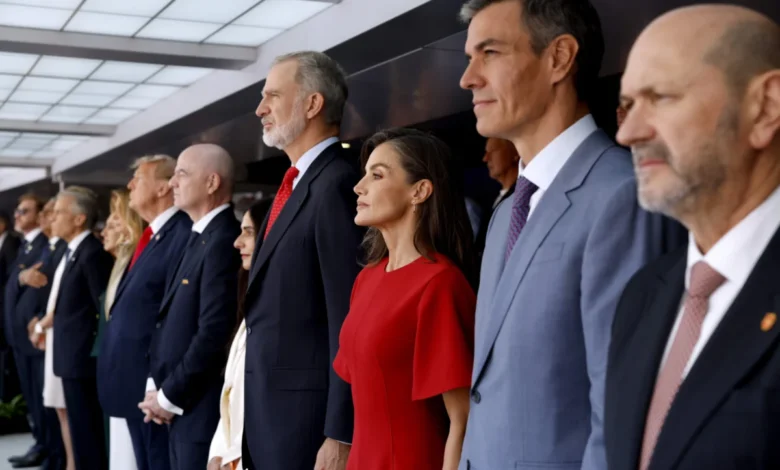
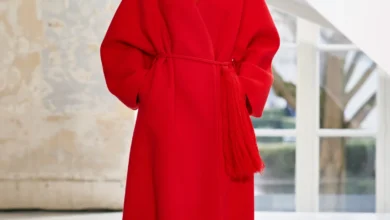
In a powerful display of national pride and unwavering support for Spain’s athletic prowess, Queen Letizia, accompanied by King Felipe VI and their daughters, Princess Leonor and Infanta Sofía, attended the World Cup Finals held in East Rutherford, New Jersey, on Sunday. The Spanish monarch, renowned for her impeccable style and strategic use of fashion, chose a striking red dress, harmonizing perfectly with the vibrant uniforms of the Spanish team, a deliberate sartorial statement that resonated with fans and observers alike. This public appearance underscored the Royal Family’s deep connection to the nation’s cultural fabric, particularly through the unifying spectacle of international sport.
A Royal Spectacle of Support at the World Cup Finals
The presence of the entire immediate Royal Family at such a high-profile international event is a testament to the significance the Spanish Crown places on supporting national endeavors and connecting with its populace. The atmosphere at the MetLife Stadium in East Rutherford was electric, a fitting backdrop for a global championship that captures the attention of billions worldwide. Queen Letizia’s choice of a bold red gown was not merely a fashion statement but a potent symbol of solidarity, instantly recognizable as the color of Spain’s national teams. This strategic color coordination has become a hallmark of her public appearances, often subtly reinforcing national identity and morale. King Felipe VI, a figure known for his dignified bearing, complemented his wife’s vibrant ensemble with a more understated yet equally symbolic gesture, sporting a red necktie against his dark suit. This subtle nod ensured a cohesive family presentation, reflecting a unified front of support.
The younger generation of the Spanish monarchy also embraced the national colors with youthful enthusiasm. Princess Leonor, the heir presumptive to the throne, donned a sophisticated yet casual ensemble featuring a white cinched shirt paired with stylish red pants, subtly echoing her mother’s dominant color. Her younger sister, Infanta Sofía, opted for a red shirt combined with khaki pants, presenting a relaxed yet patriotic look. Their attire, much like their parents’, was carefully curated to project an image of approachable royalty deeply invested in the nation’s successes. The collective appearance served as a powerful visual representation of generational support for the national team, bridging the gap between the monarchy and everyday citizens through the shared passion for sport.
A Chronology of Royal Fandom: From Semifinals to Finals
The family’s attendance at the World Cup Finals in New Jersey was the culmination of an evident journey of fervent support throughout the tournament. Earlier in the week, a captivating behind-the-scenes video circulated widely on Instagram, offering a rare glimpse into the private moments of the Royal Family’s fandom. The footage captured the foursome – King Felipe, Queen Letizia, Princess Leonor, and Infanta Sofía – seated arm-in-arm, fully immersed in the excitement of Spain’s dramatic semifinal victory over France. In this more private setting, they were seen wearing replica jerseys of the Spanish team, numbered 26, a subtle yet significant detail representing the current year’s World Cup tournament. This candid display of genuine enthusiasm resonated deeply with the public, humanizing the royal figures and allowing citizens to see them as fellow fans sharing in the collective joy and tension of national competition.
The journey from the intense semifinal celebration to the grand stage of the finals underscores a consistent and visible commitment from the Royal Household. Such public displays are not merely ceremonial; they are integral to the modern monarchy’s strategy of engagement and public relations. By actively participating in and visibly supporting national events, especially those with widespread popular appeal like the World Cup, the royals reinforce their role as figures of national unity and pride, fostering a sense of shared identity and collective celebration. This consistent presence at critical junctures of the tournament provided a narrative arc of royal support that captivated both national and international media attention.
The Fashion Diplomacy of the Spanish Crown
Beyond their role as symbols of national unity, the Spanish Royal Family, particularly Queen Letizia and her daughters, have emerged as significant forces in the world of fashion. While King Felipe VI is frequently lauded as one of Europe’s best-dressed statesmen, Queen Letizia, a former journalist, has cultivated a distinct and influential style that seamlessly blends high fashion with accessibility. Her wardrobe choices are meticulously observed and widely emulated, reflecting a sophisticated understanding of contemporary trends while honoring her royal duties.
Queen Letizia’s recent ensembles have showcased a diverse range of designers, from established luxury houses to more accessible high-street brands, a strategic mix that broadens her appeal. She has been seen in elegant pieces from Carolina Herrera, a perennial favorite for its classic sophistication, alongside more democratic selections from Mango, demonstrating her ability to integrate popular brands into her royal wardrobe. Other designers like Byan Basalt and Adrianna Papell also feature in her recent fashion chronicles, indicating a discerning eye for quality and design that transcends price points. Her style is often characterized by clean lines, tailored silhouettes, and a preference for bold colors, making her a contemporary fashion icon whose influence extends far beyond Spain’s borders.
Princess Leonor: Heir Apparent and Emerging Style Icon
As the heir presumptive to the Spanish throne, Princess Leonor, at 20 years old, is rapidly coming into her own, both in her royal duties and her personal style. Her public appearances are increasingly scrutinized as she prepares for her future role, and her fashion choices reflect a budding elegance and maturity. Like her mother, Leonor demonstrates a preference for both established luxury and emerging designers. Recent appearances have seen her in sophisticated pieces from CH Carolina Herrera, a line known for its youthful yet refined aesthetic, signaling a continuity of classic taste within the family. She has also sported creations from Moliane Lamia and Bleis Madrid, indicating an appreciation for Spanish design talent and a willingness to explore a diverse fashion landscape.
Leonor’s sartorial evolution coincides with a pivotal period in her life. She recently completed three rigorous years of army, naval, and air force training, a significant milestone for a future Head of State and Commander-in-Chief. This period of intense military preparation has undoubtedly instilled a sense of discipline and purpose, qualities that subtly translate into her public persona and, by extension, her fashion choices. In September, she is slated to embark on a new academic chapter, studying political science at Carlos III University of Madrid. Her attire choices are thus not merely aesthetic; they are part of a broader narrative of a young royal stepping into her destiny, balancing tradition with modernity, and presenting an image of capability and grace to her future subjects.
Infanta Sofía: Forging Her Own Path in Fashion
At 19 years old, Infanta Sofía, Princess Leonor’s younger sister, is also carving out a distinct fashion following. While her sister’s style is increasingly geared towards the formal demands of heir apparent, Sofía’s choices often lean towards a more contemporary, perhaps slightly more relaxed, yet equally chic aesthetic. She has shown a particular affinity for brands that blend modern trends with quality craftsmanship, making her a relatable figure for many young fashion enthusiasts.
Sofía has been observed sporting labels such as Mango, a testament to its widespread appeal and the family’s support for accessible Spanish brands. Her wardrobe also includes pieces from Momoni, Sézane, Claudie Pierlot, and Mirto, showcasing a taste for European contemporary fashion that is both stylish and age-appropriate. These brands often embody a blend of effortless chic and quality, reflecting a burgeoning personal style that is distinct from her mother and sister, yet harmoniously part of the family’s overall fashionable image. Infanta Sofía’s growing influence as a fashion trendsetter among her generation is a testament to the broad impact of the Spanish Royal Family’s sartorial choices, proving that royal style is not confined to formal engagements but extends to everyday elegance and youth culture.
The Monarchy’s Connection Through Sport: Broader Implications
The Spanish Royal Family’s consistent and visible support for national sports teams, exemplified by their presence at the World Cup Finals, serves a crucial role in the modern monarchy. In an era where monarchies must continually justify their relevance, connecting with the public through shared passions like sport is an effective strategy. Such appearances allow the royals to embody national spirit, celebrating collective achievements and commiserating in defeats alongside their subjects. This fosters a sense of unity and shared identity, reinforcing the monarchy’s role as a unifying institution above partisan politics.
The World Cup, in particular, is a global phenomenon that transcends geographical and cultural boundaries. For Spain, a nation with a rich sporting heritage and passionate fan base, success on the international stage is a source of immense national pride. By being present at these pivotal moments, the King, Queen, and Princesses demonstrate their solidarity with the aspirations and emotions of the Spanish people. This form of "soft diplomacy" not only bolsters national morale but also projects a positive image of Spain on the international stage, highlighting its vibrant culture and cohesive society. The media coverage generated by their attendance amplifies this message globally, contributing to Spain’s national brand and cultural influence.
Furthermore, the involvement of Princess Leonor and Infanta Sofía in these public displays of national support is vital for the long-term future of the monarchy. It introduces them to their public in contexts that are relatable and positive, allowing them to build a rapport and public image independent of formal duties. Their youthful enthusiasm and patriotic attire resonate with younger generations, ensuring that the monarchy remains relevant and connected to the evolving demographics of the country. This generational engagement is crucial for the continuity and legitimacy of the Crown in a contemporary democratic society.
The Enduring Influence of Royal Fashion and Public Engagement
The Spanish Royal Family’s strategic use of fashion, combined with their active public engagement in national events, underscores a sophisticated approach to modern monarchy. Queen Letizia’s ability to blend high fashion with accessible brands, and her daughters’ emerging yet distinct styles, create a powerful narrative that appeals to a wide demographic. Their choices influence fashion trends, support Spanish designers, and contribute to the economic ecosystem of the fashion industry. The "Letizia effect" or the "Leonor effect" can lead to significant boosts in sales for brands they wear, highlighting the commercial power of royal endorsements.
Beyond fashion, their presence at events like the World Cup Finals serves as a masterclass in public relations and national identity building. It communicates a message of unity, pride, and shared experience, reinforcing the monarchy’s role as a consistent and supportive presence in the lives of ordinary Spaniards. This blend of carefully curated public image, genuine national pride, and strategic engagement ensures that the Spanish Royal Family remains a vital and beloved institution, adapting to the demands of the 21st century while upholding centuries of tradition. Their appearance in East Rutherford was not just about cheering on a team; it was a reaffirmation of their commitment to the nation, its people, and its place on the global stage, wrapped in the unifying colors of Spain.