Britain’s Scorching Summers Expose Weaknesses in Food Supply Chains and the Emerging Role of AI-Driven Climate Adaptation

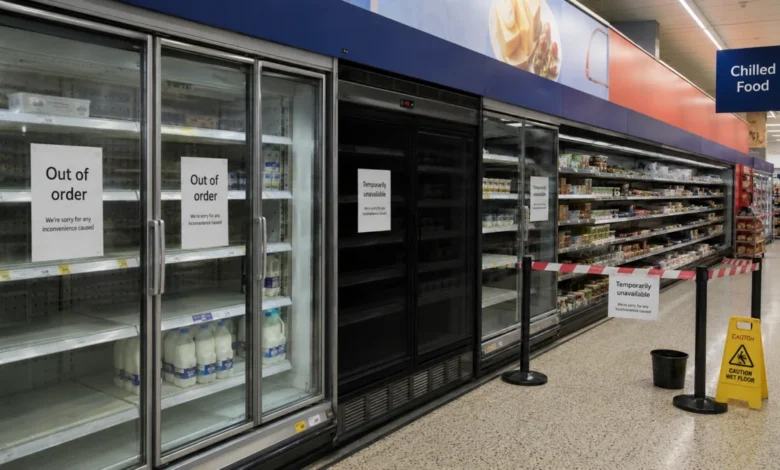
The intensification of summer heat across the United Kingdom is increasingly exposing structural vulnerabilities within the nation’s critical food infrastructure, ranging from retail refrigeration units to the complex logistical networks responsible for transporting chilled and frozen goods. As record-breaking temperatures become a recurrent feature of the British climate, the systems designed to maintain the "cold chain"—the uninterrupted series of refrigerated production, storage, and distribution activities—are facing unprecedented levels of stress. This systemic strain has moved beyond a theoretical concern for logistics experts, manifesting as empty supermarket shelves and significant food waste during peak thermal events.
A Summer of Record-Breaking Thermal Stress
The meteorological data for the current year underscores a significant shift in the UK’s climate profile. According to the Met Office, the country recorded temperatures of 35°C or higher across May, June, and July for the first time in documented history. Furthermore, eight days have already surpassed the 34°C threshold, eclipsing previous records set during the notorious heatwave of 1976 and the more recent extreme summer of 2020. This trajectory suggests that the 40°C milestone reached in July 2022 was not an isolated anomaly but a harbinger of a new climatic reality for Northern Europe.
For the retail sector, the consequences of these temperature spikes have been immediate and visible. During recent heatwaves, major supermarket chains, including Tesco, Sainsbury’s, and Marks & Spencer (M&S), reported localized equipment failures. Older refrigeration systems, often designed for a temperate maritime climate where ambient temperatures rarely exceeded 30°C, have struggled to maintain the necessary internal temperatures of 0°C to 5°C mandated for food safety. In many instances, stores were forced to cordoning off entire aisles or discard perishable stock as cooling units succumbed to the external heat. M&S has since signaled a proactive shift, announcing investments in refrigeration technology specifically engineered to withstand 45°C heat, a clear indication that the industry is moving toward long-term climate adaptation.
The Hidden Vulnerability: The Mid-Stream Cold Chain
While the failure of consumer-facing refrigerators attracts the most public attention, industry experts warn that the more significant risk lies within the "hidden" segments of the supply chain. The cold chain is a delicate ecosystem of refrigerated trailers, warehouses, and distribution centers. Any disruption in this sequence—a trailer running slightly above its set point, a pallet left on a loading bay during a shift change, or a delivery vehicle caught in traffic without adequate insulation—can compromise the integrity of the product.
In the logistics sector, these vulnerabilities are often categorized under "dwell time"—the duration a product spends stationary during the transition between different stages of the supply chain. Under standard conditions, a pallet of perishable goods might safely sit on a loading dock for 30 to 40 minutes. However, when ambient temperatures rise by 10°C or 15°C, that same window of safety shrinks dramatically. The thermal mass of the product can no longer resist the external heat, leading to "micro-spikes" in temperature that accelerate bacterial growth and reduce shelf life, even if the product is eventually returned to a chilled environment.
The Rise of Physical AI and Continuous Monitoring
To combat these "blind spots," technology firms are introducing advanced monitoring solutions aimed at providing granular, real-time data. Wiliot, a prominent player in the "Physical AI" space, argues that the traditional method of intermittent temperature checks is no longer sufficient for a high-risk climate. Amir Khoshniyati, Vice President at Wiliot, suggests that the industry requires continuous visibility to manage the "recalibration" necessitated by extreme weather.
Wiliot’s technology utilizes battery-free Bluetooth Low Energy (BLE) tags. These sensors are powered by ambient radio waves—energy harvested from the surrounding environment, such as Wi-Fi signals or cellular networks. Once attached to a product or a shipping crate, these tags transmit data regarding location, temperature, humidity, and light exposure. The inclusion of light sensors allows the system to detect if a package has been opened prematurely, while the temperature sensors provide a second-by-second account of the product’s environment.
The argument for this level of detail is rooted in the "greenhouse effect" seen in logistics. Just as a car or a room with large windows heats up significantly faster than the outside air on a sunny day, a refrigerated trailer or a glass-fronted supermarket unit faces intensified thermal pressure. Traditional tracking systems might confirm that a trailer arrived on time, but they rarely provide a detailed biography of what the product experienced during the journey. Physical AI seeks to bridge this gap, using machine learning to analyze data patterns and flag potential safety risks before the goods reach the consumer.
Infrastructure in Crisis: The Aging Warehouse Problem
The technological solutions offered by firms like Wiliot highlight a deeper issue: the physical state of the UK’s logistics infrastructure. Data from the Cold Chain Federation indicates that more than half of the UK’s 460 major cold storage facilities for food and pharmaceuticals are over 20 years old. These buildings were constructed using insulation standards and cooling technologies that did not account for the sustained 35°C+ temperatures now being recorded.
The Federation has warned that these aging warehouses are particularly vulnerable to "thermal leakage," where the energy required to keep the interior cold becomes prohibitively expensive or technically impossible to maintain as the external environment heats up. This creates a double-edged sword for retailers: skyrocketing energy bills and an increased risk of catastrophic system failure. The Food Standards Agency (FSA) has reinforced these concerns, reminding operators that maintaining the legal limit for chilled food is non-negotiable for public health.
Chronology of a Changing Supply Chain
The evolution of the UK’s response to heat-related supply chain stress can be viewed through a timeline of recent events:
- 2020: A prolonged August heatwave leads to localized "fridge meltdowns" in London and the Southeast, prompting the first major post-mortems on retail cooling resilience.
- 2022: The UK records a record temperature of 40.3°C. The "Red Weather Warning" causes widespread logistics delays as rail networks buckle and delivery drivers face hazardous conditions. Retailers begin serious internal reviews of "climate-proofing" their stores.
- 2023: Investment in IoT (Internet of Things) and sensor technology within the cold chain increases by an estimated 15% as retailers seek to minimize waste amid the cost-of-living crisis.
- 2024 (May-July): Record-breaking consecutive months of 34°C+ heat trigger the deployment of new AI-driven monitoring systems at scale. Major players like Walmart in the US provide a blueprint for UK retailers by deploying Wiliot’s technology across 4,600 stores.
Broader Implications and Economic Impact
The implications of a failing cold chain extend far beyond the immediate loss of a few pallets of produce. There is a significant economic and environmental cost to food waste. In the UK, the organization WRAP estimates that food waste costs the hospitality and retail sectors billions of pounds annually. When heatwaves cause systemic failures, these costs are often passed down to the consumer in the form of higher grocery prices.
Furthermore, the issue of "condition monitoring" is expanding into other sectors. High-end electronics, pharmaceuticals (including life-saving vaccines), and luxury cosmetics are all sensitive to thermal degradation. A smartphone exposed to extreme heat in a delivery van may still function upon arrival, but its internal battery chemistry could be permanently compromised, leading to a shorter lifespan—a phenomenon Khoshniyati compares to the heat warning on a mobile device that disappears but leaves "scarring" on the components.
The Path Toward "Safe-to-Eat" Interaction
The ultimate goal of this technological shift is a radical increase in transparency for the end consumer. The vision shared by industry innovators involves a "dialogue" between the product and the purchaser. In this future scenario, a customer at a restaurant or a supermarket could scan a QR code or use a smartphone to access the entire thermal history of a piece of seafood or meat.
This "Safe to Eat" verification would confirm that the item never exceeded a certain temperature for more than a few minutes during its entire journey from the farm to the plate. While this may currently seem like a futuristic concept, the underlying infrastructure—the tags, the ambient power, and the AI analytics—is already being integrated into global supply chains.
Conclusion: A Multi-Pronged Adaptation Strategy
As Britain prepares for a future where scorching summers are the norm, the retail and logistics sectors must adopt a multi-pronged strategy. This includes:
- Physical Upgrades: Investing in high-specification insulation and refrigeration units capable of operating in 40°C+ environments.
- Digital Visibility: Moving away from manual temperature logs toward continuous, automated sensor data that can predict failures before they happen.
- Process Recalibration: Shortening dwell times and redesigning loading bays to minimize exposure to ambient air.
- Regulatory Compliance: Working closely with the FSA to ensure that safety standards evolve alongside the changing climate.
The challenges facing the UK’s cold chain are a microcosm of the broader climate adaptation task facing the global economy. The transition from a "track and trace" model (where is my package?) to a "condition and quality" model (what happened to my package?) represents a fundamental shift in how society manages its most essential resources. In a hotter world, the ability to keep things cool is no longer just a matter of convenience; it is a cornerstone of national food security.