Digital Edition: Rokit at 40: “Resale platforms reshaped second-hand retail, but they’ll never replace in-person shopping”


As the global fashion industry grapples with questions of sustainability, overproduction, and changing consumer habits, one of the pioneers of the preloved market is celebrating a major milestone. Rokit Vintage, a high street fixture that began as a modest market stall in London during the mid-1980s, is marking its 40th anniversary. Over four decades, the brand has witnessed the complete evolution of second-hand shopping—from a counter-culture alternative associated with thrift and scarcity to a booming, multi-billion-pound sector driven by environmental consciousness and digital innovation.
In an exclusive interview reflecting on this ruby anniversary, Rokit’s leadership has shared insights into the modern preloved landscape, the complex interplay between physical stores and digital resale platforms, and the enduring appeal of the high street shopping experience. While digital marketplaces have undeniably democratized and accelerated the circular economy, industry veterans argue that the tactile, exploratory nature of brick-and-mortar retail remains irreplaceable.
From Camden Market Roots to a High Street Institution
The story of Rokit began in 1986 against the backdrop of a radically different London retail and cultural landscape. Initially launched as a single market stall in the iconic Camden Market, the venture capitalized on the burgeoning demand for vintage Americana, military surplus, and unique retro apparel. During an era defined by bold styles and counter-cultural movements, the stall quickly gained a following among musicians, stylists, and fashion-forward consumers searching for individuality on the high street.
As demand surged, Rokit transitioned from a temporary market presence to permanent bricks-and-mortar stores, establishing flagship locations across trendsetting areas of London, including Covent Garden and Brick Lane. These stores became community hubs for vintage enthusiasts, long before sustainability became a corporate buzzword. Over the years, the brand expanded its operations to include a robust online storefront, allowing it to reach a global audience while maintaining its physical retail footprint.
The 40th-anniversary milestone places Rokit in a rare tier of independent fashion retailers that have survived multiple economic recessions, shifts in consumer behavior, and the seismic disruption of e-commerce. Its longevity offers a unique vantage point from which to observe the maturation of the second-hand clothing market.
The Evolution of the Global Second-Hand Market
Rokit’s four-decade journey mirrors the broader transformation of the global preloved economy. For many years, second-hand shopping was viewed primarily through the lens of economic necessity or niche subcultures. However, the 21st century—and particularly the past decade—has seen a radical mainstreaming of vintage and thrift retail.
Driven by mounting concerns over the environmental footprint of fast fashion, changing consumer attitudes toward ownership, and the search for personal expression, the global second-hand apparel market has expanded exponentially. Market analyses indicate that the sector is growing at a rate significantly faster than the broader retail apparel market. Consumers, particularly younger demographics such as Gen Z and Millennials, increasingly view pre-shed clothes not as a compromise, but as a deliberate ethical choice and a stylistic badge of honor.
This shift has attracted massive corporate investment, transforming the competitive landscape. Traditional retailers, luxury houses, and digital-first startups have all rushed to capture a share of the circular fashion boom, introducing trade-in programs, dedicated resale sections, and peer-to-peer digital marketplaces.
Digital Resale Versus the Physical Storefront
Despite the rapid proliferation of peer-to-peer apps and online resale platforms—which have successfully lowered the barrier to entry for casual sellers and buyers alike—industry leaders maintain that digital alternatives cannot fully replicate the physical retail experience.
Reflecting on the modern retail ecosystem, Rokit’s leadership emphasizes that while online platforms have reshaped second-hand retail by providing unprecedented convenience, global reach, and inventory visibility, they serve a fundamentally different consumer need than physical shops.
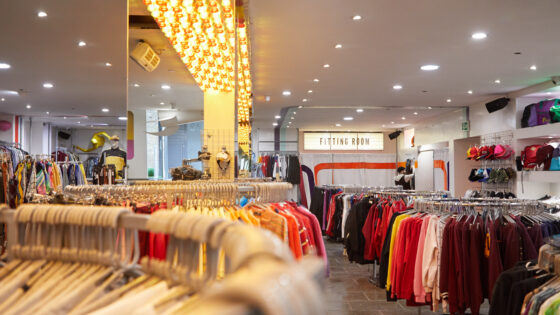
Digital platforms excel at transactional efficiency. Algorithms, targeted searches, and digital filters allow shoppers to track down specific items, brands, or eras within seconds. However, this efficiency often strips away the serendipitous discovery that defines traditional vintage shopping.
In contrast, physical stores offer a sensory and exploratory experience. Browsing through densely packed racks, touching different fabric weights, smelling vintage textiles, and stumbling across unexpected treasures create an emotional connection with the garment that a high-resolution digital image cannot reproduce. For many consumers, the high street vintage shop functions as a physical archive of fashion history, offering a tactile escape from algorithm-driven digital spaces. Furthermore, physical stores provide immediate gratification, eliminating shipping wait times and delivery emissions.
Market Challenges in an Era of Over-Saturation
Reaching a 40-year milestone has not been without its obstacles. The contemporary preloved market, while lucrative, presents a complex web of operational challenges that differ starkly from those faced by Rokit in its early decades.
Chief among these challenges is the rising cost of sourcing authentic, high-quality vintage inventory. As the popularity of second-hand clothing has soared globally, competition for vintage stock has intensified dramatically. Wholesalers, sorting facilities, and independent pickers face unprecedented demand, driving up acquisition costs.
Additionally, the rise of "greenwashing" and the influx of ultra-fast fashion items entering the circular economy have complicated sorting processes. Retailers must dedicate significant resources to authenticating items, ensuring quality control, and filtering out low-durability garments that masquerade as vintage.
Macroeconomic pressures, including soaring commercial rents in prime urban shopping districts, rising labor costs, and fluctuating consumer confidence amid cost-of-living crises, have also squeezed independent fashion retailers. Maintaining physical storefronts in high-rent districts like central London requires a delicate balance between driving foot traffic, optimizing average transaction values, and managing overheads.
Strategic Adaptations and the Future of Circular Retail
To navigate these headwinds, long-standing brands like Rokit have had to blend traditional retail expertise with modern operational strategies. This includes refining digital inventory management to bridge the gap between online and offline stock, engaging with younger consumers through social media storytelling, and doubling down on the unique curation that sets independent vintage apart from mass-market retail.
Industry analysts note that the future of successful preloved retail lies in an omnichannel approach. Rather than viewing digital platforms and physical stores as adversaries, forward-thinking retailers are using online channels to build brand awareness, test regional demand, and drive foot traffic into physical stores, where the brand experience is most potent.
As Rokit enters its fifth decade, its trajectory offers a compelling case study in retail resilience. By staying true to its roots in curation and community while adapting to the digital age, the brand highlights the enduring value of physical retail spaces in an increasingly virtual world.
Ultimately, the milestone serves as a reminder that while technology will continue to redefine how consumers discover and buy preloved fashion, the human desire for tactile exploration, unique storytelling, and physical community spaces on the high street remains as strong as ever.