Scotland Leads the Green Revolution in Global Fashion With 11 Pioneer Ethical Brands

Scotland is increasingly positioning itself at the vanguard of the global sustainable fashion movement, demonstrating that a nation of 5.4 million people can exert a disproportionate and positive influence on ecological manufacturing standards. While the international apparel industry has long been criticized for its reliance on fast fashion models, excessive carbon emissions, and poor labor practices, a burgeoning ecosystem of Scottish designers and manufacturers is rewriting the rules of textile production. By anchoring their business operations in circular economy principles, zero-waste manufacturing, local sourcing, and the revival of heritage craft techniques, these enterprises are offering a compelling blueprint for the future of ethical retail.

The transition toward sustainable garment production arrives at a critical juncture for the worldwide textile sector. According to environmental data aggregators, the global fashion industry is responsible for approximately 10 percent of global carbon emissions—surpassing all international flights and maritime shipping combined—while consuming trillions of liters of water and generating millions of tons of textile waste annually. In response to these escalating environmental pressures, consumer demand for transparent, durable, and ethically produced clothing has surged. Scottish brands, leveraging centuries-old traditions of textile craftsmanship, are uniquely positioned to meet this demand, combining heritage materials like Scottish cashmere and British wool with cutting-edge circular design innovations.
A comprehensive review of Scotland’s ethical fashion landscape highlights eleven standout brands that are successfully marrying high-end style with rigorous environmental and social governance.

Heritage and Slow Fashion Pioneers
At the heart of Scotland’s slow fashion movement are established houses that prioritize longevity, natural fibers, and generational craftsmanship. Brora, a fixture of the Scottish luxury knitwear market for over three decades, has long operated on the premise that style and sustainability are mutually inclusive. The brand relies almost exclusively on natural, biodegradable fibers such as Scottish cashmere, lambswool, linen, and organic cotton, minimizing synthetic inputs. Brora’s commitment to local manufacturing involves collaborating with skilled domestic artisans who utilize traditional techniques, while foreign manufacturing partners are subjected to rigorous codes of conduct concerning worker welfare, health, safety, and environmental impact. Reflecting its adherence to high corporate standards, Brora achieved official B-Corp certification, underscoring its transparency and accountability.
Similarly rooted in traditional textiles, ERIBÈ Knitwear has championed 100% natural fibers—including guaranteed non-mulesed Responsible Wool Standard (RWS) merino lambswool and British wool—since its founding in 1986. Operating within Scotland and the European Union under strict regulatory frameworks, ERIBÈ employs a made-to-order and small-batch production model to curtail overproduction. Faulty textile panels are systematically unraveled and rewound into yarn, and traditional plastic packaging has been entirely phased out in favor of biodegradable alternatives.

In the rugged Scottish Borders, Findra has carved out a niche in ethical activewear for women. The brand utilizes natural and recycled technical fabrics to produce cycling apparel, base layers, and outerwear. More than half of Findra’s collection is manufactured within the United Kingdom, while international production partners adhere to stringent labor and environmental certifications. To combat the disposable culture typical of modern sportswear, Findra offers a comprehensive garment repair service designed to maximize the lifespan of every item.
Innovation in Circular Economies and Zero-Waste Design
The push toward a circular economy—wherein waste is eliminated, and resources are kept in continuous use—is a defining characteristic of several contemporary Scottish labels. Glasgow-based Second Cashmere addresses the vast volume of discarded luxury knitwear destined for landfills. By sourcing waste cashmere from UK textile recyclers, the enterprise cleans, reconditions, and restores garments to commercial viability. Items that cannot be directly restored are unraveled to create reclaimed cashmere yarns, which are then used to manufacture new products or supplied to consumers for mending purposes.

Beira takes a similarly uncompromising approach to circularity by utilizing discarded materials sourced exclusively from luxury manufacturers, including surplus fabrics, trims, zippers, and buttons. Operating on a limited-edition model, Beira provides unprecedented supply chain transparency; every product listing on its digital platform includes granular details regarding labor costs per hour, artisan profiles, video documentation of the manufacturing process, and specific fabric provenance.
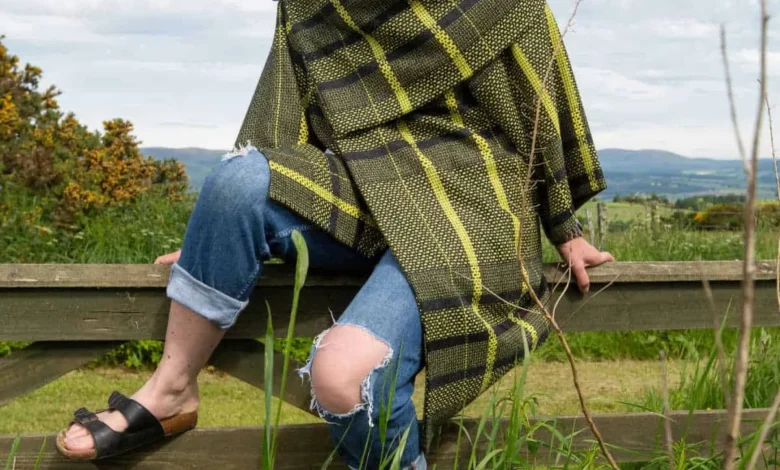
In the Highlands, Prickly Thistle operates a mill powered entirely by renewable energy, producing certified B-Corp ethical tartan and apparel from 100% natural, plastic-free textiles. The company employs century-old traditional handlooms and eliminates fabric waste entirely during production. In a notable departure from conventional garment construction, Prickly Thistle avoids the use of zippers and buttons—components that complicate recycling and restrict sizing flexibility—opting instead for adjustable straps and buckles that accommodate a multi-inch sizing range, thereby enhancing garment durability.

Regional Artisanal Excellence and Specialized Craft
Scotland’s geographic diversity, from the Northern Isles to the urban centers of Edinburgh and Glasgow, supports a vibrant network of specialized studios and independent designers. Hilary Grant, based in Orkney, produces weather-resistant knitwear accessories using high-grade lambswool sourced from farms with exemplary animal welfare and land management practices. Machine-knitted and hand-finished in Orkney, with additional production facilities in Ayrshire, the brand utilizes RWS-certified, mulesing-free yarns dyed with low-impact agents.
In Peterhead, The Croft House designs and manufactures natural-fiber knitwear for men and women, ensuring that all raw materials are sourced domestically within the UK. With the exception of select technical components in socks requiring minor synthetic reinforcement for structural integrity, the collection is entirely plastic-free. Many garments are manufactured using seamless knitting techniques to eliminate cutting waste, alongside collections crafted from un-dyed, raw yarns to minimize chemical processing.

Urban centers continue to incubate retail and manufacturing innovation. In Edinburgh, Godiva has served as an ethical retail institution for over twenty years. Alongside curated vintage collections, Godiva operates an in-store studio dedicated to its "Reworked" line, transforming vintage garments into contemporary silhouettes while supporting local independent designers. Totty Rocks, another Edinburgh mainstay, handcrafts bespoke occasion wear, tailored coats, and bridal attire to order, minimizing inventory waste and garnering international acclaim from sustainable fashion advocates. Meanwhile, Kestin champions menswear production centered on durable fabrics, transparent supply chains, and localized manufacturing partnerships that prioritize fair wages and community engagement.
Industry Implications and Market Outlook
The collective trajectory of these eleven enterprises illustrates a viable economic model for regional manufacturing within the global apparel sector. By shifting away from volume-driven production models and embracing localized supply chains, Scottish sustainable brands are mitigating the environmental externalities associated with international shipping and synthetic fiber degradation.

Industry analysts note that while scaling circular and zero-waste manufacturing presents distinct logistical challenges—particularly regarding labor costs and material sorting—consumer demand for traceability is accelerating. Regulatory bodies in both the UK and the European Union are increasingly scrutinizing greenwashing claims, making verified credentials such as B-Corp certification and transparent material sourcing vital competitive advantages. As Scotland’s ethical fashion sector continues to mature, its integration of heritage craftsmanship with modern circular economics offers an instructive case study for systemic reform across the broader international textile industry.