The curious case of two “different” pairs of Banana Republic FACTORY Travel Jeans


The Discrepancy Incident
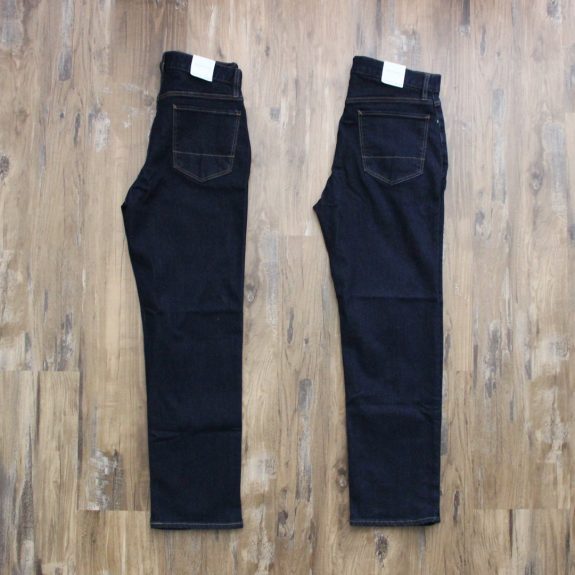
The issue came to light following a routine procurement of Banana Republic Factory "Traveler" jeans, a staple item frequently recommended for its comfort and versatility. In an attempt to verify consistent sizing across different inseams, a comparative order was placed during a recent promotional sale. Two pairs of jeans, both labeled with a 32-inch waist, were acquired: one marked with a 30-inch inseam and the other with a 32-inch inseam.
Upon delivery, a side-by-side physical inspection revealed a striking lack of manufacturing uniformity. While the administrative labels on both pairs were internally consistent—each garment featured four separate tags confirming the respective 30-inch and 32-inch specifications—the actual measurements contradicted these labels. Subsequent analysis determined that both pairs possessed an identical 29.5-inch inseam, regardless of the intended manufacturing specifications. This indicates a failure in the production-line quality control process, where labeling systems are no longer synchronized with the final cut and sew phase of garment assembly.
Historical Context and Manufacturing Shifts
Banana Republic Factory has historically been lauded for its ability to navigate the complexities of global supply chains. Throughout recent years, which have been defined by fluctuating trade tariffs, rising international logistics costs, and the volatility of the global textile trade, the brand appeared to maintain its price-to-quality ratio more effectively than many of its competitors.
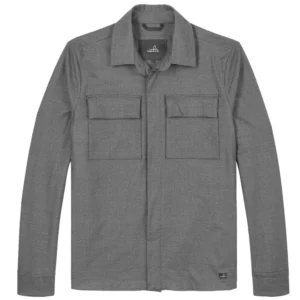
However, observers of the retail landscape have noted a broader pivot in the brand’s product composition. Industry analysts have pointed to an increasing reliance on fully synthetic materials, particularly in the company’s suiting lines, as a potential indicator of cost-cutting measures. This shift away from traditional natural fibers like wool or high-quality cotton blends toward synthetic alternatives is a common tactic used by retailers to hedge against inflationary pressures. While this keeps the retail price point accessible, it often results in a degradation of the tactile and aesthetic quality that initially defined the brand’s market position.
Industry-Wide Volatility
The incident involving the Traveler jeans does not appear to be an isolated event restricted to a single retailer. The apparel industry is currently navigating a period of profound uncertainty, characterized by a "triple threat" of supply chain instability: fluctuating raw material costs, the normalization of "fast fashion" manufacturing timelines, and labor market volatility in major textile hubs such as Southeast Asia and the Indian subcontinent.
Market data from the third quarter of 2026 suggests that garment manufacturers are under significant pressure to maintain volume while absorbing increased operational overheads. When margins are squeezed, internal quality assurance departments are often the first to see budget reallocations. Consequently, consumers are reporting an uptick in "sizing drift," where garments of the same SKU vary significantly in fit and finish. This phenomenon is becoming increasingly prevalent across the mid-market, as companies struggle to reconcile the need for high-volume output with the technical requirements of standardized sizing.
The Implications for Retail Consumers
The current state of apparel manufacturing mandates a shift in consumer behavior. The expectation that a specific size label equates to a standardized measurement is no longer a safe assumption. This is particularly relevant for online consumers who rely on digital storefronts to provide consistent sizing charts. When these charts fail to map to the reality of the delivered product, the result is a sharp increase in return rates—a costly burden that ultimately affects both the retailer’s bottom line and the consumer’s shopping experience.

For the retail sector, the implications are twofold. First, there is the immediate risk of brand dilution. If a consumer’s primary value proposition for a brand is "reliability," and that reliability is compromised by inconsistent sizing or lower-grade materials, the brand equity of the diffusion line suffers. Second, the logistical costs associated with managing a higher volume of returns due to manufacturing errors can erode the very profit margins that the company sought to protect by cutting costs in production.
Official Stance and Future Outlook
As of this report, there has been no formal statement from the parent organization regarding specific changes to their quality assurance protocols for the Factory division. However, independent retail audits suggest that major fashion conglomerates are quietly updating their internal metrics to better account for variance in garment production.
Experts advise that consumers treat all new apparel acquisitions with heightened scrutiny. The "trial-on-arrival" method—whereby tags are left intact and the garment is measured against known benchmarks before being subjected to any laundering or permanent alterations—has become a necessary precaution. The "Caveat Emptor" (buyer beware) principle, once largely reserved for high-value purchases like automobiles or electronics, is increasingly applicable to the daily purchase of mass-market clothing.
Conclusion: Navigating the Market
The experience with the Banana Republic Factory Traveler jeans serves as a case study for the current state of the global apparel market. While the brand has served as a reliable staple for many, the evidence of inconsistent manufacturing highlights a growing gap between corporate branding and the reality of factory-floor execution.

Looking forward, the industry is likely to see a period of correction. Brands that prioritize transparency regarding their manufacturing standards and invest in rigorous quality control will likely differentiate themselves from competitors who continue to allow "sizing drift" to become the status quo. For the average shopper, the path forward involves increased vigilance, a willingness to verify specifications manually, and a tempered expectation regarding the consistency of mass-produced goods in an era of unprecedented supply chain disruption. As the retail sector continues to creak under the weight of global economic pressures, the consumer must remain the final arbiter of quality, utilizing the tools of data, measurement, and critical evaluation to navigate an increasingly unpredictable retail environment.
Related posts: