Kodak Ektar 100 Continues to Define Ultra-Fine Grain and Vibrant Color Saturation for Analog Photographers

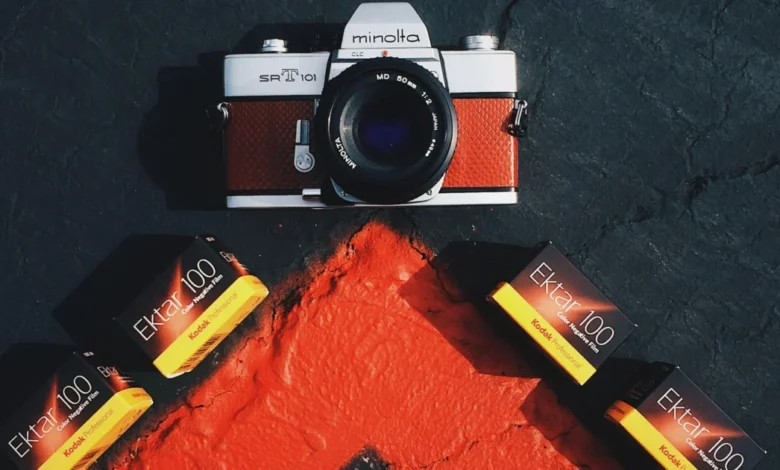
As the analog photography revival continues to sustain global interest in traditional film stocks, Kodak Ektar 100 remains one of the preeminent color negative films available on the market. Renowned for delivering exceptionally fine grain, high sharpness, and punchy, vivid color reproduction, the low-speed emulsion bridges the technical gap traditionally occupied by reversal (slide) films while retaining the exposure latitude inherent to modern color negative stocks.
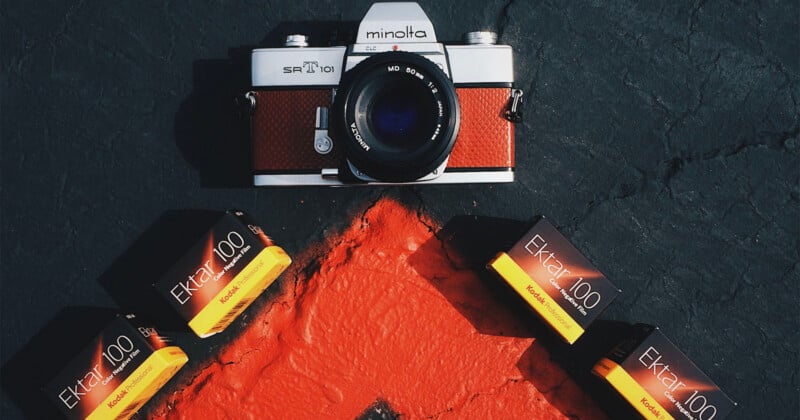
Historical Evolution: From Premium Optics to Emulsion
The pedigree of the Ektar name traces back significantly further than its contemporary incarnation as a photographic film. Introduced by Eastman Kodak in the 1930s, the "Ektar" designation—derived from a portmanteau of Eastman Kodak and Tessar—was originally reserved exclusively for the company’s highest-tier, professional-grade camera lenses. These premium optics were fitted across a diverse array of equipment formats, ranging from compact Bantam and Retina models to complex large-format studio cameras, serving as an industry benchmark for mid-century optical engineering well into the 1960s.

The brand transitioned from hardware to chemistry in 1989 with the rollout of the original Ektar film line, which included ultra-fine-grained variations such as Ektar 25 and Ektar 1000. Although those early iterations found a dedicated following among specialized shooters, shifting market conditions led Kodak to discontinue the line in 1997.

The 2008 Relaunch and Market Positioning
Following a prolonged absence from the catalog, Kodak officially reintroduced the Ektar banner in September 2008 with the worldwide release of Ektar 100. Initially distributed solely in the standard 135 (35mm) format, the emulsion’s commercial success prompted the rapid expansion of the product line to include 120 medium format rolls as well as 4×5 and 8×10 large format sheet film.

The debut arrived at a critical juncture for the analog industry. Amid the gradual phasing out of legendary stocks like Kodachrome, Kodak positioned Ektar 100 as a direct, color-negative alternative to saturated transparency films such as Fuji Velvia. By offering a high-saturation profile coupled with the exposure forgiveness of color negative chemistry, Ektar quickly captured significant market share among landscape, commercial, and fine-art photographers.

Technical Performance and Imaging Characteristics
Ektar 100 is characterized by two defining technical attributes: extreme resolving power driven by ultra-fine grain, and high-saturation color rendition.

In terms of grain structure, Kodak engineered the emulsion to yield minimal textural disruption, a feature particularly advantageous for large-format enlargement. When utilized in medium or large-format configurations (such as 120 or 4×5 sheet film), the film exhibits virtually imperceptible grain under high-magnification scanning, allowing for expansive prints with exceptional micro-detail. This level of sharpness pairs with a contrast profile that accentuates structural lines and textural boundaries.

Colorimetry represents the film’s most distinct operational characteristic. Unlike Kodak Portra emulsions—which are formulated with lower contrast and muted, naturalistic skin tones tailored for portraiture—Ektar 100 emphasizes vibrant, saturated hues. This makes the stock a preferred choice for landscape photography, where saturated blues, deep reds, and rich greens enhance environmental depth.

Long-Exposure Reliability and Slow-Speed Applications
With a nominal sensitivity rating of ISO 100, Ektar occupies a diminishing category of slow-speed color negative films currently in production. This lower speed profile provides distinct technical advantages for photographers utilizing specialized equipment, such as pinhole cameras or those employing high-density neutral density (ND) filters for daytime long-exposure photography.

The film’s performance under extended exposure times—commonly referred to as reciprocity failure—remains relatively stable compared to competing transparency stocks. Official manufacturer data indicates that exposures up to one second require no time compensation. For exposures extending to 10 seconds, only minimal adjustments are necessary, though exposures reaching 30 seconds generally necessitate an additional stop of light to offset reciprocity loss. This predictability contrasts favorably with reversal films like Fuji Velvia 50, which is known to experience pronounced color shifts (frequently toward green) after only a few seconds of prolonged exposure.

Practical Limitations in Portraiture
While highly praised for landscape and architectural applications, Ektar 100’s aggressive saturation profile presents specific challenges within portrait photography. The emulsion’s propensity for high color contrast can render human skin tones overly ruddy or saturated.

Industry professionals generally advise cautious application when utilizing Ektar for studio or close-up portrait work, recommending its deployment primarily for environmental portraits where specific clothing colors, vibrant backgrounds, or distinct features—such as bright hair or saturated eye color—benefit from the film’s color punch.

Broader Industry Impact and Outlook
As consumer availability of legacy transparency emulsions fluctuates, Kodak Ektar 100 maintains a vital structural role within the contemporary analog supply chain. Its unique combination of fine grain, high resolution, and vivid color saturation ensures its continued utility for professional photographers, advanced hobbyists, and institutional archives seeking archival-grade analog capture.

Industry observers note that as seasonal shifts bring vibrant autumn foliage into focus, demand for high-saturation color stocks typically experiences an uptick. Retailers and specialty laboratories continue to position Ektar 100 as an essential staple for analog shooters navigating complex lighting environments, large-format printing demands, and specialized long-exposure methodologies.