Capturing the Sacred: Lev L. Spiro on Photography, Wilderness, and the Celtic Concept of Thin Places

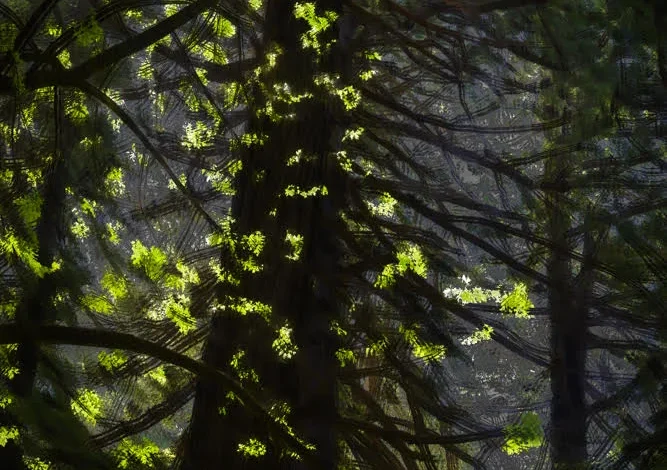
The contemporary landscape of fine art photography is increasingly preoccupied with an intangible, elusive quality that transcends mere documentation. In Celtic spiritual traditions, these spaces are known as "thin places"—geographical locations where the veil between the ordinary world and the spiritual realm is believed to grow exceptionally narrow, rendering the sacred palpable. While historically rooted in ancient folklore and theology, this philosophical framework has found a modern champion in acclaimed film, television, and fine art photographer Lev L. Spiro. Through his evocative portfolios, including the critically acclaimed series Thin Places and his ongoing project Elemental, Spiro investigates how visual media can capture moments of profound temporal and spatial suspension.
Spiro’s artistic trajectory intersects deeply with the mechanics of heightened perception. Reflecting on his formative years spent attending a wilderness camp in Vermont between the ages of eleven and thirteen, the photographer notes that his initial encounters with these phenomena predated his knowledge of the terminology. Far from being confined to grand canyon vistas or dramatic geographical anomalies, these encounters were defined by total immersion in the natural world, away from urban and suburban centers. This foundational relationship with the outdoors laid the groundwork for a multidisciplinary creative philosophy that now influences not only his personal body of work but also his highly sought-after educational workshops.
The Mechanics of Heightened Perception and Receptivity
Teaching landscape and nature photography requires a fundamental shift in how practitioners view their environment. In his popular course titled Thin Places: Photography and the Sacred in Nature, offered through the Santa Fe Workshops, Spiro addresses a common hurdle faced by technically proficient photographers: the transition from objective description to emotional expression. The curriculum draws heavily on the teachings of legendary photography pioneers Minor White and Paul Caponigro, both of whom emphasized receptivity, internal visualization, and the capacity to allow a subject to reveal itself organically rather than through aggressive framing.
According to Spiro, the process begins by teaching students how to move from ordinary vision to heightened field perception. This involves slowing down the creative cadence and opening all senses to shifting variables, including light, movement, form, time, color, texture, and spatial relationships. Rather than seeking out pre-determined compositions, photographers are encouraged to cultivate a state of readiness. Spiro frequently references the guidance of renowned photographer Sam Abell, noting the importance of allowing oneself to be physically and mentally "stopped" by an environment. Whether it is a fleeting glimpse of a waterfall filtered through dense foliage or a transient shaft of light piercing a dark foreground, these interruptions often signal the presence of a thin place. However, because these natural phenomena are inherently temporary—extinguished by a shifting breeze or a passing cloud—the photographer must learn to recognize and capture the moment before it dissolves entirely.

Chronology of a Artistic Evolution: From Narrative Directing to Fine Art
Lev L. Spiro’s transition from a prolific career in film and television direction to fine art landscape photography illustrates a deliberate evolution in visual storytelling. While narrative directing relies on externalized dialogue, structured pacing, and cinematic exposition, Spiro’s photographic practice hinges on stillness, introspection, and experiential resonance.
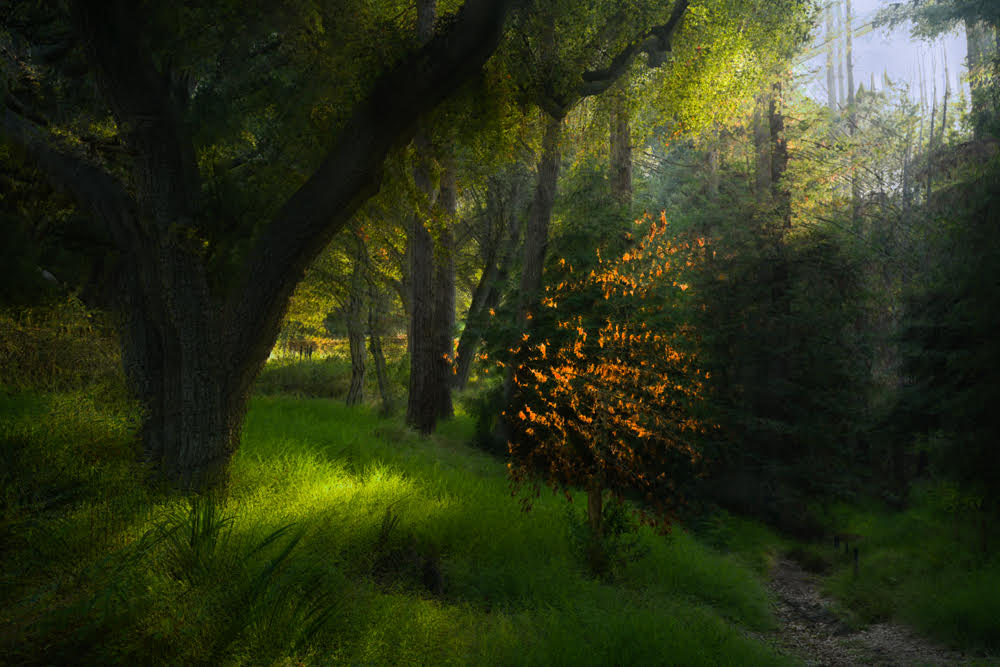
The chronology of his recent photographic output demonstrates a methodical exploration of natural elements. In his series Thin Places, Spiro concentrated heavily on the temporal window of the "golden hours"—the two hours immediately following sunrise and the two hours preceding sunset. During these intervals, the low angle of the sun maximizes shadows and creates an evocative atmosphere that enhances the otherworldly quality of forests, glens, and hidden clearings.

Building upon this foundation, Spiro later pivoted toward longer technical exposures in his subsequent series, Elemental. This body of work necessitated a shift in methodology, requiring the use of heavy tripods, specialized lenses, and multi-stop neutral density (ND) filters to capture the kinetic energy of running water and shifting cloud cover. The juxtaposition between these two bodies of work underscores a core tenet of Spiro’s teaching philosophy: the necessity of maintaining enough flexibility to abandon preconceived artistic agendas when the environment presents an unexpected visual reality.
Pedagogical Impact and the Santa Fe Workshops Phenomenon
The commercial and critical success of Spiro’s educational programming highlights a broader cultural appetite for mindful engagement with nature. The Thin Places workshop series hosted by the Santa Fe Workshops achieved rapid capacity status, selling out multiple consecutive sessions and generating a substantial waiting list of eager participants.

Industry analysts and workshop coordinators attribute this unprecedented demand to a saturation of digital imagery that relies strictly on high-resolution documentation and heavy post-processing. Modern photographers, particularly those with advanced technical skills, are increasingly seeking frameworks that allow them to infuse their portfolios with psychological depth and spiritual resonance.
Spiro maintains that the primary takeaway for his students is that thin places are not exclusive geographical anomalies waiting to be discovered on a tourist map. Instead, they emerge dynamically through sustained attention, unhurried curiosity, deep presence, and an emotional vulnerability that permits the surrounding environment to leave a lasting mark on the observer. By shifting the artistic goal from proving a location’s sacred status to conveying an internal personal experience, students learn to forge a profound, lasting connection with their audiences.
Ethical Considerations and Environmental Stewardship in Sacred Spaces

As interest in photographing remote and ecologically sensitive natural environments surges, questions regarding environmental ethics and cultural respect have come to the forefront of contemporary nature photography. Spiro emphasizes that the creation of work within fragile ecosystems demands rigorous adherence to "leave no trace" principles.
Because thin places frequently overlap with indigenous ancestral lands or sites of profound spiritual significance to various communities, ethical navigation requires more than standard environmental conservation. Photographers must balance their artistic pursuits with a deep respect for the cultural heritage and traditional beliefs tied to these locations. Spiro notes that his engagement with these environments is fundamentally collaborative and respectful; the only element removed from the space is the captured image, while the physical integrity and spiritual sanctity of the site remain entirely undisturbed.
Implications for the Future of Landscape Photography

The resonance of Spiro’s work and pedagogy points toward a significant evolution in how humanity interacts with the natural world through a camera lens. In an era dominated by hyper-accelerated digital consumption and instantaneous image sharing, the deliberate pace required to identify and photograph a thin place acts as a counterweight to modern distraction.
Furthermore, the intersection of Celtic spiritual traditions with modern photographic technique demonstrates that ancient frameworks of thought continue to offer valuable paradigms for contemporary artistic expression. By reframing landscapes not merely as economic resources or scenic backdrops, but as sites of potential psychological and spiritual transformation, artists like Spiro elevate nature photography into a realm of philosophical inquiry.
Ultimately, the enduring popularity of Spiro’s exhibitions and educational modules suggests that viewers and creators alike are hungering for work that transcends literal description. As photographers continue to embrace the principles of heightened perception and emotional openness, the boundaries between the observer and the environment will likely continue to blur, ensuring that thin places remain a vital, living component of contemporary visual culture.