Half a Century of Shred: How Burton Snowboards is Redefining Its Legacy for a New Era of Global Expansion

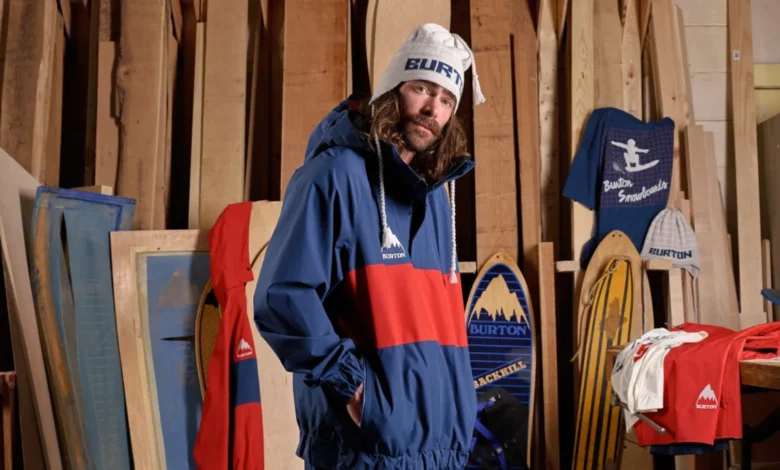
Fifty years after Jake Burton Carpenter first tinkered with the design of a wooden plank to carve turns on snow, the company he founded stands at a critical inflection point. As the snowboarding industry navigates a post-pandemic retail landscape and shifts in global winter sports demographics, Burton remains the sport’s primary standard-bearer. With the brand transitioning into a new chapter under CEO Denny Bruce and the continued strategic guidance of chairwoman Donna Carpenter, the company is pivoting toward a multifaceted growth strategy that emphasizes year-round apparel, grassroots community investment, and aggressive expansion into the rapidly maturing Chinese market.
A Half-Century of Evolution: From Vermont to the World
The history of Burton is effectively the history of modern snowboarding. Founded in 1977 in Londonderry, Vermont, Jake Burton Carpenter transformed the sport from a fringe hobby into a global cultural phenomenon. Through decades of product innovation—including the development of the first bindings and metal-edge boards—Burton effectively legitimized the sport, forcing ski resorts to open their lifts to a new generation of riders.
Following the passing of Jake Burton Carpenter in 2019, the company faced the existential challenge of maintaining its soul without its visionary founder. Donna Carpenter, who assumed a primary leadership role as owner and board chair, has focused on preserving the company’s independence. Unlike many of its competitors that have been absorbed by private equity firms or global conglomerates, Burton remains a privately held enterprise. This structural autonomy, according to leadership, is the cornerstone of the company’s current resilience. It allows for a long-term fiscal horizon that prioritizes community health and product integrity over the quarterly performance metrics often demanded by external shareholders.
Strategic Leadership Transitions
The appointment of Denny Bruce as CEO in late 2024 marked the culmination of a deliberate leadership search. Bruce, who previously held roles at Vans and Dickies, brings a background characterized by the management of complex wholesale and direct-to-consumer (DTC) ecosystems. His return to Burton—having served as a regional manager earlier in his career—is viewed as a strategic alignment of internal institutional knowledge and external market expertise.
The transition from interim leadership back to a permanent CEO structure provides the company with the stability required to execute its multi-year expansion plan. Under this new management, the focus is not merely on maintaining market share in traditional categories—where Burton has historically commanded nearly half of the total snowboarding market—but on diversifying the brand’s touchpoints with the consumer.
The Pivot to Lifestyle Apparel
While Burton’s identity is anchored in hardgoods—boards, bindings, and boots—the company is undergoing a calculated shift toward lifestyle apparel. Recognizing that its customer base seeks to maintain a connection to the brand beyond the winter season, Burton is expanding its catalog to include hoodies, rugby shirts, fleeces, and athletic wear.
This diversification is intended to mitigate the seasonality of the winter sports industry. By positioning itself as a lifestyle brand, Burton aims to capture a larger share of the "mountain-to-street" fashion movement. A central pillar of this effort is the introduction of "Zeb’s Closet," a collaborative capsule collection with professional snowboarder Zeb Powell. Powell, a prominent figure in the snowboarding community and the first Black athlete to secure a gold medal in the X Games, represents a shift in how the brand communicates with younger, more diverse audiences. The collection, which debuted alongside the opening of a new 5,000-square-foot flagship store in Manhattan, serves as a proof-of-concept for this more accessible, lifestyle-focused strategy.
Global Market Dynamics: The Rise of China
One of the most significant data points in Burton’s current growth trajectory is the explosion of the winter sports economy in China. Recent reports indicate that the Chinese winter sports market has quadrupled in value, approaching an estimated $150 billion.
Market data reveals a distinct cultural divergence between the North American and Chinese snowboarding landscapes. In the United States, snowboarding historically had to fight for legitimacy against a deeply ingrained, multi-generational ski culture. Conversely, China’s entry into winter sports has been characterized by a preference for snowboarding, which currently accounts for approximately 75% of the country’s board-and-ski market. This "leapfrog" effect—where new participants in a developing market skip the traditional ski-first adoption phase—presents a unique opportunity for Burton to cement its position as the premier brand in the world’s fastest-growing winter sports region.
Grassroots Engagement and Inclusivity
Beyond its commercial ventures, Burton continues to invest heavily in the social infrastructure of the sport. Programs such as "Culture Shifters" are explicitly designed to dismantle the long-standing perception of snowboarding as a demographically homogenous activity. By actively fostering participation among people of color, the brand is working to broaden the base of the sport.
Additionally, the "Lightweight" program and the global "Mystery Series" competitions represent a commitment to the grassroots level. By supporting up-and-coming riders and organizing accessible, international competitive events, Burton maintains its relevance at the amateur level, which often serves as the pipeline for future professional talent and brand loyalty.
A Hybrid Retail Model: The Enduring Role of Wholesale
Despite the global surge in e-commerce and the company’s own expansion into DTC channels—which now include 66 retail locations worldwide—Donna Carpenter maintains that the wholesale model remains the "heart and soul" of the industry. Currently, wholesale accounts for roughly 60% of Burton’s total sales.
This underscores a strategic decision to avoid the total disintermediation of retail partners. By balancing its presence in large-scale retailers like REI with support for independent, specialty snowboard shops, Burton ensures that it remains embedded in the local communities that provide the authentic culture of the sport. This hybrid approach is designed to balance the operational efficiencies of a direct digital business with the brand-building power of localized, expert-led retail environments.
Analysis of Future Implications
The challenges facing Burton in the coming decade are significant. The global climate crisis poses a direct threat to the longevity of the snow sports industry, and the competition for consumer discretionary spending is more intense than ever. However, Burton’s status as a private, debt-averse entity provides it with a cushion that its competitors may lack.
By focusing on the following three vectors, the company appears positioned for long-term sustainability:
- Geographic Diversification: Capitalizing on the rapid adoption of snowboarding in Asia, particularly China, to balance the maturation of the North American market.
- Product Line Expansion: Successfully transitioning from a seasonal equipment manufacturer to a year-round lifestyle apparel brand.
- Community Anchoring: Utilizing grassroots initiatives to ensure that the sport remains accessible and relevant to a more diverse demographic, thereby securing the next generation of riders.
As Burton marks its 50th anniversary, the brand is demonstrating that legacy is not merely a matter of historical achievement, but a continuous process of adaptation. By maintaining a firm grip on its core identity while aggressively pursuing new categories and markets, the company is attempting to prove that a heritage brand can successfully navigate the complexities of 21st-century retail without losing the culture that defined its inception. The next phase for the company will likely be judged by its ability to scale these lifestyle collections while simultaneously maintaining the high-performance standards that have kept its boards at the center of the snowboarding world for half a century.