The Lipstick Lesbians and the New Era of Beauty Discernment in an Age of Information Overload

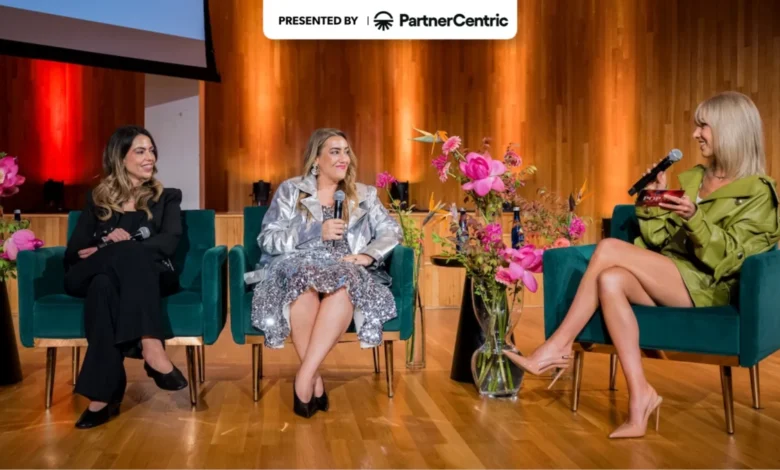
The modern beauty consumer is currently navigating an unprecedented landscape of digital saturation. According to recent industry analytics, the global beauty market is expected to reach $646 billion by 2024, a growth trajectory fueled largely by the relentless output of short-form video content on platforms like TikTok and Instagram. Yet, as the volume of available information regarding ingredients, efficacy, and brand ethics skyrockets, a secondary crisis has emerged: a profound deficit in consumer discernment. This central tension—the gap between having access to data and possessing the wisdom to interpret it—served as the primary focus of a recent panel discussion hosted by Glossy Pop NYC, featuring industry experts and content creators Alexis Androulakis and Dr. Christina Basias Androulakis.
The duo, known collectively as The Lipstick Lesbians, has leveraged their unique background in beauty product formulation and academic research to amass a following of nearly 1.8 million users. Their rise to prominence represents a shift in how beauty enthusiasts consume media, moving away from traditional influencer marketing toward a more analytical, ingredient-focused methodology.
A Chronology of Industry Disruption
The journey of The Lipstick Lesbians is deeply rooted in the practical realities of the beauty business. Their career trajectory can be categorized into three distinct phases:
- The Foundational Phase (2019–2022): The couple launched Fempower Beauty, a cosmetics line born out of a desire for authentic representation. Investing upwards of $500,000 of personal capital, they operated the brand while documenting the granular difficulties of supply chains, manufacturing, and formulation.
- The Viral Pivot (2022–2024): Following the strategic decision to pause Fempower operations due to the complexities of scaling as an independent entity, the pair transitioned into educational content. Videos capturing Alexis Androulakis evaluating products in retail environments like Sephora—analyzing packaging, texture, and ingredient integrity—gained significant traction, netting 500,000 followers in their inaugural year.
- The Ecosystem Era (2025–Present): With the formal closure of Fempower Beauty in 2025, the pair solidified their business model, which now encompasses professional speaking, high-level product development consulting, and a comprehensive eight-hour masterclass on beauty formulation.
The Problem of Discerning Truth from Noise
During the Glossy Pop NYC event, Dr. Christina Basias Androulakis highlighted a critical flaw in the current digital ecosystem. "There is more beauty content, more product, and more advice coming at us than ever before," she noted. "But access to information isn’t the same as understanding it."
This observation aligns with current psychological research regarding "information fatigue syndrome," where the sheer volume of competing claims leads consumers to either disengage or rely on heuristic shortcuts—such as the perceived authority of an influencer—rather than scientific evidence.
The panel argued that social media algorithms exacerbate this issue by favoring "extreme opinions." In the beauty space, this often manifests as "all-or-nothing" reviews that label products as "revolutionary" or "terrible." This binary framing, while highly effective for engagement metrics, fails to account for the nuance of individual skin chemistry and personal preference. Alexis Androulakis emphasized that the pressure to produce high-engagement, inflammatory content often forces creators to bypass the necessary research required to truly explain how a product functions.
The Role of Artificial Intelligence in Beauty
The rise of generative AI presents a double-edged sword for the beauty industry. On one hand, AI tools offer the potential to democratize knowledge. They can aggregate complex ingredient lists, cross-reference them with scientific literature, and summarize findings for the layperson. However, the panel was clear on the limitations of such technology.
Dr. Basias Androulakis, who holds a Ph.D. in education and technology, warned that AI is prone to "hallucinations"—the generation of false information delivered with absolute confidence. Furthermore, while AI excels at pattern recognition and data organization, it lacks the human capacity for subjective evaluation.
"AI can support your research, but it shouldn’t replace the research," she stated. The implication for retailers is significant: while AI agents will inevitably become the front line of digital customer service and product recommendations, they cannot replicate the sensory experience of a product. Whether a formula feels "right" on the skin, or whether a specific scent profile aligns with a user’s emotional state, remains firmly in the domain of human expertise.
Innovation Beyond the Marketing Hype
The Lipstick Lesbians are currently applying their philosophy of consumer-led innovation through their new direct-to-consumer venture, Leaked Labs, which launched in March. The brand represents a radical departure from traditional beauty retail cycles. By replacing standard makeup pans with "flexible pigment discs" and adopting a model where products are released in limited, experimental batches, they are inviting their audience into the R&D process itself.
This approach is a direct critique of the industry’s current obsession with performance claims—such as the "96-hour wear" marketing that has become a staple of current product launches. "At a certain point, we don’t need 96-hour makeup," Alexis Androulakis argued. Instead, she posited that true innovation lies in sensory experiences, thinner textures, and dimensional finishes that reflect the actual needs of the consumer rather than the marketing department’s desire for a bullet-point feature.
Broader Industry Implications
The success and methodology of The Lipstick Lesbians signal a maturation of the beauty consumer base. As the market becomes increasingly crowded, the competitive advantage is shifting away from brands that simply spend the most on advertising toward those that provide the most transparency and education.
- The Shift to "Beauty Literacy": Brands that fail to provide clear, evidence-based information regarding their formulations are likely to face increased scrutiny from an audience that is becoming more skilled at reading ingredient lists.
- The Human-AI Hybrid Model: The future of beauty retail will likely rely on a hybrid approach. AI will handle the logistical heavy lifting—narrowing down choices based on skin type and ingredient preferences—while human experts will continue to provide the "taste," "storytelling," and "intuition" that AI cannot synthesize.
- Radical Transparency: The Leaked Labs model suggests that the next generation of successful brands will be those that treat their customers as co-evaluators. By documenting the failures and the successes of the product development cycle, brands can foster a deeper level of loyalty than traditional, polished marketing campaigns.
The Human Element in a Digital Future
As the panel concluded, the conversation returned to the fundamental purpose of beauty. While technology may continue to optimize the search for the "perfect" mascara or foundation, the act of using beauty products is inherently non-linear and emotional.
"What should remain human is taste, storytelling, touch, intuition, and connection," Alexis Androulakis remarked. Her words serve as a reminder that the beauty industry’s primary function is not merely the correction or optimization of a person’s appearance, but the facilitation of identity, play, and self-expression.
For the average consumer, the path forward is one of skepticism and curiosity. The tools available to research a product are more powerful than they have ever been, but they require a foundation of "beauty literacy" to be used effectively. As the industry continues to evolve, the most successful brands and creators will be those that recognize that the ultimate value lies not in the product itself, but in the human connection that defines how we choose to present ourselves to the world.
In the final analysis, the "discernment problem" identified by the Androulakis duo is not a barrier to the beauty industry—it is an invitation. It is an opportunity for consumers to move from passive purchasers to active participants, and for the industry to move from a focus on high-volume, high-hype sales toward a more sustainable, transparent, and human-centric model of innovation. As AI continues to integrate into the consumer journey, the premium on human expertise, empathy, and taste will only increase, proving that even in a highly digitized world, the most critical component of beauty remains fundamentally human.
Related posts: