The Good Trade Editors Unveil Ultimate Holiday Gift Guide Highlighting Nontoxic and Sustainable Upgrades For 2026

The holiday shopping season often presents consumers with a profound paradox: the desire to express affection and generosity through gift-giving frequently clashes with the reality of contributing to global cycles of overproduction, resource depletion, and excessive waste. In response to this recurring environmental challenge, the editorial team at lifestyle publication The Good Trade has released its comprehensive 2026 Holiday Gift Guide, a meticulously curated selection of nontoxic, organic, and ethically produced upgrades spanning bedding, beauty, apparel, and home goods.
Drawing upon a decade of rigorous research, hands-on product testing, and investigative reporting into sustainable brands, the editorial staff aims to pivot holiday consumerism away from transient novelties and toward items that foster long-term health and wellness. Rather than merely introducing another material object into a recipient’s household, each recommended product is vetted to ensure it introduces safer, healthier daily habits, effectively combining the spirit of seasonal gifting with conscientious consumer stewardship.
The Anatomy of Conscientious Consumption: Market Background and Consumer Trends
Over the past decade, consumer awareness regarding the hidden chemical compositions of everyday goods has shifted dramatically. Public health reports from organizations such as the Environmental Working Group (EWG) have consistently highlighted the presence of endocrine disruptors, per- and polyfluoroalkyl substances (PFAS), phthalates, and synthetic volatile organic compounds (VOCs) in conventional textiles, personal care formulations, cookware, and cleaning supplies.
Simultaneously, the textile and manufacturing industries have faced intense scrutiny for their carbon footprints, labor practices, and contribution to global landfill capacities. In response, third-party certifications such as the Global Organic Textile Standard (GOTS), Fair Trade Certified, B Corporation status, and MADE SAFE have emerged as critical benchmarks for verifying corporate accountability and environmental safety.
The Good Trade editors have structured their 2026 guide around these rigorous standards. By prioritizing brands that invest in transparent supply chains and non-harmful material inputs, the publication attempts to mitigate the environmental degradation typically associated with Q4 retail surges, while providing readers with actionable pathways to detoxify their domestic environments.
Curated Categories and Product Analysis
The 2026 guide categorizes recommendations by lifestyle utility, ensuring that gift-givers can tailor their selections to specific recipient profiles—from the perpetually chilly individual to the home chef and the dedicated wellness enthusiast. Below is a detailed breakdown of the featured selections, their production standards, and their functional implications.
-
Maggie’s Organics Wool Socks and Sustainable Basics
Target Audience: Individuals seeking thermal comfort and ethical apparel production.
Price Point: $25 (Socks); varying for other basics.
Established in 1992, Maggie’s Organics has operated as a pioneer in the certified organic textile sector, emphasizing safe labor practices, equitable working conditions, and responsible agricultural sourcing. Their featured fair-trade Merino wool socks are knit domestically in the United States, utilizing traceable animal fibers that provide superior thermal regulation without synthetic blending. The brand’s broader catalog includes organic cotton crew socks and fleece-legging base layers. From a dermatological standpoint, utilizing untreated organic fibers next to the skin reduces the risk of irritation caused by residual processing chemicals and synthetic dyes frequently found in fast-fashion hosiery. -
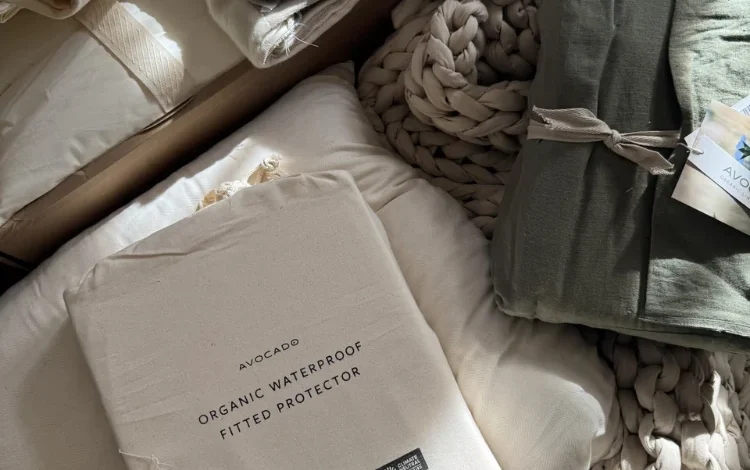
Avocado Organic Bedding
Target Audience: Health-conscious sleepers seeking chemical-free rest environments.
Price Point: Starting at $129.
Avocado has established itself as a market leader in sustainable sleep infrastructure, holding certifications as a B Corp, MADE SAFE, and Fair Trade Certified entity, alongside GOTS-certified organic supply chains. The brand’s organic cotton sheets eliminate the off-gassing of petrochemical-based flame retardants and synthetic softeners commonly found in conventional bedding. Given that humans spend approximately one-third of their lives sleeping—a period during which the body undergoes cellular repair and dermal absorption rates remain high—upgrading to certified organic textiles directly impacts indoor air quality and personal physiological safety. -
Well People Clean Sunscreen
Target Audience: Outdoor enthusiasts and daily skincare consumers.
Price Point: $26.
Addressing the well-documented environmental and physiological concerns associated with conventional chemical sunscreens—such as oxybenzone and octinoxate, which have been linked to endocrine disruption and coral reef bleaching—Well People offers EWG-verified, mineral-based formulations. Their Daygleamer mineral sunscreen serum utilizes non-nano zinc oxide to provide broad-spectrum UV protection while remaining gentle enough for sensitive and pregnancy-safe routines. By focusing on biocompatible ingredients, the product bridges the gap between effective dermatological defense and holistic safety. -
MATE PFAS-Free Activewear
Target Audience: Fitness participants and athleisure consumers.
Price Point: Starting at $58.
A significant environmental and health concern within the athletic apparel industry is the prevalence of PFAS—often referred to as "forever chemicals"—utilized to impart moisture-wicking and stain-resistant properties to synthetic fabrics. MATE addresses this vulnerability by producing activewear exclusively from natural and organic materials, entirely free of synthetic fluorinated compounds. Operating as a Climate Neutral Certified brand with plastic-free packaging, MATE provides size-inclusive options (scaling up to 3XL) that ensure high-intensity movement does not result in dermal exposure to persistent environmental toxins. -
Alter:Bio Synbiotic Cleaning Products
Target Audience: Domestic hosts and eco-conscious cleaners.
Price Point: $31.
Conventional household cleaners frequently rely on harsh surfactants, synthetic fragrances, and quaternary ammonium compounds that contribute to indoor air pollution and respiratory distress. Alter:Bio introduces a biotechnology-driven alternative utilizing probiotic and synbiotic formulations. Rather than deploying aggressive chemical sterilization, these cleansers rely on beneficial microbes to naturally break down organic residues, grease, and odors over extended periods. Packaged in post-consumer recycled plastic, the formulations avoid sulfates, parabens, silicones, phthalates, and PFAS, redefining routine household maintenance through ecological balance. -
Quince Nontoxic Cookware
Target Audience: Culinary practitioners and home chefs.
Price Point: Starting at $50.
The shift away from traditional polytetrafluoroethylene (PTFE) and perfluorooctanoic acid (PFOA) nonstick coatings has accelerated as scientific literature underscores the risks of degraded coating ingestion. Quince’s ceramic nonstick cookware line provides an aluminum body with stainless steel handles and induction-compatible bases, ensuring uniform heat distribution without the release of toxic heavy metals (such as lead and cadmium) or perfluoroalkyl substances. Oven-safe up to 500°F, these culinary tools offer the high-performance nonstick convenience demanded by modern cooks while safeguarding domestic food safety. -
OSEA pH-Balancing Body Wash
Target Audience: Skincare enthusiasts and daily bath product consumers.
Price Point: $32.
Conventional body washes often compromise the skin’s acid mantle through the use of synthetic sulfates and artificial fragrances, which can exacerbate conditions such as eczema and contact dermatitis. OSEA’s Undaria Algae Body Wash utilizes a plant-derived formulation centered around mineral-rich Undaria seaweed, combined with botanical oils including jojoba, coconut, and avocado. Housed in sustainable glass packaging, the product functions simultaneously as a gentle surfactant and a nourishing dermal treatment, aligning personal hygiene with clean beauty standards. -
Pact Organic Cotton Tees
Target Audience: Consumers seeking accessible, high-integrity everyday apparel.
Price Point: $20.
Pact occupies a vital space in the sustainable fashion market by proving that ethical production does not necessitate prohibitive pricing. Utilizing GOTS-certified organic cotton, Fair Trade manufacturing facilities, and carbon-neutral shipping initiatives, the brand delivers durable wardrobe essentials. The accessibility of these foundational pieces encourages consumers to transition away from fast-fashion supply chains, reducing the cumulative water consumption and pesticide runoff associated with conventional cotton agriculture. -
Blueair 2-in-1 Purifier and Humidifier
Target Audience: Indoor wellness advocates and homebodies.
Price Point: $301.
Indoor air quality is an increasingly recognized determinant of overall health, with particulate matter (PM2.5), allergens, and seasonal dryness heavily impacting respiratory function. Blueair’s integrated appliance combines advanced mechanical filtration with humidification technology. Supported by a real-time diagnostic application, the unit provides users with precise metrics regarding indoor pollutant levels. By actively mitigating airborne contaminants and stabilizing humidity during dry winter months, the device offers a foundational infrastructure upgrade for home wellness.
Broader Implications and Editorial Independence
The release of The Good Trade’s 2026 gift guide underscores a broader cultural shift within the retail landscape: consumers are increasingly demanding transparency, durability, and biological safety from the brands they support. By emphasizing utility over excess, the guide challenges the traditional holiday narrative of thoughtless consumption.
Furthermore, the publication maintains a strict editorial separation from commercial partnerships. As detailed by the editorial board, recommendations are derived from independent testing and journalistic vetting rather than brand-owned marketplaces. While affiliate commissions may support the publication’s operational overhead, the integrity of the review process remains anchored in empirical evaluation and environmental accountability.
As the retail sector navigates the complexities of sustainability, guides of this nature serve a dual purpose: they offer practical solutions for conscious consumers while incentivizing manufacturers to adopt safer, more equitable production models for the future.