Tesco completes its global retreat with a 1.7 billion euro sale of its Czech and Slovakian operations to Ahold Delhaize

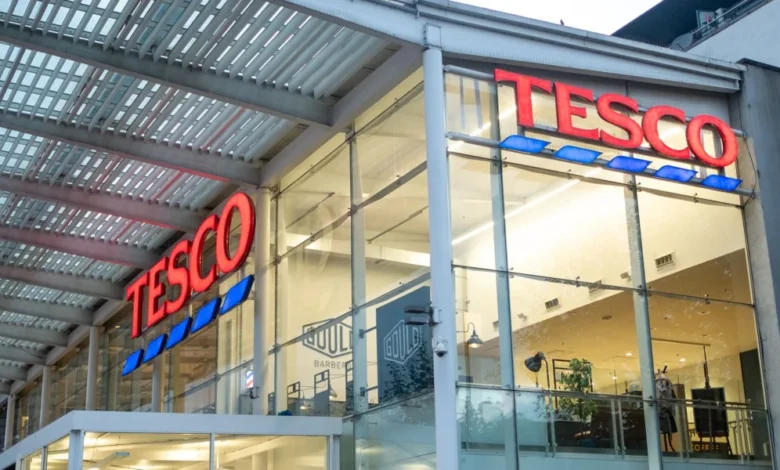
Tesco has officially entered into a definitive agreement to divest its supermarket businesses in the Czech Republic and Slovakia to the Dutch retail conglomerate Ahold Delhaize. Valued at approximately €1.7 billion (£1.5 billion), this transaction represents a watershed moment for the British retail titan, effectively signaling the conclusion of a two-decade-long era of aggressive international expansion. The move serves as the final chapter in a strategic pivot that has seen the company systematically shed its foreign assets to consolidate its dominance within the United Kingdom and Ireland.
The transaction, which is anticipated to finalize in the second half of 2027, follows a rigorous period of portfolio optimization initiated by current Chief Executive Ken Murphy. By offloading these Central European operations, Tesco aims to streamline its corporate structure, reduce operational complexity, and sharpen its focus on its core "food-first" retail ecosystem. For Ahold Delhaize, the acquisition represents a significant expansion of its footprint in Central and Eastern Europe, allowing the company to leverage existing synergies within its regional logistics and supply chain networks.
The Legacy of the Global Ambition
To understand the weight of this divestment, one must look back to the early 2000s, an era when Tesco was widely viewed as the blueprint for the successful international retailer. Under the leadership of Sir Terry Leahy, the company embarked on a rapid, global acquisition spree. By 2011, the retailer had established a physical presence in 13 countries, spanning from the United States to China, and across much of Eastern Europe.
Sir Terry’s vision was predicated on the belief that Tesco’s sophisticated inventory management, proprietary Clubcard data analytics, and operational efficiency could be seamlessly exported to emerging markets. However, the company soon encountered the "local context" paradox. In China, Tesco struggled to compete with agile, hyper-local grocery platforms that better understood the nuances of regional consumer preferences and traditional supply chains. In the United States, the launch of "Fresh & Easy" in 2007 was marred by a failure to accurately forecast the shopping habits of American consumers, leading to significant financial hemorrhaging. By 2012, under the tenure of Philip Clarke, the reality of these international struggles forced a change in strategy. The withdrawal from the U.S. market, followed by a phased exit from China, marked the beginning of a long-term contraction.
A Chronology of Retrenchment
The following timeline illustrates the evolution of Tesco’s global strategy over the last two decades:
- 2007: At the height of the expansionist phase, Tesco operates in 13 countries, with Sir Terry Leahy positioning the brand as a global retail powerhouse.
- 2012: Philip Clarke announces the formal withdrawal from the loss-making Fresh & Easy venture in the United States.
- 2013-2015: The company begins a series of strategic reviews of its Asian and European assets, prioritizing profitability over geographic spread.
- 2020: Tesco completes the sale of its businesses in Thailand and Malaysia for approximately £8 billion, signaling a major shift toward domestic focus.
- 2026: Following the current sale announcement, Tesco’s international footprint is reduced to a single territory: Hungary.
- 2027 (Expected): Finalization of the Czech and Slovakian sale to Ahold Delhaize.
Strategic Rationale and Investor Sentiment
The decision to retreat from international markets has not been met with the skepticism often reserved for downsizing. Instead, shareholders and market analysts have largely praised the move. Over the past five years, Tesco’s share price has seen a consistent upward trajectory, effectively doubling in value as the company demonstrated an ability to generate higher margins by focusing on its home turf.
Market analysts suggest that the "Internationalization" model of the 2000s is increasingly viewed as an outdated strategy in the age of digital retail and localized supply chains. The cost of maintaining a global infrastructure—including regional headquarters, cross-border logistics, and the constant need to localize product ranges—often outweighed the incremental revenue gains.
"Tesco has successfully transitioned from a retailer trying to be everything to everyone, everywhere, to a highly efficient, data-driven machine in the UK and Ireland," notes a senior retail analyst. "The capital returned to shareholders from these divestments has created a virtuous cycle of reinvestment in digital capabilities, such as their online delivery infrastructure and the loyalty-driven Clubcard ecosystem."
The Current Market Landscape
In the United Kingdom, Tesco currently holds a market share of 28.2%, according to recent data from WorldPay and industry metrics. This dominant position places it significantly ahead of its nearest competitor, Sainsbury’s, which holds roughly 15.2%. This gap has widened as Tesco has channeled its resources into competitive pricing strategies and the rapid expansion of its "Jack’s" discount brand legacy and "Aldi Price Match" initiatives, effectively neutralizing the threat from hard discounters.
However, the departure from Central Europe leaves one major question for the board: the future of the Hungarian business. With 200 stores and a workforce of approximately 8,000 employees, Hungary is now the final international outpost. Tesco has maintained that it is currently reviewing "strategic options" for this market, though it has provided no definitive timeline for a potential exit. Given the current trajectory of the business, it is widely expected that Hungary will be the next asset to be evaluated for divestment.
Implications of the Ahold Delhaize Acquisition
For Ahold Delhaize, the acquisition of the Czech and Slovakian units is a strategic play to solidify its market position in the region. The Dutch retailer is no stranger to the complexities of the European grocery market, and it is expected to integrate the Tesco assets into its existing regional operations.
From an employee and customer perspective, the transition is expected to be gradual. Tesco Chief Executive Ken Murphy emphasized that until the deal closes, the priority remains serving customers and supporting staff. "For Tesco, the transaction will further simplify the Group, increasing our focus on our core UK and Irish businesses and supporting our continued investment in our food-first retail ecosystem," Murphy stated in a briefing following the announcement.
Broader Economic Reflections
The retreat of a multinational of Tesco’s stature serves as a case study in the limits of corporate scaling. While globalization offered the promise of diversified revenue streams, it also introduced massive exposure to regulatory changes, currency fluctuations, and varying economic cycles.
As Tesco pivots toward its core markets, the focus is shifting toward "retail technology." By concentrating investment in the UK and Ireland, the company is pouring capital into automated fulfillment centers, AI-driven demand forecasting, and a more robust digital loyalty program. This shift from physical geographic expansion to technological depth suggests that the future of retail growth lies in the optimization of the customer experience rather than the acquisition of physical square footage in foreign markets.
For the retail industry at large, the Tesco example is a stark reminder that the "British model" is not a universal constant. Retail, at its heart, remains a deeply local business. Success is dictated by the ability to respond to local labor laws, unique supply chain challenges, and the specific consumption patterns of a local demographic. When a company can no longer provide a superior value proposition compared to local incumbents, the most responsible fiduciary act is, as Tesco has demonstrated, to divest and refocus.
As the industry looks toward the second half of 2027, the completion of this sale will likely be viewed as the final step in a long, deliberate transformation of a 20th-century giant into a 21st-century retail specialist. Whether this concentrated focus will provide the long-term stability shareholders crave remains to be seen, but the data thus far suggests that for Tesco, the path to growth was found by looking inward, rather than outward.
Related posts: