Reju expands textile mill network to bridge the gap between chemical recycling and industrial fabric production

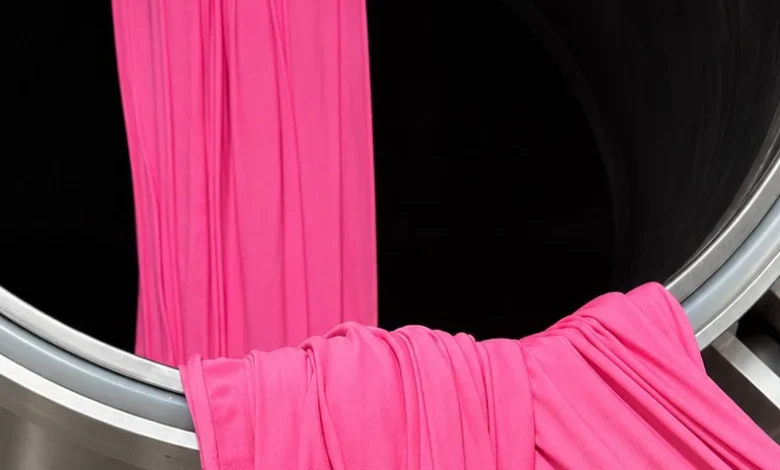
Reju, the Paris-based textile innovation company backed by Technip Energies, has officially announced a strategic partnership with six prominent textile mills across Europe and the Americas. This initiative is designed to integrate the company’s proprietary chemical recycling technology directly into the commercial supply chain. By collaborating with manufacturers such as A. Sampaio, RDD Textiles, Tintex Textiles, FOV Fabrics, Utenos Trikotažas, and Swisstex Direct, Reju aims to demonstrate the viability of using regenerated polyester—derived from post-consumer waste—in the production of high-performance, commercially scalable fabrics.
The move marks a critical evolution in the company’s business model. While Reju has spent recent months focusing on the capital-intensive task of building infrastructure for its "Regeneration Hubs," this latest development addresses the equally complex challenge of "downstream integration"—ensuring that recycled resins can be successfully spun, dyed, and finished using the conventional machinery currently utilized by the global fashion and apparel industry.
The Technological Imperative: Beyond Mechanical Recycling
The global textile industry has historically relied on mechanical recycling, a process that shreds discarded garments into fibers. While effective for certain applications, mechanical recycling suffers from significant limitations: it shortens fiber length, reduces tensile strength, and often results in down-cycled materials that struggle to meet the quality standards required for premium fashion.
Reju’s approach centers on chemical recycling, a process derived from technology pioneered by IBM Research. This method effectively "depolymerizes" polyester waste back into its original chemical building blocks—monomers. Once purified, these monomers are re-polymerized into high-quality polyester chips that are indistinguishable from virgin material. This closed-loop system allows the same material to be recycled indefinitely without losing performance or aesthetic quality. By partnering with these six mills, Reju is now moving from the laboratory and pilot phase into real-world application, proving that their chemically regenerated polyester can be processed alongside conventional synthetic fibers.
Chronology of Reju’s Expansion Strategy
The establishment of this mill network is the latest in a series of strategic milestones for Reju as it seeks to scale its operations globally:
- Technology Foundation: Reju secured access to advanced depolymerization technology originating from IBM Research, forming the basis for its chemical recycling process.
- Infrastructure Commitment: The company announced plans to establish a network of "Regeneration Hubs," aimed at industrial-scale processing of post-consumer polyester.
- North American Milestone: Reju selected Rochester, New York, as the location for its first North American hub, targeting the vast reservoir of textile waste in the United States.
- European Expansion: The company announced a secondary facility in Lacq, France, as part of its European growth strategy.
- Financial Support: Reju successfully secured €135 million in funding through the Dutch government’s NIKI programme, designed to catalyze sustainable industrial innovation in the Netherlands.
- The Mill Network Launch: In November 2026, Reju unveiled its partnership with six specialized textile mills in Portugal, Sweden, Lithuania, and the Americas to operationalize the use of its recycled material.
Mapping the Manufacturing Capabilities
Each of the six selected partners brings a unique set of technical competencies to the Reju ecosystem, ensuring that the regenerated polyester can be utilized across a diverse range of product categories:
- A. Sampaio (Portugal): With over 75 years of history, this firm provides essential expertise in circular knitted fabrics, offering the structural integrity required for high-volume apparel production.
- RDD Textiles (Portugal): Known for its focus on bio-based materials and advanced dyeing, RDD provides the research-driven environment necessary for testing how recycled polyester reacts to sustainable chemical finishing.
- Tintex Textiles (Portugal): A specialist in fashion, activewear, and loungewear, Tintex adds capacity for high-quality, lower-impact finishing, which is essential for brands looking to maintain sustainability credentials across the entire supply chain.
- FOV Fabrics (Sweden): Bringing technical expertise to the table, FOV focuses on woven textiles intended for high-performance and demanding functional applications, proving that Reju’s fibers can withstand rigorous physical stress.
- Utenos Trikotažas (Lithuania): This vertically integrated partner offers both knitting and finished garment manufacturing, providing a "one-stop-shop" capability that simplifies the logistics for brand partners.
- Swisstex Direct (USA/El Salvador): This partnership is pivotal for Reju’s North American ambitions, offering regional manufacturing in Los Angeles and El Salvador, thereby reducing the carbon footprint associated with shipping textiles across the Atlantic.
Official Perspective: Building a Circular System
Reju CEO Patrik Frisk, who has been instrumental in steering the company toward these partnerships, emphasized that the collaboration is not merely about sourcing, but about system architecture. "Every selected mill with whom we are working adds to our circular textile system," Frisk noted in a press statement. "As plans for Reju’s future Regeneration Hub network grow, so will our ability to deliver a consistent, high-quality regenerated polyester that manufacturers and brands can then build on."

The sentiment reflects a shift in the textile industry’s approach to sustainability. Rather than treating recycling as an isolated waste management issue, Reju is positioning it as a fundamental component of textile design. By integrating the mill network early, Reju ensures that its material output is tailored to the specific technical requirements of the manufacturers who will eventually supply major retail brands.
Market Implications and Future Analysis
The global polyester market remains the largest segment of the fiber industry, accounting for more than 50% of all fiber production worldwide. However, it is also one of the most significant contributors to microplastic pollution and waste. Reju’s model addresses these systemic failures by providing a scalable alternative to virgin polyester derived from fossil fuels.
Industry analysts suggest that the success of Reju will depend on two primary factors: price parity and supply chain traceability. While chemical recycling is currently more expensive than traditional virgin polyester production, the upcoming implementation of stricter Extended Producer Responsibility (EPR) regulations in the European Union and parts of North America is expected to incentivize the adoption of recycled content.
Furthermore, the "Regeneration Hub" model provides a solution to the "collection bottleneck." By placing recycling facilities in strategic geographic locations—Rochester, Lacq, and the Netherlands—Reju is shortening the logistics chain, which is essential for maintaining the commercial viability of a circular economy.
The involvement of Technip Energies, a firm traditionally associated with large-scale energy infrastructure, provides Reju with the engineering pedigree required to handle the complexity of chemical depolymerization at an industrial scale. This is a departure from the smaller, boutique recycling startups that have previously struggled to move beyond pilot projects.
Conclusion: The Road to Commercialization
As Reju prepares to bring its first Regeneration Hubs online, the partnership with these six mills acts as the final validation step. By proving that their recycled polyester can seamlessly enter the production lines of established manufacturers, Reju is de-risking the transition for major apparel brands.
For the textile industry, this represents a significant step toward decoupling growth from resource depletion. If the network successfully demonstrates that high-performance clothing can be manufactured from post-consumer waste without compromising quality, it could set a new industry benchmark for circularity. With the support of the Dutch NIKI programme and the backing of global industrial partners, Reju is well-positioned to transform from a technology developer into a foundational supplier for a more sustainable, circular fashion economy in the coming decade.