The Great Divide: Scaling Textile Circularity Between European Regulation and Chinese Industrial Ambition

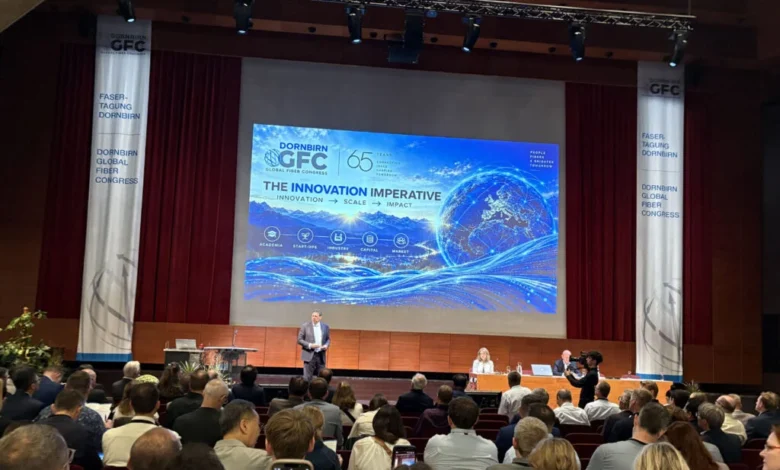
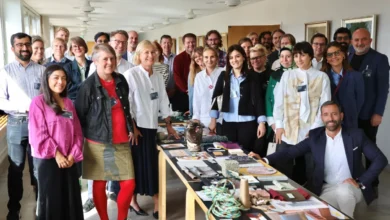
The 65th edition of the Dornbirn Global Fiber Congress (GFC), held in Austria from September 16-18, 2026, served as a stark reminder that while the global textile industry remains unified in its desire for sustainability, the path to achieving a circular economy is diverging significantly between East and West. For over a decade, the congress has been the epicenter of discourse on mechanical, chemical, and enzymatic recycling. However, as industry leaders gathered this year, the atmosphere was defined less by technical breakthrough and more by a growing anxiety regarding industrial scale and global competitiveness.
A Legacy of Innovation Facing a Crisis of Scale
The Dornbirn GFC has long been the primary stage for fiber innovation, attracting a coalition of scientists, policy experts, and textile manufacturers. Since its inception, the congress has evolved from a niche gathering into a critical barometer for the global fiber market. Yet, despite years of successful pilot projects and academic validation of recycling technologies, the transition from lab-scale efficiency to industrial-scale viability remains elusive.
Robert van de Kerkhof, president of the Austrian Fibers Institute, set a somber tone during the opening CEO panel. He articulated a sentiment shared by many European stakeholders: while Europe prides itself on high-level circularity strategies and regulatory frameworks, it is rapidly losing its competitive edge. "Europe’s competitive advantage is shrinking as its companies respond to a series of crises, one after another," van de Kerkhof noted. "We are losing the opportunity to pass on know-how to the next generation of leaders. China is no longer just leading in cheap production, but also in innovation. Europe is meanwhile leading in bureaucracy."
The "Urban Mine": China’s Strategic Pivot
While Europe navigates the complexities of implementing the EU Strategy for Sustainable and Circular Textiles, China has codified a more aggressive, industrial approach under its Circular Economy Development Plan for the 2026-2030 period. Central to this strategy is the concept of the "urban mine."
In this framework, Chinese policymakers treat municipal and industrial waste not as an environmental burden, but as a strategic reserve of raw materials. Under the 15th Five-Year Plan, the state has categorized waste textiles alongside high-value resources like plastics, rare metals, and end-of-life vehicles. The ambition is staggering: by 2030, China aims to develop a resource recycling industry valued at approximately RMB 8 trillion (roughly €1 trillion).
This policy builds upon the foundational recycling mandates introduced in 2022, which set a clear target: 30% of all waste textiles must be recycled or repurposed by 2030, with an annual output of three million tons of recycled fiber. Unlike previous voluntary efforts, this plan dictates the entire lifecycle of a garment, from design for disassembly to the establishment of advanced sorting and classification networks.
The European Regulatory Landscape: A Four-Year Review
The contrast with the European Union is significant. In March 2022, the European Commission unveiled its ambitious vision for 2030, aiming to transform the bloc into a hub for durable, repairable, and recyclable textiles. Yet, four years later, the industry remains haunted by the statistic that only 1% of materials used in clothing are recycled into new clothing.
While critics argue this figure is a global estimate rather than a precise measurement of European performance, the persistence of the "1% myth" highlights the systemic inertia facing the region. Europe’s approach has been defined by a heavy reliance on legislative instruments:
- January 2025: Mandatory separate collection of textile waste came into effect across all EU member states.
- July 2026: A ban on the destruction of unsold clothing and footwear for large companies was implemented to curb overproduction.
- Ongoing: The implementation of Extended Producer Responsibility (EPR) schemes, designed to shift the financial burden of waste management back onto the producers.
- Digital Product Passport: An evolving requirement intended to provide full transparency regarding the composition and circularity potential of every item sold.
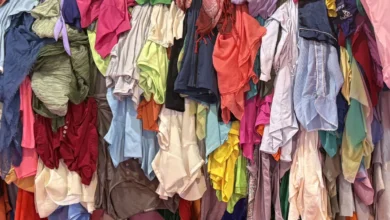
Despite these measures, the European Environment Agency’s data indicates that the system is failing to capture the volume required for industrial recycling. In 2022, Europe generated roughly 6.94 million tons of textile waste, yet less than 15% was successfully separated at the household level. Of the waste that was collected, 26% was still sent to landfills or incineration, and an additional 1.4 million tons were exported in 2025, effectively outsourcing the waste management challenge to developing nations.
Technical Hurdles and Economic Realities
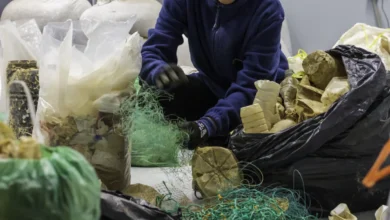
At the heart of the debate at Dornbirn 2026 was the persistent issue of "material complexity." Modern fast fashion relies on complex blends of synthetic and natural fibers, intricate dyeing processes, and specialized finishes. Separating these components remains a significant technological and economic barrier.
Even where chemical recycling—which can break down fibers to their molecular level—has proven effective, the economics of collection and sorting remain prohibitive. Many of the companies presenting at Dornbirn, such as those affiliated with the Brussels-based ReHubs initiative, are attempting to bridge the gap between chemical research and market-ready infrastructure. However, the cost of processing remains significantly higher than the cost of producing virgin polyester or cotton, rendering circular products less attractive to a price-sensitive consumer base.
Comparative Analysis: Infrastructure vs. Regulation
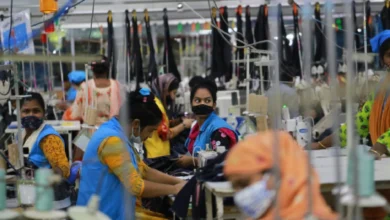
The fundamental difference between the current Chinese and European trajectories lies in the definition of the problem. European policy treats the textile crisis as a matter of "consumer and producer behavior," leading to a proliferation of labeling requirements, digital passports, and waste collection mandates. China, conversely, treats the crisis as an "industrial capacity" issue, focusing on the sheer volume of material recovery and the integration of recycled output into the broader manufacturing supply chain.
However, neither strategy is currently a guarantee of circularity. Even China’s ambitious three-million-ton recycled fiber target includes "down-cycling"—the conversion of textile waste into low-value products like insulation, carpet backing, or automotive filling. While this reduces landfill pressure, it does not achieve the industry’s "holy grail": textile-to-textile, closed-loop recycling.
The Road Ahead: 2030 and Beyond
As the Dornbirn Global Fiber Congress concluded, the message to stakeholders was clear: the era of the "pilot project" must come to an end. The next four years leading to the 2030 target dates will be defined by the ability to monetize the circular economy.
For Europe, the success of the current regulatory framework will depend on whether it can foster the infrastructure necessary to make recycling as profitable as virgin material production. If the EU cannot convert its complex regulatory environment into operational capacity, it risks becoming a region that mandates high standards it cannot afford to produce, effectively becoming a market for recycled goods manufactured in more industrial-scale jurisdictions.
For China, the challenge lies in the quality of the recycled output. If it can successfully move beyond mechanical shredding and toward high-value chemical recycling, it could dominate the global market for secondary raw materials.
Ultimately, the goal remains the same for all players: moving from an linear model—where 16kg of textile waste is generated per person annually in Europe—to a circular one where the "urban mine" of discarded clothing is fully integrated into the global manufacturing economy. Whether this transition is achieved through the bureaucracy of Brussels or the industrial planning of Beijing will be the defining story of the next decade of fiber innovation.