Beyond the Surface: How Contemporary Designers Are Reimagining the Everyday Mirror

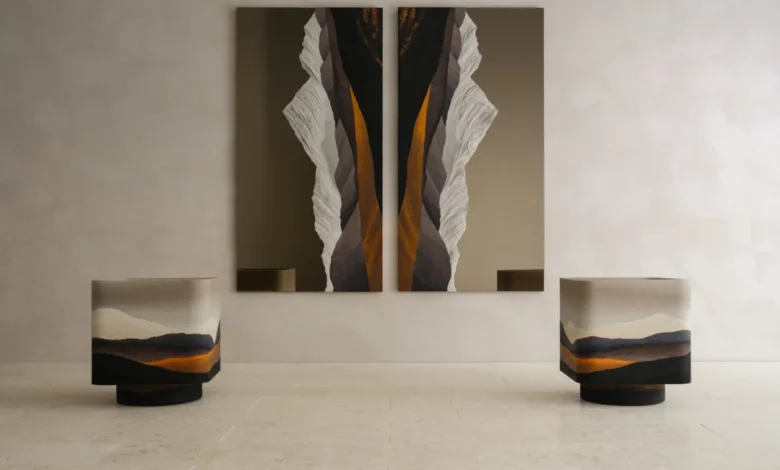
Mirrors have long occupied a dual role in human domestic life: they are utilitarian necessities meant for grooming and checking appearances, yet they also function as optical tools capable of expanding spatial dimensions, amplifying natural light, and altering the psychology of a room. Historically, the evolution of the mirror was dictated by industrial limitations—how flat glass could be cast, how evenly silvering could be applied, and how securely a frame could hold a heavy, fragile plate. However, over the past decade, rapid advancements in material science, digital fabrication, and craft-led experimentation have broken these traditional constraints. Today, contemporary designers are treating the mirror not as a passive reflective surface, but as an active sculptural canvas.
This paradigm shift was a central theme at the inaugural Walker Design Triennial held last month. During the opening talks, Eleni Petaloti, co-founder of the New York- and Athens-based studio Object of Common Interest, delivered a keynote address exploring the psychological dimensions of design. She argued that manipulating reflective surfaces can raise profound questions about memory, noting that memory is, in its own way, another form of reflection. Petaloti’s observations highlight a critical distinction in the contemporary material landscape: unlike the digital screens that mediate virtually every aspect of modern life, a physical mirror engages directly and organically with its immediate surroundings. It responds dynamically to ambient light, human movement, and the transient presence of the viewer, creating an interactive installation rather than a static piece of home decor.
The intersection of object, environment, and viewer forms the conceptual backbone of an influential new wave of mirror designs currently appearing across international galleries and showrooms. While some contemporary creators treat the frame as the primary sculptural element—employing tactile materials like cast bronze, glazed ceramics, and hand-worked timber—others manipulate the reflective glass itself through color, texture, chemical tinting, and unconventional fabrication techniques. The following eight collections illustrate how this familiar household fixture has been elevated into a compelling medium for high-end collectible design.
Pushing Glass Toward Sculpture: Roll & Hill Collaborates with Bower Studios
The relationship between geometry and dimensional depth is vividly explored in the new Fringe collection, a collaboration between Brooklyn-based Bower Studios and manufacturing house Roll & Hill. Founded by Danny Giannella and Tammer Hijazi, Bower Studios has built a reputation for challenging conventional spatial perception through mirrored compositions. With Fringe, the designers push reflective glass further into sculptural territory by integrating warm timber frames with multi-toned mirrored panels interspersed with subtle graphic outlines.
The manufacturing process requires immense precision, as the multi-layered planes must align perfectly to create an illusion of depth across a flat wall. By interspersing clean geometric silhouettes with tactile wood grain, the collection bridges the gap between mid-century warmth and postmodern optical art. Priced starting at $3,960, the Fringe collection is currently available through Roll & Hill, appealing to interior architects seeking statement pieces that actively restructure the visual weight of a room.

Playful Tension: The MoMA Design Store and Ready To Hang
While high-end galleries often focus on austere or monumental forms, the intersection of playfulness and functional design is vividly captured in the Jelly Ring Mirror, produced by New York-based Ready To Hang for the MoMA Design Store. Jeffrey Renz, founder of Ready To Hang, drew inspiration from garment design and soft-sculpture techniques to challenge the rigid industrial nature of wall mirrors.
The piece features a round, scalloped, translucent amber-colored glass frame embedded with smooth, hand-turned spherical elements that encircle the central reflective plane. The resulting silhouette mimics an organic embrace or a compressed, fluid form, establishing a subtle dialogue between hard glass and soft curvature. Offered at $995 through the MoMA Design Store, the Jelly Ring Mirror demonstrates how accessible cultural institutions are increasingly championing avant-garde fabrication techniques that transform daily routines into unexpected visual encounters.
Light Dynamics and Lunar Phases: Sabine Marcelis at Salon 94 Design
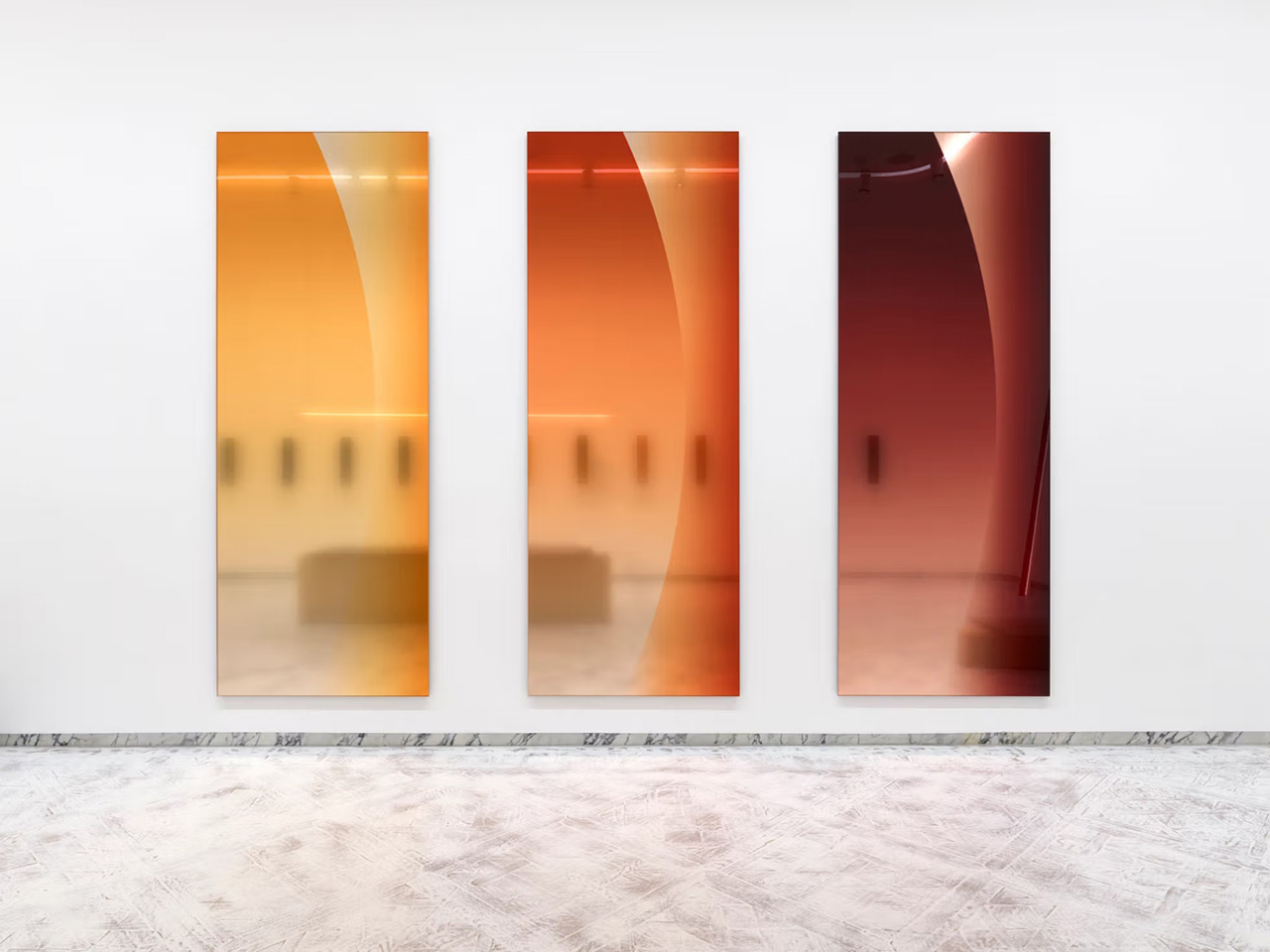
In Manhattan, Salon 94 Design recently showcased the Phase and Phase Vertical collections by Dutch designer Sabine Marcelis, a practitioner internationally renowned for her mastery of color and light transmission. Marcelis utilizes her signature ombré-hued cast resin to create subtly tinted surfaces that filter incoming light while simultaneously reflecting the surrounding architectural environment.

The visual impact of the Phase collection is deeply temporal. Because the cast resin interacts continuously with changing natural light conditions throughout the day, the appearance of the mirrors shifts constantly, evoking quiet lunar cycles and atmospheric moods. Rather than functioning as ordinary looking glasses, these luminous objects blend precise minimalism with fluid gradient tones. The resulting pieces invite meditative contemplation, proving that mirrors can serve as atmospheric barometers within residential and commercial spaces alike.
Ceramic Craft and Modern Geometry: Mutina Meets Ronan Bouroullec
Ceramic production and minimalist geometry collide in Carrousel, a limited-edition series of dynamic mirrors created by French designer Ronan Bouroullec in collaboration with Italian tile producer Mutina. Known for his restrained yet poetic approach to industrial design, Bouroullec designed openwork ceramic frames covered in high-gloss Gris or Orange glazes.
These vibrant, tactile borders interact dynamically with sunlight, casting colorful highlights across domestic interiors just as effectively as the mirrored glass captures reflections. The collaboration highlights a growing trend among European manufacturers: marrying high-tech glass processing with traditional, human-scaled ceramic craft. Each piece retains the subtle, imperfect imprint of the human hand while maintaining clean, modern lines. Distributed via the Mutina shop, Carrousel offers collectors a bridge between ceramic art tile installations and functional wall mirrors.

Upcycled Color Theory: Studio RENS at The Future Perfect
Color theory and sustainability converge in Glass Ensemble, a striking series of mirrors introduced by Eindhoven-based Studio RENS at New York’s prestigious gallery The Future Perfect. Designers Renee Mennen and Stefanie van Keijsteren construct the expansive collection using fused sheets of upcycled glass, reflecting a broader industry push toward environmentally responsible collectible design.
By combining transparent glass with colorful foils and polishing the resulting surfaces, Studio RENS alters both light transmission and reflection. Each mirror functions simultaneously as a three-dimensional geometric sculpture and a practical looking glass, producing subtle tonal shifts that evoke deep emotional responses from viewers. Priced starting at $4,900, Glass Ensemble demonstrates that sustainable material sourcing does not require a compromise in aesthetic sophistication or luxury market appeal.
Earthy Strata and Geological Form: Fernando Mastrangelo at Cristina Grajales Gallery
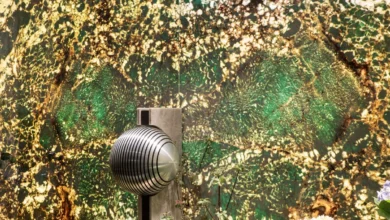
At the Cristina Grajales Gallery in New York, designer Fernando Mastrangelo unveiled The Divide as part of his broader Territories collection. Mastrangelo is celebrated for his unorthodox material palette, and The Divide is no exception; the designer casts crushed minerals, colored sand, and cement along the perimeter of the mirror to create a stark, raw contrast against the smooth, silvered central glass plane.

The variegated gradients along the frame appear deliberately weathered, evoking the natural strata of vulnerable coastal landscapes or geological fault lines. By framing a clean, modern reflection with rugged, earthlike textures, Mastrangelo forces viewers to confront their image within an imagined natural setting. Treating the frame as the primary expressive element, this functional sculpture successfully bridges the worlds of contemporary art and interior design.
Organic Proportions: Jennifer Choi’s Seasons Mirror at Otras Formas
Proportion and organic craft take center stage in the Seasons Mirror by designer Jennifer Choi, recently unveiled at the New York showroom Otras Formas. Measuring 33 inches square, the wall-mounted piece features a meticulously sculpted wooden frame that contours smoothly around its central glass panel.
Choi draws direct inspiration from the cyclical shifts of the natural world, translating seasonal transitions into fluid lines and warm tonal variations across carved timber surfaces. The result is a harmonious, tactile object that softens architectural angles while maintaining a quiet, understated elegance. The Seasons Mirror underscores the enduring appeal of wood-working traditions when reinterpreted through a contemporary design lens.

Monumental Scale: Blu Dot’s Mojo Mirror
For clients seeking scale and architectural presence, Minneapolis-based brand Blu Dot introduced the Mojo Mirror, a floor-standing design that rethinks traditional dressing aids through organic geometry. Standing at an impressive 79 inches tall, the Mojo departs entirely from conventional rectangular shapes, featuring fluid, asymmetrical contours inspired by the organic silhouette of a roughly hewn rock.
By pairing accessible industrial manufacturing with grand proportions, Blu Dot has transformed an everyday dressing accessory into a dramatic, room-defining centerpiece. Priced at $1,250, the Mojo illustrates how mass-production brands are successfully democratizing avant-garde sculptural forms for a broader consumer market.
Broader Implications for Interior Architecture and the Design Market
The rapid proliferation of experimental mirrors signals a fundamental shift in how interior architects and residential designers conceptualize wall space. For decades, mirrors were selected primarily for their reflective utility—to brighten a dark hallway or make a compact room appear larger. Today, however, these objects are increasingly specified as focal art installations that dictate the color palette, lighting scheme, and emotional tone of an interior.

From an economic perspective, the market for collectible and craft-led design continues to expand robustly, driven by collectors who value narrative-driven objects over mass-produced uniformity. Whether through Sabine Marcelis’s luminous cast resins, Fernando Mastrangelo’s geological cement frames, or Studio RENS’s upcycled glass compositions, contemporary designers are proving that even the most ordinary domestic artifact can become a profound medium for artistic expression. As these innovative fabrication techniques mature, the boundary between fine art and functional home decor will continue to dissolve, inviting individuals to see both themselves and their built environments in an entirely new light.