The Invisible Lens: How Smart Glasses Are Redefining Privacy and Fashion in the Age of Surveillance

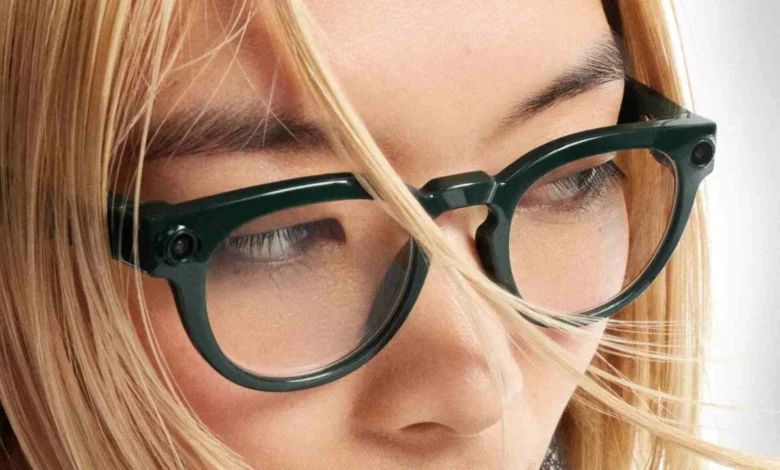
The rapid expansion of the smart eyewear market has placed the tech industry at a precarious intersection of high-fashion aspiration and profound social discomfort. As companies like Meta, Google, and Samsung flood the market with increasingly stylish, camera-integrated frames, a growing chorus of consumers is grappling with the normalization of ubiquitous recording. This tension between the utility of wearable AI and the erosion of public privacy has transformed a niche gadget category into a focal point of a broader cultural debate regarding consent, surveillance, and the boundaries of digital convenience.
The current landscape is defined by a frantic race to rebrand the "smart glass" from a clunky, dystopian accessory into a must-have lifestyle item. For the average consumer, this manifests as a split-screen reality: on one side, there is the desire for frictionless digital interaction; on the other, a visceral, often reflexive, rejection of being recorded without permission.
A Chronology of the Smart Glass Evolution
The modern smart glasses movement did not emerge in a vacuum. It is the latest chapter in a decade-long saga of wearable technology failures and iterative pivots. The journey began in earnest with the 2013 launch of Google Glass. Despite the company’s efforts to frame the product as a revolutionary tool for heads-up computing, the project was plagued by severe public backlash, culminating in the derisive label of "Glassholes" for early adopters. The social stigma surrounding the device, coupled with privacy concerns regarding its forward-facing camera, led to its eventual retreat from the consumer market.
Following the Google Glass era, companies like Snap attempted to normalize the form factor with Spectacles. Despite a massive marketing push, the hardware struggled to gain mass-market traction, resulting in a $40 million write-down for the company. The shift in momentum finally arrived in 2021 with the introduction of the Ray-Ban Stories. While this partnership between Meta and EssilorLuxottica faced regulatory scrutiny in Europe regarding the adequacy of the recording indicator LED, it succeeded in one critical area where its predecessors failed: it looked like a pair of standard, fashionable sunglasses.
This year has seen an aggressive acceleration in the sector. On November 12, Google and Samsung officially opened preorders for Gemini-powered eyewear produced in collaboration with Warby Parker and Gentle Monster. These releases represent a calculated pivot toward aesthetic-first marketing, distancing the devices from their technological origins to avoid the "creep" factor that has long haunted the category.
The Marketing Fantasy: Aesthetics Over Utility
The industry’s current strategy relies heavily on the "normalization through design" philosophy. Warby Parker, for instance, has eschewed the tech-heavy rhetoric of its competitors in favor of a literary, intellectual aesthetic. By hosting pop-up events styled after classic literature and focusing on the utility of AI-driven navigation and translation, the brand attempts to frame its glasses as tools for the "thoughtful user" rather than the "content creator."
Conversely, Gentle Monster has leaned into the surreal and the ultra-fashionable. By recruiting high-profile celebrities such as Joaquin Phoenix and utilizing the visual language of high-end cinema, the brand seeks to position its hardware as a status symbol. This follows a broader trend within the EssilorLuxottica ecosystem, where Ray-Ban Meta has utilized figures like Kylie Jenner and K-pop star Jennie to drive demand.
For many Gen Z consumers, these endorsements successfully mask the underlying surveillance capability of the hardware. As 20-year-old lifestyle creator Addison Campbell notes, the right celebrity campaign can transform a camera-equipped frame into an essential component of an outfit, effectively bypassing the initial psychological barrier of "tech-wear" skepticism.
The Privacy Contradiction and the Burden of Trust
Despite the polished marketing, the fundamental discomfort remains. Social media platforms have become incubators for this anxiety, with TikTok users frequently sharing experiences of being filmed unknowingly. Searches for "Meta glasses creepy" yield millions of views, reflecting a genuine apprehension that transcends brand loyalty.
The industry response to these concerns has been twofold: technical safeguards and philosophical redirection. Thomas Dexmier, vice president of consumer electronics at HTC, has been at the forefront of attempting to solve the consent crisis. The HTC VIVE Eagle frames introduce a voice-command feature that allows nearby individuals to demand an end to a recording session. While this feature provides a technical mechanism for agency, it introduces its own set of ethical dilemmas.
"Who do you trust?" is the central question posed by Dexmier. The dilemma is that a feature designed to empower a bystander could, in the wrong hands, be weaponized to silence a witness or disrupt the documentation of public events. The regional variance in responses to this feature is telling: European users tend to favor the "stop" command as a vital privacy protection, whereas North American users have expressed concerns that it could be used by aggressors to prevent the documentation of wrongdoing.
Economic Viability and Future Implications
The financial stakes are substantial. EssilorLuxottica’s wearables segment, which includes the Ray-Ban Meta collection, reported a 20% growth in the third quarter, generating approximately $546 million. This level of market penetration suggests that the industry has successfully found a consumer base willing to trade a degree of privacy for the convenience of hands-free AI.
Meta’s recent decision to introduce Ray-Ban Meta Audio—a camera-free version of their popular frames—indicates an acknowledgment that some users want the intelligence of the device without the baggage of the camera. This bifurcation of the product line allows the company to capture the market that is wary of surveillance while maintaining its grip on the creator economy.
The executive outlook on these developments remains divided. Neil Blumenthal of Warby Parker draws a parallel between the current state of smart glasses and the early days of the automobile. He argues that just as society eventually developed safety standards and traffic laws for cars, we are currently in a transition period where we must define the "norms we want to enforce" for wearable technology. This perspective assumes that adoption is inevitable and that the responsibility lies in creating a social framework that governs, rather than bans, the technology.
However, critics and skeptics remain unconvinced. The fundamental issue is that smart glasses require the public to implicitly trust the stranger in their vicinity. Unlike a smartphone, which is held in the hand and is visibly oriented toward the subject, smart glasses turn the wearer into an always-on sensor. As long as the primary marketing strategy remains focused on hiding the "tech" inside the "style," the divide between those who view these devices as essential tools and those who view them as tools of mass surveillance will likely continue to widen.
Looking Ahead: The Normalization Challenge
As we move toward 2027, the industry is entering a new phase of integration. The success of these devices will not be determined by camera resolution or AI processing speeds, but by the ability of companies to convince the public that the presence of these cameras is not a threat.
Current efforts to integrate smart glasses into fashion weeks and lifestyle presentations indicate that the industry is leaning heavily into the "accessory" status. By positioning the glasses as props for creative expression rather than instruments of data collection, brands are betting that aesthetic desirability will eventually override the social friction of surveillance.
However, the path forward remains fraught with regulatory and social hurdles. If the industry continues to prioritize the "stealth" aspect of its design, it risks repeating the failures of the past. The next few years will be a definitive stress test for the category: either we will see the emergence of a new, universally accepted set of social norms governing wearable recording, or the industry will face a regulatory reckoning as the volume of "non-consensual surveillance" complaints reaches a tipping point.
Ultimately, the smart glass represents a mirror held up to our current society—a reflection of our competing desires for total digital empowerment and total personal anonymity. The industry is currently trying to sell us the former, while the public is increasingly wary of losing the latter. Whether these two forces can reach a stable equilibrium remains one of the most significant questions in the future of consumer technology.