Derek Lam Reclaims Its Identity Through Strategic Pricing and Controlled Distribution at NYFW

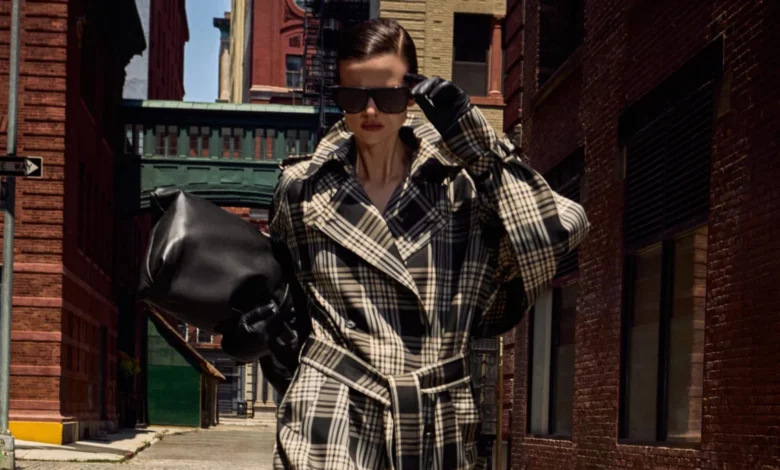
The Derek Lam spring 2027 presentation, unveiled this Friday, marks a pivotal evolution for the heritage American brand. While the collection itself is characterized by a newfound vibrancy—featuring a sophisticated infusion of color, intricate prints, and tactile embellishments—the most significant transformation remains largely unseen. The label is undergoing a comprehensive structural overhaul, shifting from the wide-net, promotion-heavy strategies that defined its recent past toward a disciplined, high-end contemporary model. This pivot arrives following a period of corporate restructuring that saw the brand separated from its contemporary sibling, Derek Lam 10 Crosby, and placed back under the creative direction of Robert Rodriguez.
A Chronology of Rebirth and Restructuring
The current state of Derek Lam is the culmination of several years of corporate volatility and strategic repositioning. Six years after the original Derek Lam main line was shuttered, the brand made a triumphant return to the New York Fashion Week (NYFW) calendar in February. This revival was bolstered by a major corporate shift in April, when Public Clothing Company finalized the sale of the intellectual property of Derek Lam 10 Crosby to NYC Alliance.
This divestiture was not merely a administrative necessity; it was a foundational move intended to insulate the main collection from the mass-market pressures often associated with contemporary diffusion lines. By separating the two, management—led by president Danielle Alalu—has been able to sharpen the brand’s identity, focusing on a luxury-adjacent positioning that occupies a specific "white space" in the current retail landscape.
Strategic Pricing and the Advanced Contemporary Gap
In an era where inflation has pushed the price points of many "advanced contemporary" brands into the realm of traditional luxury, Derek Lam is positioning itself as a tactical alternative. The collection is now pegged to a retail price range of $295 to $1,295. This deliberate pricing strategy is intended to capture the interest of consumers who are increasingly disillusioned by the skyrocketing costs of labels such as Zimmermann, Ulla Johnson, and Veronica Beard.
"We’ve seen a white space in the advanced contemporary world in terms of being a little bit sharper from a price-point standpoint," said Alalu in an interview. "Prices have gone up so far, and with a lot of these brands, the customer might say, ‘I can just buy designer at that point.’"
By maintaining this price corridor, the brand aims to offer a "day-to-night" versatility that satisfies the modern woman’s demand for utility without forcing her to make the budgetary leap into the luxury designer tier. This is supported by the brand’s data-driven approach to production, where categories like poplin dresses—which account for approximately 45% of spring and summer sales—are prioritized alongside modal tops and woven blouses.
Operational Overhaul: DTC and Wholesale Dynamics
The brand’s distribution strategy is undergoing an equally rigorous transformation. Moving away from the "all doors" retail model that characterized its previous iterations, the company is now prioritizing selectivity. Currently, approximately 85% of the brand’s customer base is concentrated in the United States, with a strategic expansion into international markets planned, including a presentation for global buyers in Paris this October.
The company has tapped the Goods and Services Showroom—a firm with a proven track record representing brands like Frame and Self-Portrait—to oversee its global wholesale business starting with the spring 2027 season. This partnership is designed to ensure that the brand’s wholesale presence is as curated as its direct-to-consumer (DTC) efforts.
The digital front is also being rebuilt. The company’s relaunched e-commerce site now accounts for roughly 15% of total sales. Rather than relying on the deep-discount culture that often plagued the 10 Crosby line, the current management is focusing on re-engaging legacy customers who have a history of full-price purchasing. Early results have been promising; Alalu noted that the brand’s first sale post-launch was to a customer who had been dormant since 2022, signaling a strong latent brand loyalty.
Navigating the Retail Landscape: The Saks Fifth Avenue Partnership
A critical component of the brand’s recovery is its ongoing relationship with Saks Fifth Avenue, a partnership that has faced scrutiny following the retail giant’s recent financial turbulence. When Saks Global parent company filed for Chapter 11 bankruptcy in January, it carried a debt load of approximately $3.4 billion, with significant outstanding payments owed to major fashion houses including Chanel, Kering, LVMH, and Richemont.
Despite the industry-wide friction caused by delayed payments and inventory gaps, Derek Lam has maintained a committed, albeit cautious, stance. "We stuck by them through thick and thin," Alalu said. "We really see the value of them existing in the market. It creates competition, and it gives choices to the consumer." This commitment is being rewarded with a high-profile takeover of the Saks New York atrium scheduled for October, a move that signals a renewed confidence from the retailer in the brand’s potential.
Design Evolution Under Robert Rodriguez
Robert Rodriguez has been tasked with the delicate balance of elevating the brand’s aesthetic while keeping it accessible. For the spring 2027 collection, Rodriguez has moved toward a more expressive palette, utilizing color, print, and intricate embellishments to differentiate the collection from the more muted, utilitarian focus of his February debut.
However, the signature architectural shapes and utilitarian DNA of Derek Lam remain intact. Rodriguez’s expertise lies in material innovation; he frequently sources high-end fabric alternatives that mimic the feel and performance of luxury textiles at a lower cost. A notable example of this, as described by Alalu, involves bonding lace to the back of a T-shirt. This technique provides the visual complexity and "dressy" aesthetic of expensive lace while maintaining the comfort and casual drape of a soft cotton top.
Future Outlook and Market Implications
The upcoming presentation will shift away from the 35-model runway format used for the fall 2026 debut, favoring a smaller, more interactive environment. This format allows guests to engage directly with the garments, emphasizing the quality of the fabrics and the construction—key selling points for a brand attempting to prove its worth to a skeptical retail market. While a return to a traditional runway show remains a future possibility, the current priority is fostering a more intimate connection between the product and the consumer.
The broader implication of the Derek Lam relaunch is a potential blueprint for other heritage labels attempting to navigate the volatile "post-discount" retail environment. By capping price points, controlling wholesale distribution, and leaning heavily on data-driven inventory management, the brand is attempting to re-establish itself as a core component of the modern wardrobe.
"Perhaps our customer buys her bag at Celine and her shoes from The Row," Alalu noted, summarizing the brand’s new philosophy. "She mixes and matches the way we know women do." By aiming for this "mix-and-match" segment of the market—where the consumer values quality and design but is increasingly price-conscious—Derek Lam is betting that its history, combined with a leaner, more agile business model, will be enough to secure its long-term viability in a crowded and highly competitive fashion landscape. Whether this "advanced contemporary" strategy can gain sufficient traction against larger, more heavily financed competitors remains the central question for the coming year. However, for now, the brand’s focus is clear: re-asserting its identity as a fixture of New York style, one strategic garment at a time.