Born Slippy Challenges Conventional Wetsuit Insulation with Launch of Limited Edition Aptus 1.0

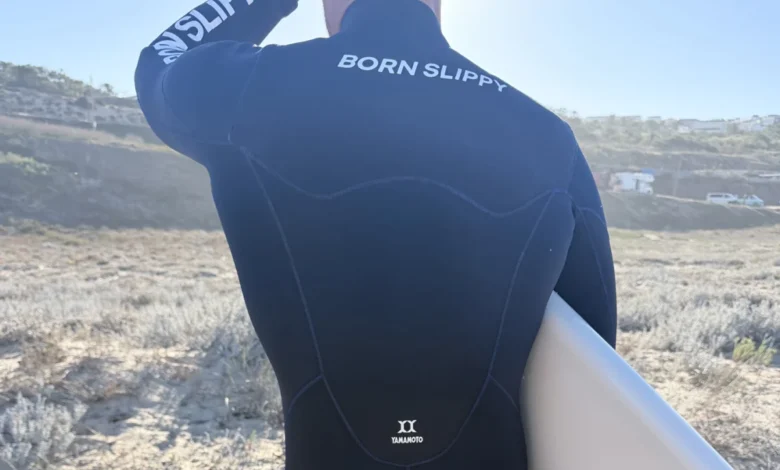
The high-performance watersports sector has witnessed a significant shift in manufacturing philosophy with the introduction of the Aptus 1.0, a made-to-measure wetsuit designed to redefine the balance between thermal efficiency and anatomical flexibility. Developed by the Valencia-based technical brand Born Slippy, the suit represents a departure from mass-market production methods, opting instead for a highly bespoke model that utilizes advanced micro-chamber insulation technology. Founded by British entrepreneur Charles Gadsdon and developed in collaboration with big-wave surfing icon Andrew Cotton, the Aptus 1.0 is limited to a global production run of 1,000 individually numbered units.
Engineering a New Thermal Standard
At the core of the Aptus 1.0 is the rejection of the industry-standard fleece lining. Historically, manufacturers have relied on thick, synthetic fleece layers to trap heat against the body. While effective at raising internal temperatures, these linings often introduce significant bulk, which can lead to increased drag, water absorption, and restricted range of motion—critical drawbacks for athletes operating in extreme marine environments.
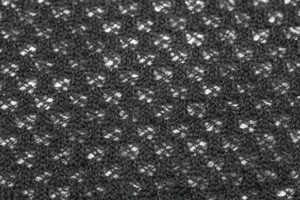
Born Slippy’s solution involves an engineered micro-chamber structure integrated directly into the torso panels of the wetsuit. By creating a series of small, air-trapping pockets, the design mimics natural insulation systems found in the natural world, allowing for heat retention without the requirement for heavy liners. This construction is paired with Japanese Yamamoto limestone-based neoprene, a material highly regarded in the industry for its closed-cell structure, superior stretch properties, and reduced environmental impact compared to petroleum-derived equivalents.
The integration of these materials is reinforced by a rigorous assembly process. Every seam is glued, blindstitched, and finished with triple-taping. This construction methodology is designed to virtually eliminate water ingress—the primary cause of hypothermia and thermal degradation in cold-water surfing.

The Bespoke Revolution: Data-Driven Fit
Perhaps the most disruptive element of the Aptus 1.0 is its move away from standardized sizing. In a market where wetsuits are typically sold in generic sizes (Small, Medium, Large, etc.), the Born Slippy model mandates a personalized pattern based on 26 distinct anatomical measurements per customer.
This focus on precision is not merely a luxury; it is a functional requirement for thermal performance. Thermal regulation in a wetsuit is heavily dependent on the "flush" factor—the movement of cold water through the suit. If a suit is too loose, cold water enters and circulates against the skin, forcing the wearer’s body to expend precious energy to re-warm that water. By minimizing the gaps between the neoprene and the user’s skin, the Aptus 1.0 aims to stabilize the micro-climate within the suit, significantly extending the duration an athlete can remain in cold water without experiencing physical fatigue or core temperature drops.
A Chronology of Development and Testing
The journey of the Aptus 1.0 from concept to commercial reality spans several years of iterative testing in some of the world’s most hostile marine environments.
- 2023–2024: Conceptualization of the micro-chamber insulation technology by Charles Gadsdon in Valencia. Initial prototyping focuses on material compatibility between Yamamoto neoprene and the new chamber structure.
- Early 2025: Andrew Cotton joins the project as a founding athlete and technical advisor. Testing of early prototypes commences in the Atlantic waters of Croyde Bay, North Devon.
- Mid-2025: High-intensity testing moves to Nazaré, Portugal. The focus shifts to structural integrity under the extreme hydrodynamic pressures associated with big-wave surfing.
- November 2026: The official launch of the Aptus 1.0, marking the transition from development to a controlled, numbered release.
Andrew Cotton, who famously rode an 80-foot wave at Nazaré in 2014, has been instrumental in the product’s refinement. Following his recovery from a severe spinal injury sustained at the same location in 2017, Cotton’s involvement brought a unique perspective on the intersection of gear performance and athlete safety. According to Cotton, the feedback loop during the development phase focused heavily on the suit’s tactile quality. He noted that the Yamamoto neoprene, when paired with the custom-fit pattern, provides a "cashmere-like" interface with the skin, reducing the chafing often associated with long hours in the water.
Digital Transparency and Limited Availability
Reflecting a broader trend toward product traceability, Born Slippy has integrated a "Digital Product Passport" into every suit. This digital asset provides the wearer with comprehensive documentation, including material origin, production specifications, care instructions, and a guarantee of authenticity. By assigning a unique serial number and security code to each of the 1,000 units, the company ensures the secondary market value remains protected and provides a direct line of communication regarding the product’s lifecycle.

The price point of €1,295 positions the Aptus 1.0 firmly in the ultra-premium category. However, the company argues that this represents a fundamental shift in the economics of sports apparel. By limiting production to 1,000 units, Born Slippy avoids the waste inherent in seasonal, high-volume production cycles. Once the 1,000th suit is manufactured, the pattern and model will be discontinued, effectively making each suit a collector’s item within the technical watersports community.
Industry Implications and Market Analysis
The entry of Born Slippy into the technical wetsuit market serves as a case study for the "premiumization" of outdoor gear. As climate change and increased interest in extreme sports drive demand for more resilient equipment, athletes are increasingly willing to pay a premium for longevity and performance.
From an industry perspective, the Aptus 1.0 demonstrates three key trends:
- Technological Decoupling: Moving away from reliance on singular materials (like standard neoprene) toward complex, engineered systems (micro-chambers).
- Hyper-Personalization: The use of 26-point measurements suggests a future where high-performance gear is generated via digital modeling rather than mass-produced in factories, potentially reducing the massive inventory waste currently plaguing the apparel industry.
- Traceability as Value: The implementation of a Digital Product Passport addresses the growing consumer demand for transparency in supply chains, allowing users to verify the sustainability and ethics of the manufacturing process.
While the €1,295 price tag will naturally limit the Aptus 1.0 to a niche demographic of professional and high-level amateur surfers, the underlying technologies—particularly the micro-chamber insulation—could eventually influence mainstream manufacturing. If the performance claims are validated over the coming winter season, major manufacturers may be compelled to investigate similar non-fleece, high-efficiency insulation methods.
Ultimately, the Aptus 1.0 is more than a piece of protective equipment; it is a challenge to the status quo of the surfing industry. By prioritizing an individual fit over mass-market efficiency, Born Slippy is testing the market’s appetite for a more sustainable, high-performance, and artisanal approach to extreme sports. Whether this model can scale beyond a limited 1,000-unit run remains to be seen, but the initiative highlights a significant evolution in how athletes engage with the equipment that keeps them safe in the world’s most dangerous waves.