Armando Cabral and USM Expand Collaborative Furniture Collection Exploring Cultural Heritage and Modular Innovation

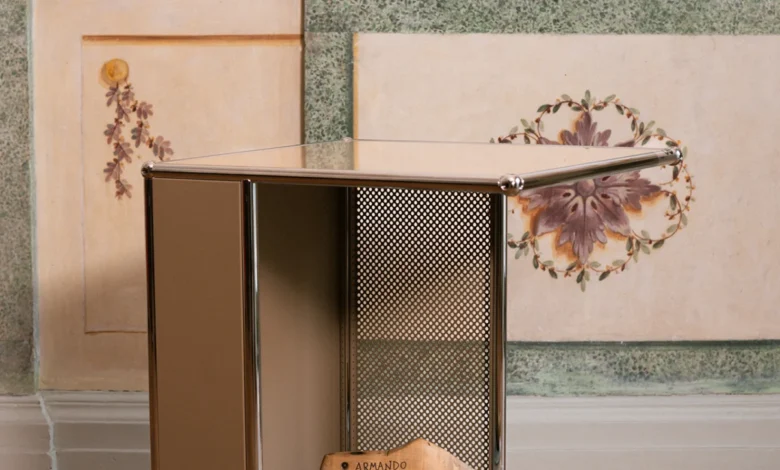
The intersection of Swiss industrial precision and multinational cultural heritage has found a new expression in the expansion of the NKYINKYIM A CASA collection, a collaborative endeavor between the renowned lifestyle entrepreneur Armando Cabral and the iconic modular furniture manufacturer USM. This recently broadened eight-piece collection represents a sophisticated evolution of the USM Haller System, integrating the centuries-old weaving traditions of Portugal’s Alentejo region with the symbolic visual language of West Africa. Featuring a diverse array of pieces including a daybed, the Bassarel love chair, the Uno bookshelf, a side table, and a valet wardrobe, the collection serves as a physical manifestation of cross-cultural exchange, challenging the traditional boundaries of modular design.
For Armando Cabral, a former top-ranked fashion model who has successfully transitioned into a prominent lifestyle entrepreneur, this collaboration is more than a design exercise; it is a reflection of a life lived across borders. Born in Guinea-Bissau and raised in Portugal before being educated in London and eventually settling in New York City, Cabral’s personal narrative is one of constant movement and adaptation. The NKYINKYIM A CASA collection serves as a canvas for these diverse reference points, merging the hyper-rationalist Swiss engineering of USM with the warmth and history of his own upbringing.
The Evolution of the NKYINKYIM A CASA Philosophy
The nomenclature of the collection is central to its identity. The word "NKYINKYIM" is derived from the Adinkra symbols, a visual language developed by the Akan people of Ghana and Côte d’Ivoire. Specifically, the Nkyinkyim symbol represents "twistings" or the "intertwining paths" of life’s journey. It is a symbol of versatility, resilience, and the initiative required to navigate the complexities of progress, both as an individual and as a collective. By pairing this with the Portuguese phrase "A Casa," which translates to "at home," Cabral anchors the collection in a sense of belonging that transcends geographic boundaries.
The expansion of this collection comes at a time when the global design industry is increasingly looking toward "warm modernism"—a movement that seeks to humanize the cold, industrial lines of mid-century design with tactile materials and cultural storytelling. USM’s Haller System, designed in 1963 by architect Fritz Haller and Paul Schärer, is the quintessential example of Swiss rationalism. Originally conceived for the USM office building in Münsingen, Switzerland, the system relies on a chrome-plated brass ball joint and steel tubes to create infinite configurations. While its "form follows function" ethos is historically rooted in post-World War I modernism, Cabral’s intervention introduces a layer of narrative complexity that recontextualizes the system for a contemporary, globalized audience.
Design Synthesis: Alentejo Textiles and Swiss Steel
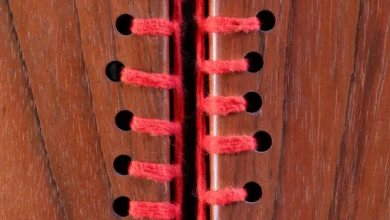
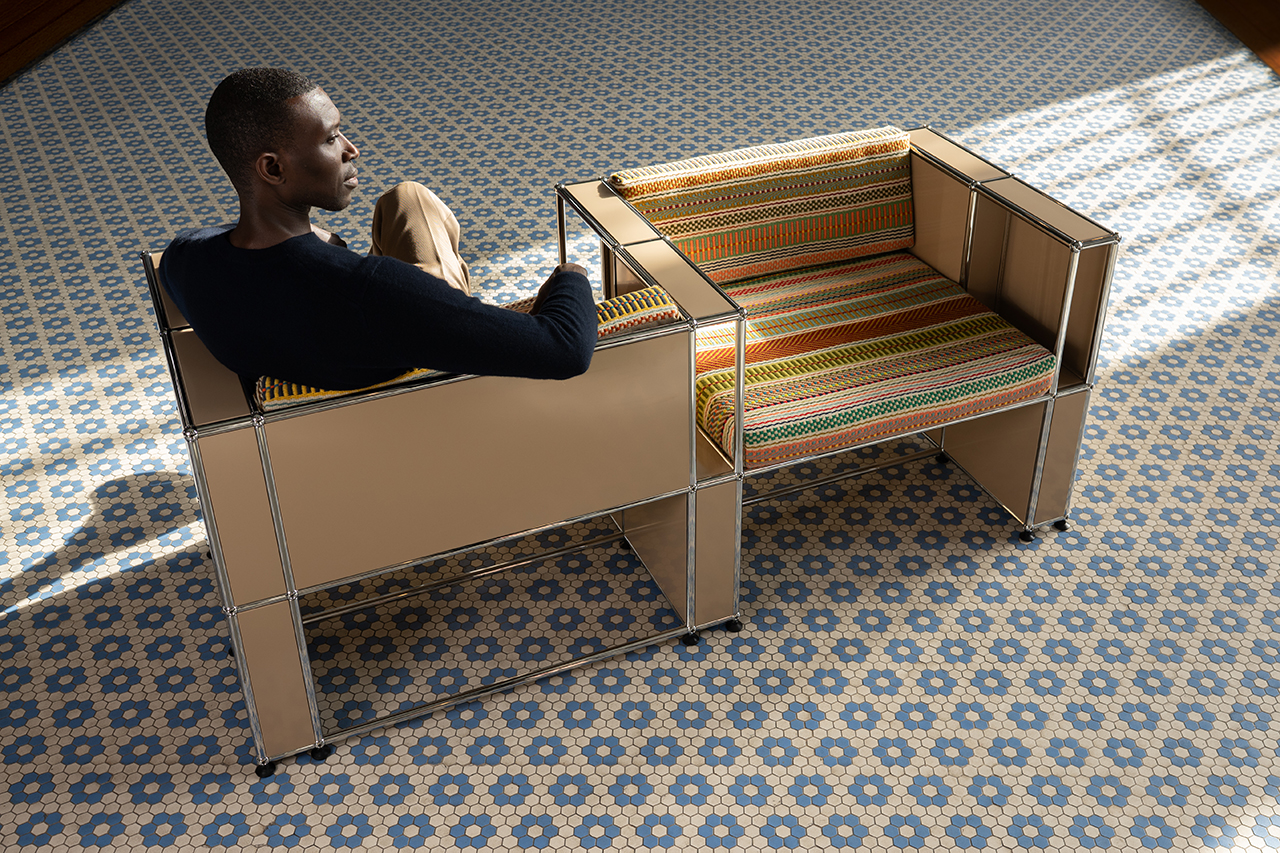
The most striking visual element of the new pieces is the use of elaborate, multi-directional striped fabrics. These textiles are a direct reinterpretation of the weaving traditions found in Portugal’s Alentejo region. Known for its rugged landscapes and deep agricultural roots, Alentejo has a long history of producing heavy wool blankets and intricate fabrics characterized by geometric patterns and vibrant, earthy tones. By wrapping USM’s rigid steel structures in these soft, culturally significant textiles, Cabral creates a tension between the industrial and the artisanal.
The collection includes several standout pieces that push the functional boundaries of the Haller System:
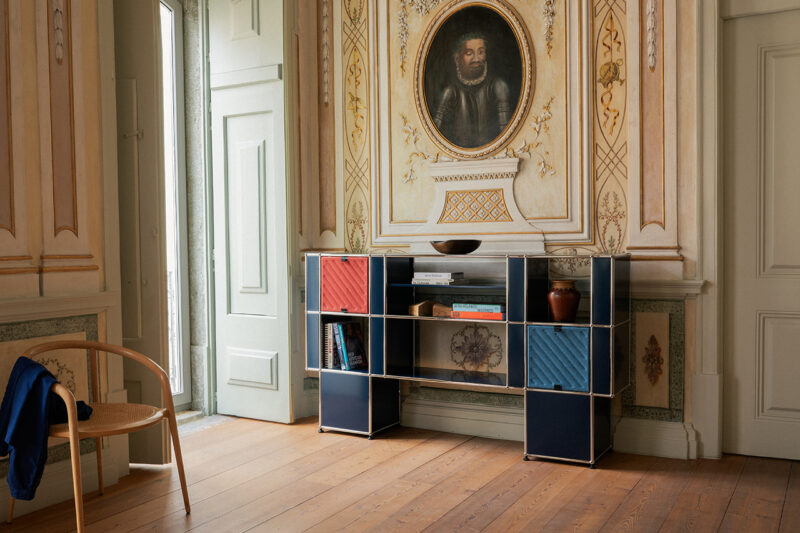
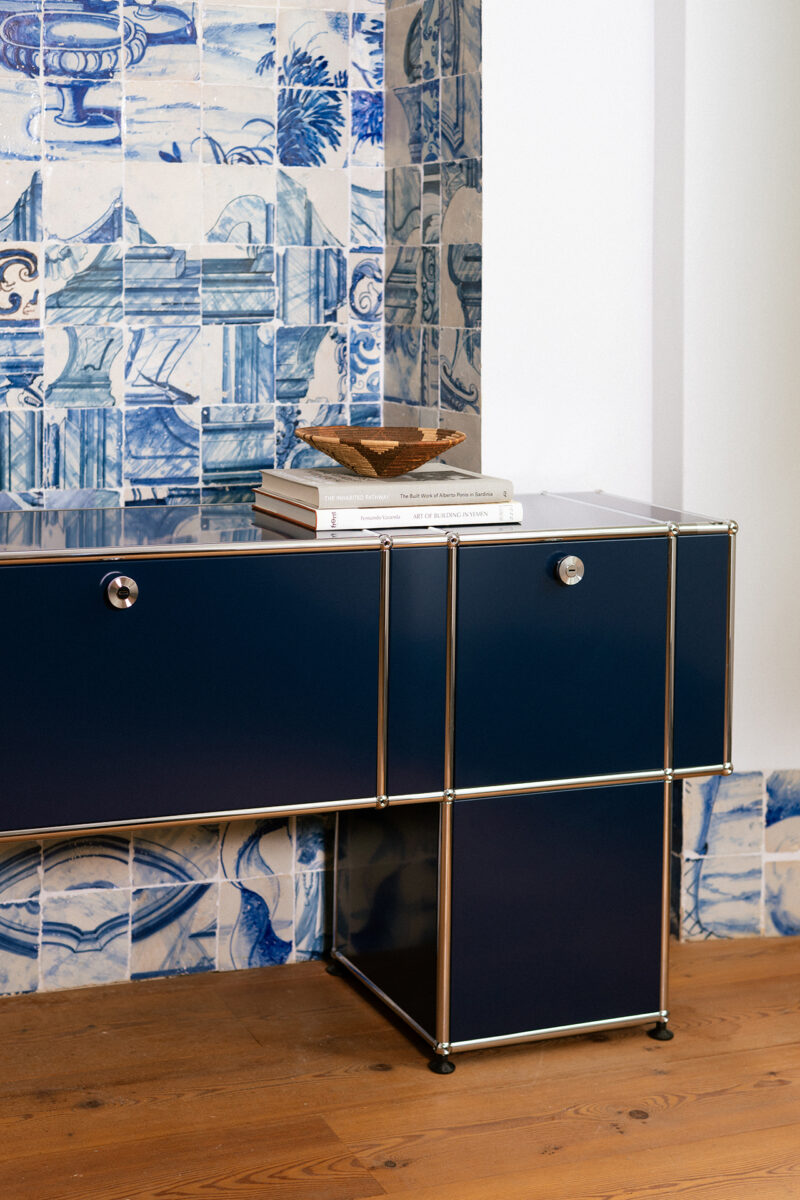
- The Uno Bookcase: This piece utilizes the signature steel tube-and-connector-ball structure to create an unexpected geometric silhouette. By strategically placing colored insert panels, the bookcase takes on the appearance of a sculptural object, echoing the shapes found in West African art while maintaining the utility of a high-end shelving unit.
- The Bassarel Love Chair: A bold reimagining of the traditional tête-à-tête (head-to-head) seating arrangement. The chair features two seats placed side-by-side but facing in opposite directions, a configuration historically designed to allow for intimate conversation while maintaining a degree of formal decorum. In Cabral’s version, the use of Alentejo-inspired cushions adds a layer of domestic comfort to the otherwise stark metal frame.
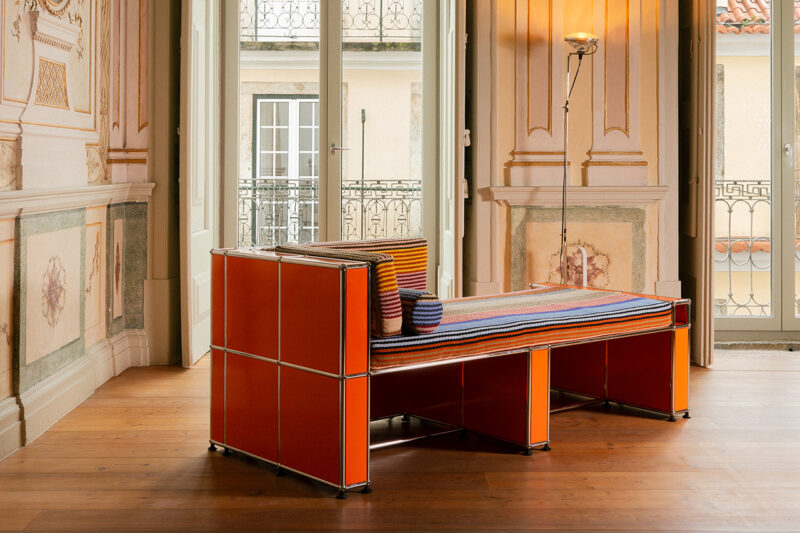
- The Valet Wardrobe and Daybed: These pieces address the needs of the modern home, where the boundaries between work, rest, and dressing are increasingly fluid. The daybed, in particular, showcases the modular nature of the system, providing a large surface area for the display of the collection’s signature striped fabrics.
Chronology of a Cross-Continental Collaboration
The partnership between Armando Cabral and USM did not emerge in a vacuum. It is the result of a multi-year dialogue regarding the role of furniture in personal expression. Cabral, who launched his eponymous luxury footwear brand in 2008, has long been obsessed with craftsmanship and the "architecture" of design. His footwear often blends European construction with subtle nods to his African heritage, a philosophy he has now scaled up to the level of interior architecture.
The initial phase of the NKYINKYIM A CASA project focused on smaller-scale interventions, testing how the Haller System could accommodate non-industrial materials. The success of these early experiments led to the current eight-piece expansion. Throughout the process, Cabral worked closely with USM’s technical teams to ensure that his asymmetrical compositions and experimental color palettes did not compromise the structural integrity or the modular "logic" of the Haller System.
"To me, the modular nature of USM’s designs symbolizes the way each component forms a cohesive, functional structure," Cabral noted during the collection’s launch. This perspective aligns with the original intent of Fritz Haller, who viewed his system as a "building kit" for the modern world. However, where Haller saw a solution for the universal office, Cabral sees a tool for the expression of the individual soul.
Supporting Data and Market Implications
The collaboration arrives amidst a significant shift in the luxury furniture market. According to recent industry reports, the "Collectible Design" segment has seen a 15% year-over-year increase in consumer interest, particularly among younger demographics who value brand story and cultural authenticity as much as aesthetic appeal. Furthermore, the modular furniture market is projected to grow at a CAGR of 5.8% through 2030, driven by the increasing need for flexible living spaces in urban environments like New York and London—cities where Cabral has a significant presence.
USM’s decision to partner with a figure like Cabral also reflects a strategic move toward "cultural branding." By moving away from purely functional marketing and toward collaborative storytelling, USM maintains its status as a heritage brand while remaining relevant to a diverse, global clientele. The Haller System is already part of the permanent collection at the Museum of Modern Art (MoMA) in New York; this collaboration ensures that its legacy continues to evolve rather than becoming a static relic of the past.
Broader Impact on Cultural Expression in Design
The NKYINKYIM A CASA collection serves as a provocation for the design community to reconsider what furniture can accomplish. It suggests that the objects we surround ourselves with are not merely tools for living, but are also vessels for memory and identity. By integrating the Adinkra symbol of the "intertwining path," the collection acknowledges that modern identity is rarely linear. It is a series of twists, turns, and cross-cultural encounters.
Industry analysts suggest that this collaboration may set a precedent for other heritage brands to engage more deeply with designers from the African diaspora and other underrepresented backgrounds. The success of the collection demonstrates that there is a significant appetite for products that offer a high degree of technical sophistication without sacrificing soulful, narrative-driven design.
As the collection integrates into homes around the world, it carries with it the spirit of the Alentejo weavers, the wisdom of the Akan people, and the precision of Swiss engineering. It stands as a testament to the idea that "home" (A Casa) is not a fixed point on a map, but a space we build for ourselves using the diverse materials of our own histories. Through the NKYINKYIM A CASA expansion, Armando Cabral and USM have proved that even the most rational systems have room for the beautiful complexity of the human experience.