Pierpaolo Piccioli Unveils Transformative Balenciaga Couture Debut, Redefining High Fashion for a Modern Era

Pierpaolo Piccioli, one of haute couture’s most seasoned and celebrated practitioners, is poised to make his highly anticipated high-fashion debut at Balenciaga on Wednesday, marking a significant new chapter for both the esteemed French house and the designer himself. Arriving at Balenciaga a year ago following a long and illustrious career at Valentino in Rome, Piccioli faces the "tall order" of helming a maison with a monumental legacy, a challenge he embraces with a philosophy deeply rooted in the foundational principles of couture while injecting a distinctly contemporary sensibility. His inaugural collection promises a departure from recent traditions, relocating the spectacle from Balenciaga’s mythic salons to the vibrant streets of Paris and focusing exclusively on the female form.
Piccioli’s Vision: The Couturier as a Polymath
For Piccioli, the role of a couturier extends far beyond mere dressmaking; it is a multidisciplinary art form. He articulates a profound understanding of Cristóbal Balenciaga’s ethos, stating in a recent interview, "I really get that idea of Cristóbal Balenciaga: that a couturier has to be a sculptor, or architect for the shapes, has to be a painter for the colors, a philosopher for how people feel in your clothes. All of this is something that I can take inspiration from." This comprehensive definition underscores the intellectual and artistic depth required for haute couture, positioning the designer as a master craftsman, an artistic visionary, and a keen observer of human experience. Yet, Piccioli emphasizes that while tradition provides inspiration, the ultimate expression must be profoundly personal and instinctive. "In a way, it also has to be very personal; I’ve learned to react in a very instinctive way," he added, signaling his intent to imbue Balenciaga’s couture with his unique creative signature.
A Historic Revival and a New Direction
Balenciaga’s haute couture activity was famously resurrected in 2020 under then-creative director Demna, some 53 years after the Spanish master Cristóbal Balenciaga closed his legendary house in 1968. This revival was a momentous occasion for the fashion world, bringing back one of couture’s most revered names to its rightful place. Since its return, Balenciaga has consistently held annual shows at its meticulously restored salons at 10 Avenue George V, recreating the precise ambiance of the founder’s era. These shows, often coed, blended historical reverence with Demna’s distinct avant-garde vision, re-establishing Balenciaga as a force in haute couture.
Piccioli, however, is charting a new course for the house’s high-fashion presentations. Known for his innovative staging at Valentino, where he once showcased couture in a nightclub beneath a Parisian bridge, he is now taking Balenciaga couture "to the streets." The Wednesday show will unfold as an open-air, midday display at the Cité Universitaire, an idyllic university campus and private park nestled in the 14th arrondissement of Paris. This radical shift in venue is not merely a stylistic choice but a philosophical one. "I wanted to have couture related to the moment," Piccioli explained. "You will see the collection paraded in this formal garden… It makes it more real in a way; it’s more related to life." This move aims to democratize the perception of couture, bridging the gap between exclusive artistry and everyday existence, making it feel more accessible and pertinent to contemporary life.
Focusing on the Female Form: Redefining Modern Femininity
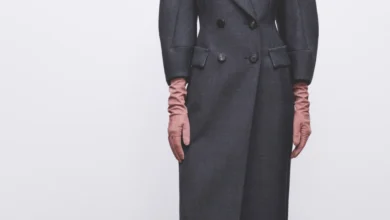
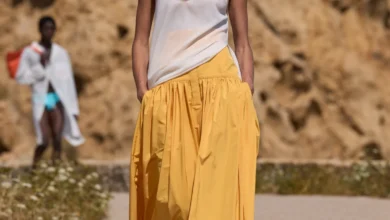
Another significant departure for Piccioli’s debut collection is its exclusive focus on women’s couture, a stark contrast to Balenciaga’s recent coed presentations. This deliberate choice reflects a desire to articulate a precise vision of modern femininity through haute couture. "I felt it was important to redefine a vision of a woman in couture here, so setting up this idea of easiness, of effortlessness, of garments that could be extravagant combined with daily wardrobe pieces, fusing tailoring and flou," he elaborated. This approach speaks to a desire for practical luxury, where the grandeur of couture seamlessly integrates with everyday attire, promoting a sense of ease and natural elegance. The fusion of tailoring (structured, sharp lines) and flou (soft, flowing drapery) suggests a dynamic interplay of strength and fluidity, leveraging "super modern techniques" to achieve this balance.
The Human Heart of Couture: Celebrating the Atelier
Beyond the grand statements of venue and gender focus, Piccioli places immense value on the human element behind haute couture. He has actively shared portraits of the men and women who comprise the Balenciaga couture ateliers and studio on his personal and the brand’s Instagram accounts. This transparency is a deliberate effort to highlight the collective craftsmanship and passion that breathes life into each garment. "It is so important to understand the people that make couture," he emphasized. "It takes time to understand each other, to know each other, and to find a common way of working, because you cannot arrive in a company and impose only your vision."
Piccioli’s philosophy underscores collaboration as the cornerstone of creative success. He believes that true magic in couture arises when a designer’s vision harmonizes with the skills, enthusiasm, and dedication of the artisans. "You have to involve people in your own vision, in order to have not only their techniques, but also their passion, their enthusiasm, their love. That’s how you get the magic," he added, acknowledging the deep, almost spiritual connection between designer and artisan that defines haute couture. This approach fosters a sense of shared ownership and collective artistry, vital for nurturing creativity within a heritage house.
A Deep Dive into the Craft: Interview Insights

In a comprehensive conversation, Piccioli elaborated on his approach to couture, its relevance, and the painstaking labor involved.
WWD: How does it feel to be back doing haute couture?
Pierpaolo Piccioli: "So good! I love doing couture. I feel that this is the laboratory of experimentation, innovation and challenges. I really feel good doing couture, especially in a house where its identity lies in the couture. It’s an approach that changes everything and informs the way you work."
Piccioli views couture as the ultimate creative crucible, a space where innovation and tradition coalesce. For Balenciaga, a house founded on the principles of couture, this connection is particularly profound, informing every aspect of its design philosophy. His return to the haute couture calendar after his illustrious tenure at Valentino is met with widespread anticipation from industry observers, who eagerly await his interpretation of Balenciaga’s iconic codes.
He revealed that his collection was conceived with a deep respect for Cristóbal Balenciaga’s methods, particularly his "continuous conversation with the body." This historical reverence translates into a contemporary focus on "lightness and movement, the negative space between the body and the fabric, and the engineering of the cut" as central tenets of his designs. This echoes Cristóbal’s revolutionary approach, which prioritized comfort and fluidity without sacrificing architectural precision.
WWD: The Balenciaga couture atelier is much younger than Valentino’s. What are your impressions of it?
P.P.: "Without them, I couldn’t have done such a couture show. Yes, they are younger if I compare them to the people I worked with at Valentino. Young means that you have maybe fewer years of experience, but also a different mindset, and it can be an open mindset. For example, we fused tailoring and flou in a way that is kind of new and they never experienced in the past. So what is really interesting is to know people, know their skills and try to find a way to fuse together these intentions and arrive at something that is new. Couture involves a more free mindset, which is something I like."
The relative youth of Balenciaga’s atelier, a consequence of its recent revival, presents both a challenge and an opportunity. While it may lack the decades of institutional memory found in older ateliers, it offers a fresh perspective and an openness to experimentation. Piccioli sees this as an advantage, fostering a "free mindset" that enables new techniques, such as the innovative fusion of tailoring and flou. This collaborative exploration of skills and intentions is key to producing truly novel couture.
WWD: From your investigations of the archive, what elements from Cristóbal will guide you?
P.P.: "Engineering the cuts, not using so many fabrics, not using additional structures, but arriving at the perfect meld between the fabric, the shape, the color and the surface — as if you used only one gesture to create the object. I feel that he managed a balance between maximalism and minimalism, which I like, and it’s very close to my way of seeing fashion."
Piccioli’s archival research reveals a profound connection to Cristóbal Balenciaga’s mastery of cut and form. He admires the founder’s ability to achieve sculptural perfection through minimal means, creating garments that appear to be a single, effortless gesture. This delicate balance between maximalist impact and minimalist execution, a hallmark of Cristóbal’s work, resonates deeply with Piccioli’s own aesthetic philosophy.
WWD: Do you have a favorite collection, dress or technique of his?
P.P.: "It’s more about his method, emphasizing movement and the body. Freedom of the body is something that is so modern, so relevant today. It’s a method which is so precise, but also distinctive. In this collection, I use some flower motifs, but more as surfaces. I noticed that Cristóbal never used flowers in a very pretty or romantic way. They were almost always bold and deep. They were maximal surfaces despite minimal shapes, which is kind of an oxymoron. To me, this tension is interesting."
His admiration for Cristóbal extends beyond specific designs to a reverence for his methodology, particularly his emphasis on the body’s freedom of movement. This principle, revolutionary in Cristóbal’s time, remains incredibly modern and relevant. Piccioli’s interpretation of floral motifs, channeling Cristóbal’s bold and unromantic approach, further highlights this tension between maximalist surface decoration and minimalist form, a creative oxymoron he finds compelling.
WWD: What do you hope to accomplish with your first couture collection for Balenciaga?
P.P.: "I hope that we can deliver the idea that we are a modern couture house that is relevant today, and that this approach, this culture of couture is something that we can spread over all categories and aspects of the brand."
Piccioli’s ambition for his debut is clear: to firmly establish Balenciaga as a modern and relevant couture house. More broadly, he envisions couture as the "soul" of the company, a guiding philosophy that should permeate every product category, from haute couture to ready-to-wear and accessories. This holistic approach suggests that the meticulousness, innovation, and artistic integrity of couture can elevate the entire brand.
WWD: How does your first couture collection relate to the ready-to-wear collections?
P.P.: "To me, couture is the soul of this company, and this informs all categories. If you do a T-shirt or pair of denim using the approach of couture, engineering the cuts, it’s a different way of approaching modern garments and daily wear garments. It’s a mindset."

This statement is crucial for understanding Piccioli’s long-term vision for Balenciaga. Couture, in his view, is not an isolated, aspirational pinnacle but a fundamental mindset that can transform even the most quotidian garments. By applying couture principles – precision in engineering, thoughtful cuts, a focus on the body – to everyday items like T-shirts and denim, he aims to instill a different sense of value and quality across the entire brand spectrum.
The Genesis of a Collection: Time, Instinct, and Hidden Labor
The creation of this highly anticipated collection began in October/November of the previous year, involving months of intensive toil, experimentation, and research. Piccioli revealed that some pieces took "six to seven months to be achieved exactly as it is now," underscoring the immense time and dedication inherent in haute couture. His process starts with drawings, but is fundamentally driven by a clear narrative and an instinctive reaction to fabrics and colors. Over the years, he has learned to trust this instinct more than rational calculation.
A key tenet of Piccioli’s couture philosophy is the deliberate concealment of the immense effort involved. "It takes time to experiment, to try, to innovate, and then also to hide all the techniques and all the efforts. It was important to get the emotion and the magic of the couture, and you only get that when you hide all the process, and it looks easy and effortless." This concept of "effortless elegance" is a hallmark of true luxury, where the complex artistry is sublimated to create an illusion of natural grace and ease for the wearer.
Early Glimpses: Met Gala and Bridal Creations
While this Wednesday marks his official couture debut for Balenciaga, Piccioli confirmed that the Met Gala looks he designed earlier were indeed his first couture creations for the house, alongside some undisclosed bridal commissions. These initial projects offered tantalizing hints of his burgeoning vision for Balenciaga, building anticipation for the full collection.
The Enduring Relevance of Couture in a Modern World
WWD: Do you consider couture to be still relevant in today’s fashion world? Why?
P.P.: "Couture is still relevant because it gives you the culture to approach every category in a different way. That said, I don’t believe in the elevation of garments. I feel that the garments have to be exactly what they are. They have to maintain their authenticity, but they can be engineered in the best way, and I think couture and making couture helps in doing this. It’s a different way of thinking about the value of the garments."
Piccioli’s profound belief in couture’s enduring relevance stems from its capacity to instill a superior "culture" of design across all fashion categories. He rejects the notion of "elevating" garments beyond their inherent purpose, instead advocating for authenticity. Couture’s value, he argues, lies not in its exclusivity or ostentation, but in its ability to inspire the finest engineering and craftsmanship, thereby redefining the intrinsic worth and quality of any garment. This perspective firmly positions haute couture as a vital intellectual and artistic wellspring, essential for pushing the boundaries of creativity and quality in the contemporary fashion landscape.
Implications for Balenciaga and the Future of Couture
Pierpaolo Piccioli’s debut at Balenciaga couture is more than just a new collection; it represents a significant strategic pivot for the house and a potential redefinition of haute couture’s role in the 21st century. By taking couture to the streets, focusing exclusively on women, and emphasizing the fusion of extravagance with daily wear, Piccioli is challenging traditional notions of luxury and exclusivity. This move could broaden couture’s appeal, making it feel more connected to contemporary lifestyles and values.
His emphasis on the atelier and collaborative spirit aligns with a growing industry trend towards transparency and valuing craftsmanship, potentially attracting a new generation of artisans and clients who appreciate the human story behind the garments. Furthermore, his vision of couture as a guiding "mindset" for all brand categories suggests a coherent creative direction that could unify Balenciaga’s diverse offerings, enhancing brand perception and market position.
As the fashion world converges on the Cité Universitaire, all eyes will be on Piccioli to witness how he balances Balenciaga’s rich heritage with his distinctive modern vision. His inaugural collection is poised not only to showcase exquisite craftsmanship but also to ignite a fresh dialogue about the essence, purpose, and future of haute couture.
Related posts: