Cinematic Elegance Meets Coastal Vibrancy: Pirajean Lees Brings Mimi Kakushi to the Delano Miami Beach

Rooftop destinations have long defined the architectural and social topography of Miami, offering sweeping open-air respites high above the ceaseless energy of the city streets. Yet, the debut of Mimi Kakushi’s first United States outpost on the fourth floor of the iconic Delano Miami hotel introduces an entirely distinct design narrative to South Beach. Conceptualized by the London-based multidisciplinary interior architecture and design firm Pirajean Lees, the venue weaves together the tropical vibrancy of modern Miami, the architectural and cultural glamour of 1920s Osaka, and the moody, romantic allure of classic Hollywood cinema.
Founders Clémence Pirajean and James Lees, who previously spearheaded the design for the acclaimed restaurant’s original location in Dubai, approached the Miami project through a uniquely narrative lens. Drawing their primary inspiration from the life and legacy of Sessue Hayakawa—the pioneering Japanese silent film actor and international icon of the early 20th century—the designers imagined a fictitious, cosmopolitan lifestyle for the star. In this conceptual framework, Hayakawa is envisioned as an avid global traveler whose living quarters, private retreats, and entertaining spaces reflect the eclectic, multifaceted dimensions of his celebrated personality.
This meticulous storytelling shapes every corner of the indoor-outdoor establishment, creating an immersive hospitality experience that bridges historical homage with contemporary luxury. Reserved exclusively for hotel guests and members of the prestigious Delano Members Club, the restaurant’s expansive terrace and interior dining rooms offer a secluded sanctuary overlooking the Atlantic coastline.
Architectural Chronology and the Evolution of the Delano
The arrival of Mimi Kakushi at the Delano Miami Beach marks a significant chapter in the ongoing revitalization of one of South Beach’s most historically resonant hospitality properties. Originally designed by architect Robert Swartburg in 1947 and later reimagined by Philippe Starck in the 1990s, the Delano set a global benchmark for minimalist, surrealist hotel design. The integration of a fourth-floor Japanese restaurant heavily rooted in 1920s Taishō-era aesthetics represents a bold departure from the property’s traditional white-on-white palette, injecting rich tones, theatrical lighting, and complex cultural narratives into the historic landmark.
Planning and design for the U.S. outpost began well in advance of its opening, requiring a delicate balance between preserving the structural integrity of the mid-century hotel and engineering a completely bespoke interior landscape. Pirajean Lees worked closely with local structural engineers and historical preservation consultants to adapt the fourth-floor terrace and interior layouts. The construction phase prioritized sustainable building practices, sourcing certified regional lumber for custom millwork while importing specialized artisanal elements—such as hand-painted landscapes and bespoke stained glass—to maintain architectural authenticity.

Spatial Programming and Interior Materiality
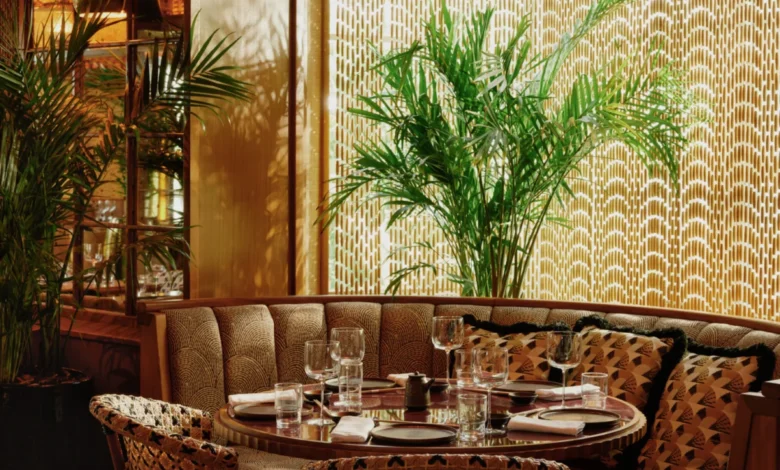
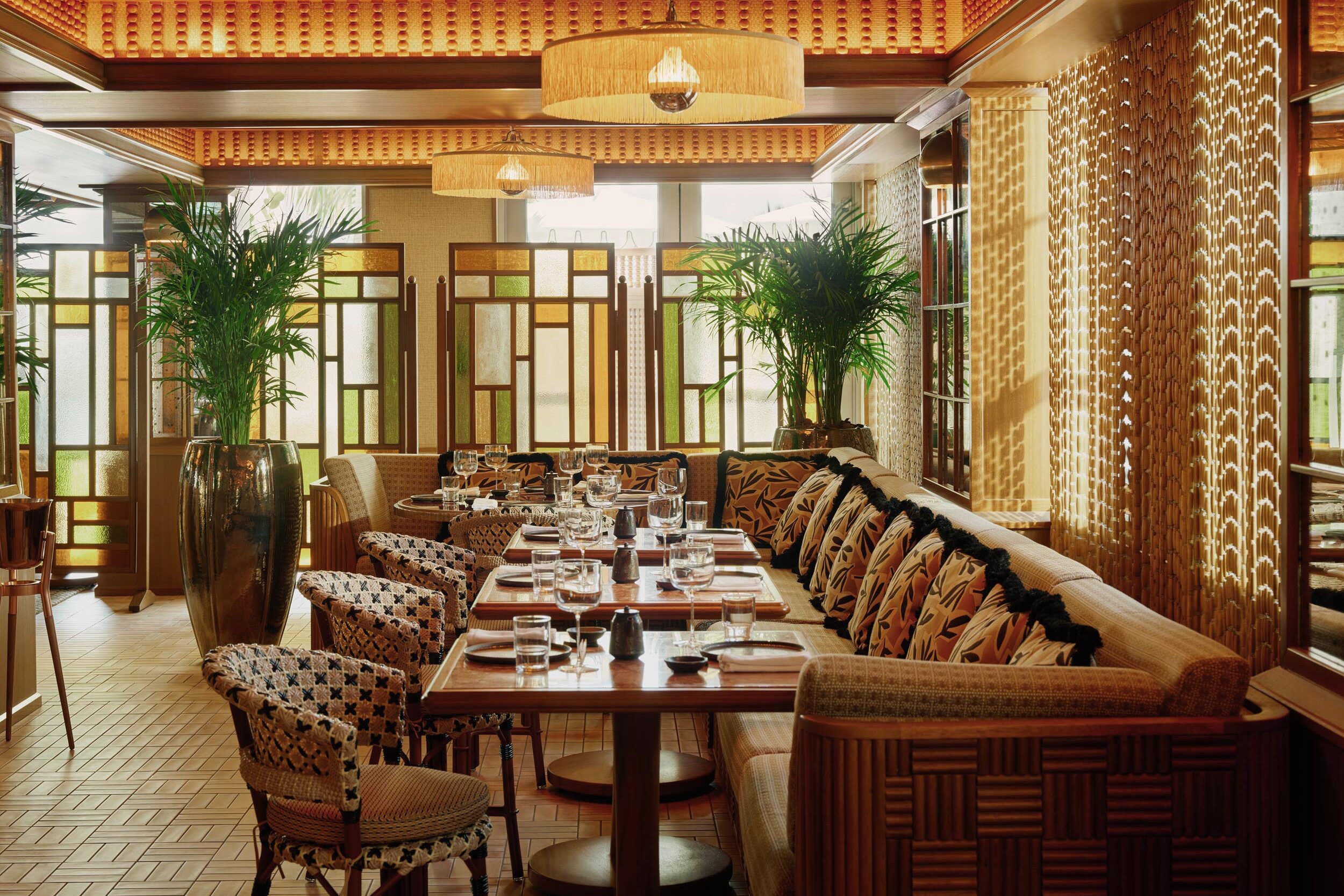
Stepping off the elevator on the fourth floor, visitors are immediately transported away from the sun-drenched Miami promenades into a moody, atmospheric enclave reminiscent of a 1920s Osaka jazz club crossed with a Hollywood studio green room. Sunlight filters gently through timber bead curtains and amber-hued stained glass panels, casting shifting, geometric patterns across a sophisticated, tactile material palette dominated by warm browns, rich creams, and polished hardwoods.
The spatial programming is carefully orchestrated to accommodate diverse dining formats, seamlessly transitioning from intimate, secluded booths to vibrant communal areas. Strategic placement of lush tropical greenery serves as natural room dividers across the open-air terrace, ensuring privacy without obstructing the panoramic ocean views. Banquette seating upholstered in patterned, textured fabrics lines the perimeter, complemented by custom-woven rattan chairs that pay homage to traditional Asian craft techniques while standing up to the coastal Florida climate.
At the heart of the culinary operation lies the open sushi counter, designed to place food preparation at center stage. Diners seated at the counter enjoy unobstructed lines of sight to observe head chef Henry Park and his culinary team meticulously crafting sashimi, delicate tempura, and modern interpretations of classic Japanese dishes. Meanwhile, a dedicated DJ station anchors the auditory landscape, curating a dynamic soundscape that evolves subtly from relaxed daytime ambiance to an energetic, sophisticated evening rhythm.

Innovative Beverage Programs and Guest Engagement
One of the defining departures from conventional hospitality trends at Mimi Kakushi Miami lies in its unconventional approach to beverage presentation. Eschewing traditional printed cocktail menus, the venue introduces an interactive, nostalgic element to the bar experience. Patrons are handed a vintage View-Master—the classic stereoscopic toy popular in the mid-20th century—allowing them to click through physical reels showcasing vivid images and descriptions of signature cocktails.
The beverage menu itself is deeply tied to the narrative of East Asian botany. Crafted by a team of expert mixologists, the cocktail program utilizes rare ingredients, house-made infusions, and botanicals native to Japan and neighboring regions. According to preliminary hospitality data released by the property, the interactive menu has rapidly emerged as a focal point for guest engagement, significantly increasing average dwell times at the bar and driving higher social media visibility for the brand.
Supporting Data and Market Demographics
The launch of Mimi Kakushi within the Delano portfolio reflects broader economic and demographic shifts in the South Florida luxury hospitality market. Industry analytics indicate that Miami Beach has experienced a steady surge in demand for experiential, design-forward dining concepts that cater to high-net-worth international travelers and affluent domestic transplants from major urban centers like New York and Los Angeles.

Market research compiled by regional hospitality boards highlights several key performance metrics for the area:
- Luxury Tourism Inflow: International visitor spending in Miami-Dade County has risen by approximately 14% year-over-year, with a pronounced demographic preference for immersive, culturally blended culinary experiences.
- Private Club Membership Growth: Exclusive members-only clubs, such as the Delano Members Club, have seen a 22% increase in waitlist applications over the past twenty-four months, signaling a strong consumer appetite for gated, high-privacy amenity spaces.
- Design Investment: High-end hospitality projects in South Beach are allocating an average of 30% more capital toward bespoke, custom-crafted architectural elements and artisanal landscaping compared to pre-2020 benchmarks, driven by consumer demand for authenticity and visual storytelling.
Industry Statements and Stakeholder Perspectives
While formal public relations statements from Pirajean Lees emphasize the emotional and cinematic resonance of their design choices, industry insiders and architecture critics have been swift to analyze the broader implications of the project.
"What Pirajean Lees has achieved with Mimi Kakushi is a masterclass in cross-cultural spatial narrative," noted Elena Vance, a prominent architectural historian specializing in mid-century resort conversions. "By superimposing the persona of Sessue Hayakawa onto a 1940s Miami Beach hotel, they have successfully avoided the tired tropes of generic tropical hospitality. Instead, they’ve created a layered, timeless interior that honors history while pushing the boundaries of modern restaurant design."

Culinary analysts have similarly praised the integration of head chef Henry Park’s menu with the venue’s physical environment. By balancing the transparency of the open sushi counter with the secluded intimacy of the bamboo-screened terrace, the restaurant addresses a critical demand among affluent diners: the desire for both high-visibility social dining and protected, low-profile privacy.
Broader Economic and Cultural Implications
The successful opening of Mimi Kakushi at the Delano serves as a bellwether for the future of luxury hospitality design in coastal metropolitan markets. As urban centers become increasingly dense, properties like the Delano are forced to maximize the potential of vertical and rooftop spaces. By transforming a fourth-floor terrace into an immersive, cinematic sanctuary, the development demonstrates how structural limitations can be leveraged as creative assets.
Furthermore, the collaboration underscores the growing commercial viability of storytelling-driven interior architecture. Consumers are no longer satisfied with passive dining environments; they seek spaces that offer intellectual and cultural engagement. The fusion of 1920s Osaka aesthetics, Japanese silent film history, and classic Miami glamour establishes a new benchmark for how global restaurant brands can successfully anchor themselves in local markets without losing their core identity.

As Mimi Kakushi establishes its permanent footprint on the Miami skyline, it stands not merely as a restaurant or a rooftop lounge, but as a fully realized physical manifestation of an imagined cinematic world—one where past and present, East and West, converge against the backdrop of the Atlantic Ocean.