Colin Kaepernick Reflects on a Decade of Activism, Explains Ongoing NFL Ambitions, and Critiques Institutional Power at the 2026 Black Footwear Forum

Nearly a decade after he first took a knee during the national anthem to protest racial injustice and police brutality, former San Francisco 49ers quarterback Colin Kaepernick is returning to the national conversation with renewed focus. As he embarks on a multifaceted promotional and advocacy tour for his recently released book, The Perilous Fight, Kaepernick is attempting to bridge his past athletic career with a broader, long-term mission of community empowerment and systemic change.
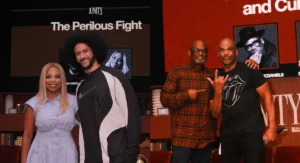
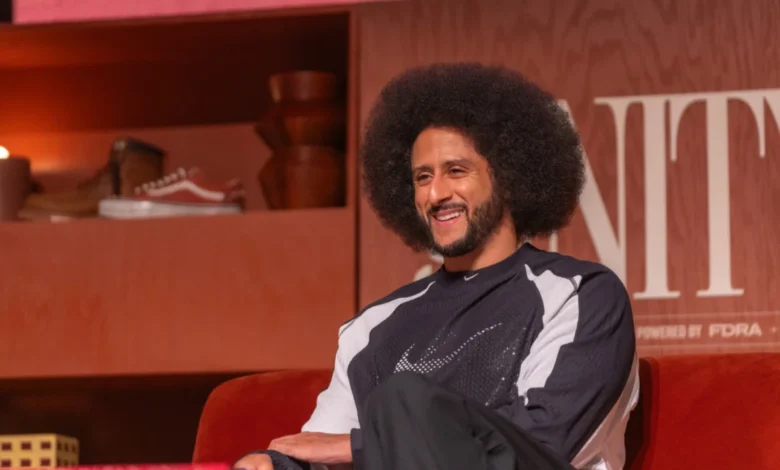
Kaepernick made his first book tour stop earlier this month at the 2026 Black Footwear Forum in Detroit, Michigan. Joined on stage by prominent sports journalist Jemele Hill, Kaepernick addressed an audience of industry leaders, creatives, and entrepreneurs. The venue, which centers on Black leadership, community development, and economic opportunity within the footwear and fashion industries, served as a fitting backdrop for a conversation that frequently pivoted between individual sacrifice and collective action.
The appearance offered a comprehensive retrospective of the athlete-activist’s journey since 2016. Throughout the candid discussion, Kaepernick dismantled persistent narratives surrounding his exit from professional football, detailed the mechanics of institutional pushback he faced from the National Football League, and articulated why, despite everything, he continues to maintain his physical conditioning with the distinct goal of returning to the gridiron.
Challenging False Narratives and Examining the 2016 Catalyst

To understand Kaepernick’s current standing, observers must revisit the inflection point of the 2016 NFL season. While serving as the quarterback for the San Francisco 49ers, Kaepernick initially sat and later knelt during the pregame renditions of "The Star-Spangled Banner." His silent protest was launched in direct response to the unpunished killings of Black citizens by law enforcement across the United States, including high-profile cases such as Mario Woods in San Francisco, Alton Sterling in Baton Rouge, and Philando Castile in Minnesota.
On stage in Detroit, Kaepernick addressed what he considers the two most damaging and inaccurate narratives propagated about his protest: that his athletic skills had declined to a level warranting his benching, and that his activism was financially motivated.
"I think the reason that one bothers me is because it was trying to attack the intention and sincerity around what I was trying to do and what I was trying to accomplish, and that just isn’t the case," Kaepernick told Hill and the audience.
Kaepernick’s journey to protest was not born of a singular moment, but rather a gradual awakening fueled by a lifetime of experiences and extensive reading. He credited his now-wife, Nessa Diab, with introducing him to The Autobiography of Malcolm X, a text that opened the door to a deeper curriculum of anti-colonial and sociological literature, including works by Frantz Fanon, James Baldwin, Steve Biko, and Marcus Garvey. Equipped with an analytical framework regarding structural oppression, Kaepernick felt compelled to act rather than remain passive in the face of ongoing systemic violence.
The Genesis of the Knee and the Myth of the Veterans’ Advice

For years, public discourse surrounding Kaepernick’s protest frequently referenced former NFL player and military veteran Nate Boyer, whom media outlets often credited with advising Kaepernick to transition from sitting to kneeling to demonstrate respect for military personnel. Kaepernick directly challenged this narrative during the Black Footwear Forum panel.
According to Kaepernick, the modification of his protest from sitting on the bench to kneeling on the sideline was actually conceived in consultation with his teammate and fellow activist, Eric Reid. The primary objective of the adjustment was twofold: to blunt criticisms that the protest was inherently disrespectful to military veterans, and to maintain the focus squarely on racial inequality and police accountability without isolating members of the locker room.
Despite the solidarity shown by close teammates, Kaepernick noted that the broader league environment was characterized by fear. While many players expressed private support, the vast majority declined to join him publicly. Kaepernick expressed empathy for their hesitation, acknowledging the immense financial stakes and generational wealth associated with a professional football career.
"I think that is part of the environment that the NFL has created as well, is if you speak up, we have control over your career, we have control over the dollars that are going to go into your pocket," Kaepernick explained. "At the same time, we’re seeing our brothers and sisters being killed. And at a certain point, you have to make that decision. Are you just looking out for yourself, or are you going to look out for each other collectively?"
The NFL Blackball, Collusion, and the Push for Obedience

Following the conclusion of the 2016 NFL season, Kaepernick opted out of his contract with the 49ers and became an unrestricted free agent. Despite statistical metrics indicating he remained a starting-caliber quarterback, no franchise offered him a contract. In October 2017, Kaepernick filed a grievance against the NFL and its owners, alleging collusion to blackball him from the league due to his political activism. The legal battle ultimately concluded in early 2019 with a confidential financial settlement.
Kaepernick argues that his continued exclusion, and the league’s handling of the subsequent social justice initiatives, revealed an underlying institutional preference for compliance over merit.
"I worked my ass off to get to this place," Kaepernick said in Detroit. "I put in the work and the hours, I want the same shot that everybody else gets. You say you’re a meritocracy, regardless of my critiques of you, I should have the right to go out and show you that I’m the best. And by denying that, you’re also telling on yourself in relation to what you actually value and what they’re actually looking for. They aren’t looking for the best players, they’re looking for obedient players who can put on a great show."
The quarterback has not taken a snap in an NFL game since January 1, 2017, yet maintains a rigorous daily training regimen. When questioned by Jemele Hill about why he continues to pursue a return to a league that treated him so harshly, Kaepernick pointed to a dual rationale: justice for his own truncated career and protection for the next generation of athletes.
He recalled an encounter during one of his "Know Your Rights Camps" in Las Vegas, where a young aspiring football player approached him with a devastating dilemma: "I love playing football and I want to go professional there. I also want to fight for my community. Which one do you think I should choose?"

Kaepernick asserts that forcing young people to choose between a professional athletic career and civic advocacy is an unacceptable reality engineered by league leadership. By continuing to push for a roster spot, he aims to dismantle the message that political dissent results in professional exile.
Co-optation, the Players Coalition, and Roc Nation
During the panel, Kaepernick also shed light on behind-the-scenes maneuvers by NFL leadership to neutralize the player-led movement. He detailed a 2017 summit between prominent league owners—including Robert Kraft of the New England Patriots and Terry Pegula of the Buffalo Bills—and select players. According to Kaepernick, owners expressed explicit desires to find a way to end the protests, leading to the formation of the Players Coalition and financial contributions tied to social justice initiatives. Many prominent protesting players subsequently halted their demonstrations.
Kaepernick drew a sharp distinction between genuine systemic reform and what he views as co-optation. "Our goal was never about a check," he stated. "It was actually to effect structural and institutional change. So if it wasn’t accomplishing that goal, then why are we stopping and why are we ending?"
He further addressed subsequent developments, such as the NFL’s 2019 partnership with Jay-Z’s Roc Nation to oversee entertainment and social justice initiatives, including the Super Bowl halftime show. Kaepernick rejected comparisons between his own legal grievance against the league and partnerships formed after the protest was suppressed.

"Me going through a grievance process because the NFL blackballed me, and that’s a process that’s laid out in advance, is drastically different than coming in on the back of the NFL saying, ‘We need a Black face to stop the protest,’" Kaepernick said, alleging that similar multi-million-dollar deals were offered to him and Eric Reid to provide institutional cover. He criticized figures who stepped into those roles, framing the dynamic as a fundamental conflict between individual advancement and collective liberation.
Corporate Partnerships and the Long Game of Advocacy
Despite his ongoing exclusion from professional football, Kaepernick has successfully built alternative avenues for economic and cultural influence. His enduring relationship with athletic apparel titan Nike stands as one of the most notable examples. Initially signed by the brand in 2011, Kaepernick became the face of Nike’s 30th-anniversary "Dream Crazy" campaign in 2018, featuring the iconic tagline: "Believe in something. Even if it means sacrificing everything."
Despite initial threats of consumer boycotts, the campaign drove substantial engagement, boosted Nike stock value, and won an Emmy Award for Outstanding Commercial. In 2019, a collaborative Air Force 1 sneaker designed by Kaepernick sold out online in under two hours. At the Black Footwear Forum, Kaepernick subtly signaled this ongoing partnership by wearing a shirt bearing the brand’s signature Swoosh logo.
Broader Implications and the Road Ahead

As Kaepernick continues his book tour for The Perilous Fight, his messaging remains rooted in the necessity of historical awareness and systemic critique. Observers note that his pivot toward community coalition-building, youth empowerment through his camps, and multimedia projects reflects a broader transition from reactive protest to proactive institution-building.
Whether the NFL will ever open its doors to a player who has spent nearly a decade challenging its foundational power dynamics remains highly improbable. However, Kaepernick’s insistence on keeping his athletic readiness intact serves a symbolic and practical purpose. By refusing to let the narrative of his ability be rewritten, and by continuously exposing the institutional mechanisms that prioritized compliance over merit, Colin Kaepernick ensures that the reckoning he introduced to American sports culture in 2016 remains an active, unresolved dialogue.