Alexandre Arnault Joins Nike Board of Directors as the Athletic Footwear Giant Navigates a Critical Strategic Pivot

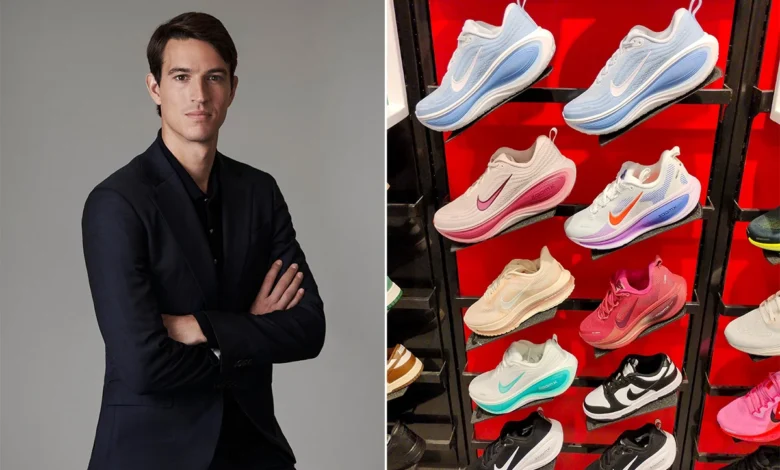
Nike Inc. has officially announced a high-profile addition to its leadership ranks, bringing in luxury retail veteran and executive Alexandre Arnault to serve on its board of directors. The appointment, revealed on Wednesday, marks a significant moment for the Beaverton, Oregon-based sportswear titan as it works to reclaim its dominant market position through strategic governance, fresh perspectives, and deep consumer engagement.
Arnault, a prominent scion of the billionaire Arnault family, currently serves as the deputy chief executive officer of Moët Hennessy, the wines and spirits division of luxury conglomerate LVMH Moët Hennessy Louis Vuitton—a pivotal role he assumed in February 2025. His entry into the boardroom of the world’s largest athletic footwear and apparel company comes at a crucial historical juncture for Nike, which has faced mounting financial headwinds, shifting consumer preferences, and fierce competition in recent quarters.
By welcoming an executive renowned for spearheading high-stakes luxury transformations, digital integrations, and global brand revivals, Nike is signaling an aggressive push toward modernizing its product storytelling, elevating its marketplace execution, and re-establishing profound cultural relevance on a global scale.
A Proven Track Record in Luxury and Global Brand Building
To understand the potential impact of Alexandre Arnault’s appointment on Nike’s board, industry analysts point to his extensive and diverse resume within the luxury and consumer goods sectors. Prior to stepping into his current leadership role at Moët Hennessy, Arnault spent four critical years as the executive vice president of product, communications, and industrial at Tiffany & Co.
During his tenure at the legendary American jeweler—which LVMH acquired in a monumental $15.8 billion deal—Arnault was widely credited as a master architect of the brand’s modern revitalization. He orchestrated high-profile cultural marketing campaigns, most notably the "Not Your Mother’s Tiffany" initiative featuring superstar couple Beyoncé and Jay-Z, which successfully modernized the heritage brand’s image, captured younger demographic cohorts, and drove unprecedented product buzz.
Before his success at Tiffany & Co., Arnault played a foundational role in one of LVMH’s savviest operational maneuvers: the acquisition of German luxury luggage maker Rimowa. Following the acquisition, Arnault served as Rimowa’s chief executive officer for four years, transforming the traditional travel-goods manufacturer into a cult-favorite lifestyle brand through strategic collaborations with streetwear icons like Supreme, Off-White, and Daniel Arsham.
His earlier professional trajectory spans critical disciplines in finance, technology investment, and corporate strategy. Arnault cut his teeth focusing on digital innovation and technology investments at LVMH and family holding company Agache, following foundational stints at elite advisory firms McKinsey & Company and private equity titan KKR.
Beyond his executive responsibilities, Arnault has cultivated a robust governance portfolio. He currently sits on the board of directors at LVMH and serves as a trustee of the prestigious Museum of Modern Art (MoMA) in New York. His past corporate governance experience includes board seats at major European enterprises such as French retail giant Carrefour, iconic footwear brand Birkenstock, and luxury outerwear pioneer Moncler.
Leadership Perspectives and Strategic Intent
The decision to appoint Arnault has drawn enthusiastic endorsement from Nike’s top leadership echelon, who view his cross-industry expertise as an invaluable asset for the company’s ongoing turnaround efforts.
Mark Parker, executive chairman of Nike Inc. and the company’s former long-serving chief executive officer, emphasized that Arnault’s background aligns perfectly with the brand’s long-term governance and succession goals.
“Alexandre has earned a reputation for helping iconic global brands evolve, innovate, and grow in a changing, complex marketplace,” Parker said in an official statement. “As part of our commitment to strong governance and thoughtful board succession, we look for leaders with distinctive experiences, fresh perspectives, and a proven ability to create long-term value. Alexandre’s leadership across some of the world’s most respected brands will make him a strong addition to our board.”
Elliott Hill, who returned to Nike as president and chief executive officer to steer the company through its current structural evolution, echoed Parker’s sentiments. Hill highlighted Arnault’s unique understanding of modern consumer dynamics.
“Alexandre understands how some of the world’s most influential brands stay relevant, deepen consumer connections, and drive long-term growth,” Hill noted. “His experience across innovation, digital transformation, and brand building will be an asset as we continue to strengthen our connection with consumers, sharpen our competitive edge, and accelerate Nike’s next chapter of growth around the world.”
Navigating Financial Headwinds and Market Realities
Arnault’s arrival on the board arrives as Nike navigates a complex transition period characterized by fluctuating revenues, shifting wholesale partnerships, and intensifying pressure from agile athletic competitors.
In its most recent fourth-quarter financial report, Nike posted net sales of $10.97 billion, representing a 1 percent decline compared to $11.09 billion reported during the same period in the previous fiscal year. On a currency-neutral basis, the downturn was even more pronounced, registering a 4 percent decrease. These figures underscore the lingering challenges the brand faces in balancing its digital direct-to-consumer strategy with traditional wholesale channels, alongside managing inventory levels and macroeconomic pressures in key international territories like Greater China and Europe.
To combat these pressures, Nike has been actively reshaping its executive leadership team and operational structure. In August, the company made headlines by hiring Jane Ewing as executive vice president and chief commercial officer—a strategic role that the Swoosh had paradoxically eliminated just eight months prior. Ewing now commands Nike’s sprawling global marketplace organization, overseeing vital revenue-generating engines including global sales and the Nike Direct retail ecosystem.
The integration of corporate leaders from outside the traditional athletic wear ecosystem—typified by Ewing’s return and now Arnault’s appointment to the board—highlights a broader strategic pivot at Nike. The company is actively looking beyond conventional footwear industry playbooks, importing top-tier expertise in luxury brand storytelling, supply chain optimization, and marketplace management to rebuild its competitive moat.
Broader Implications for the Athletic Footwear and Apparel Industry
The appointment of a high-profile luxury executive to the board of the world’s premier athletic brand points to a larger, ongoing convergence between high fashion, luxury, and sportswear. Over the past decade, the boundaries dividing performance athletic gear and high-end lifestyle fashion have steadily dissolved, fueled by high-profile collaborations between sportswear giants and luxury houses—such as Nike’s historic partnerships with Louis Vuitton, Dior, and Tiffany & Co., the latter of which Arnault intimately helped oversee.
By bringing Arnault into the inner sanctum of its corporate governance, Nike is positioning itself to further capitalize on this cultural intersection. As sneaker culture continues to intersect with luxury fashion, art, and digital innovation, Arnault’s deep institutional knowledge of millennial and Gen Z consumer psychology, high-end product drops, and global marketing narratives could prove instrumental.
Furthermore, Arnault’s extensive background in digital transformation and venture-style tech investing directly addresses areas where Nike has sought to refine its approach. While Nike was an early pioneer in digital retail and mobile app ecosystems, the company has faced execution hurdles in recent years regarding wholesale partner relationships and the balance between digital exclusivity and broad physical availability.
Looking ahead, the inclusion of an executive with Arnault’s pedigree is expected to influence not only Nike’s product pipeline and marketing communications but also its overarching international expansion strategy. As Nike looks to revitalize its core product franchises—spanning running, basketball, and lifestyle sportswear—the board will rely heavily on diverse strategic perspectives to guide management through a hyper-competitive global landscape.
As Nike prepares for its upcoming fiscal quarters, all eyes will be on Beaverton to see how this newly reinforced leadership team translates strategic board-level insights into tangible retail momentum, restoring the brand to its customary trajectory of sustainable, innovation-led growth.