Hidden Depths: Nicole Tung Exposes the Human and Ecological Toll of Southeast Asian Overfishing at the Bronx Documentary Center

The quiet devastation unfolding beneath the waves of Southeast Asia has been brought into stark relief through the lens of award-winning photojournalist Nicole Tung. Her powerful multimedia exhibition, Overfishing in Southeast Asia, currently on view at the Bronx Documentary Center through April 26, 2026, presents a multi-layered investigation into an industrial crisis that largely escapes public scrutiny. Developed over nine months of rigorous, on-the-ground reporting backed by the 15th Fondation Carmignac Photojournalism Award, Tung’s work tracks the interconnected collapse of marine biodiversity, the precarious livelihoods of coastal populations, and the severe exploitation of migrant labor across Thailand, the Philippines, and Indonesia.
Main Facts and Scope of the Investigation
Tung’s body of work cuts through the sanitized packaging of the global seafood industry to reveal a complex web of environmental degradation and human suffering. At the core of the exhibition is a sobering paradox: while global demand for seafood continues to surge, the very ecosystems that supply it are being pushed to the brink of irreversible collapse.
For small-scale, traditional fishers across Southeast Asia, the consequences are existential. Along the coastlines of the three nations documented by Tung, local fishers consistently reported that valuable fish stocks near the shore have been virtually wiped out. Unable to compete with the sheer scale, technology, and capital of industrial fishing fleets, traditional communities are witnessing the erasure of centuries-old maritime traditions.

The exhibition underscores that overfishing is not merely an isolated environmental concern. Instead, it is an intersectional crisis tied directly to geopolitical tensions, systemic labor trafficking, lax regulatory enforcement, and the accelerating degradation of global climate resilience.
Chronology and Regional Dynamics
The trajectory of Southeast Asia’s fisheries crisis has evolved unevenly over the past decade, shaped by disparate national laws, geopolitical flashpoints, and shifting regulatory frameworks.

Following international scrutiny and European Union pressure over human rights abuses and illegal, unreported, and unregulated (IUU) fishing, Thailand enacted sweeping reforms around 2015. These measures included the implementation of Port In Port Out (PIPO) inspection systems to monitor vessel crews and stricter oversight of commercial operations. While these regulations initially forced many vessel owners out of business due to skyrocketing operational compliance costs, they also allowed depleted marine ecosystems in certain Thai waters to show signs of recovery. However, recent political pressures have mounted within the Thai parliament to roll back these hard-won protections, threatening a return to previous abuses.
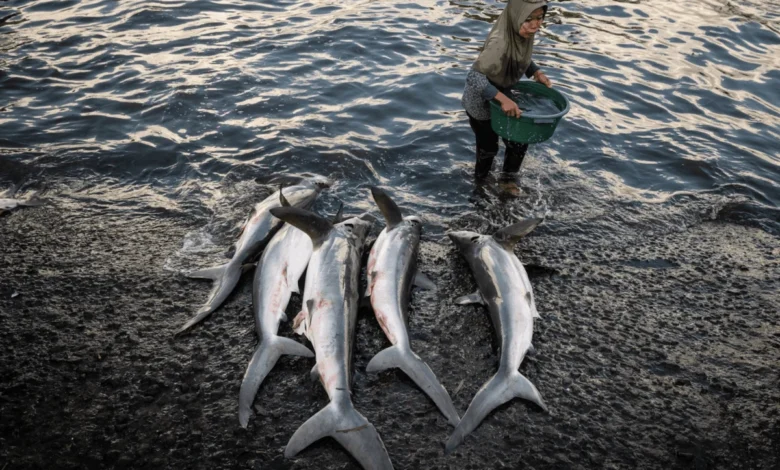
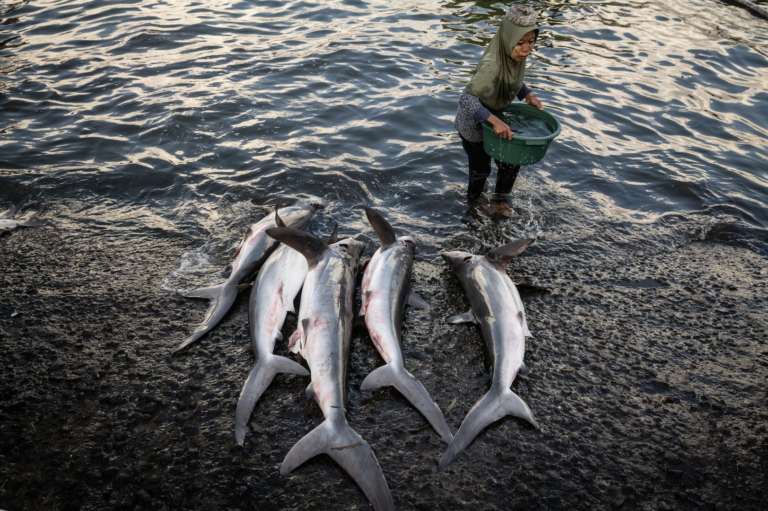
In contrast, Indonesia’s commercial fishing sector remains plagued by systemic corruption and weak enforcement. Maritime laborers aboard commercial vessels—frequently flagged to foreign entities, particularly Chinese, Korean, and Taiwanese operations—routinely face severe labor exploitation, hazardous conditions, and minimal oversight. Furthermore, despite Indonesia signing international conservation agreements such as the CITES II appendix to protect vulnerable and endangered marine life, enforcing bans on the harvest and sale of high-risk species like sharks and wedgefish remains exceptionally difficult at major hubs such as Tanjung Luar in East Lombok.

Meanwhile, the Philippines presents an entirely different geopolitical dimension. In Philippine waters, overfishing is inextricably linked to broader territorial disputes in the South China Sea. The assertion of China’s expansive "Nine-Dash Line" claim has transformed traditional fishing grounds into contested zones. Filipino fishers face routine intimidation, harassment, and displacement by Chinese maritime militias and coast guard vessels, rendering domestic law enforcement against illegal foreign fishing virtually impossible.
Supporting Data and Environmental Realities
The scale of extraction captured in Tung’s photography highlights the devastating toll on marine megafauna and fragile habitats. Industrial bottom trawling and long-lining systematically devastate ocean floors, capturing non-target species as bycatch and destroying vital breeding grounds.

In Indonesia, ports like Tegal and Tanjung Luar process immense quantities of vulnerable and endangered marine species. Sharks and wedgefish, critical apex predators necessary for maintaining marine ecosystem balance, are hauled ashore daily. While shark fins are exported primarily to markets in Hong Kong and China—where they feed the luxury dining trade and supply raw materials for cosmetic products—shark meat and skin are consumed locally as a primary source of protein.
The environmental toll extends beyond targeted harvests. In Thailand, wildlife rescue centers frequently encounter marine turtles suffering catastrophic injuries from discarded commercial fishing gear. Animals such as hawksbill turtles are routinely found tangled in "ghost nets"—abandoned or lost industrial fishing nets that drift indefinitely, trapping and maiming marine life long after their deployment.

Access, Challenges, and the Human Element
Documenting an industry characterized by secrecy, transnational movement, and criminality presented formidable obstacles for the photojournalist. Gaining physical access to commercial fishing vessels or offshore supply ships proved nearly impossible during the reporting period. Captains and corporate boat owners operate within a tightly guarded shadow economy, actively avoiding independent journalistic scrutiny. Consequently, Tung’s narrative focuses heavily on the points of convergence: bustling ports, local markets, processing centers, and the coastal communities absorbing the shockwaves of industrial overfishing.
Among these communities are groups like the Urak Lawoi indigenous population on Koh Lipe, Thailand. Traditionally dependent on artisanal fishing, the community has seen its ancestral way of life systematically eroded by commercial depletion. With local waters largely devoid of fish, younger generations have been forced to pivot away from fishing entirely, integrating instead into the regional tourism economy to survive.

Broader Impact and Implications
Experts and conservationists emphasize that the implications of unchecked industrial fishing extend far beyond regional shores, directly impacting global climate stability. Oceans act as the planet’s primary carbon sink and temperature regulator. The systematic destruction of marine habitats and the catastrophic loss of biodiversity degrade the ocean’s capacity to absorb carbon, accelerating the feedback loops of global climate change.
Addressing this crisis requires a fundamental shift in consumer awareness and corporate accountability. Environmental organizations, such as the Monterey Bay Aquarium’s Seafood Watch program, provide consumer metrics to help track sustainable seafood choices. However, industry analysts note that individual behavioral changes—such as avoiding heavily overfished species or inquiring about supply chain provenance at restaurants and markets—must be matched by rigorous, transnational legislative enforcement.

Ultimately, Nicole Tung’s exhibition serves as both a documentation of loss and a call to action. By visualizing the invisible mechanics of the global seafood trade, Overfishing in Southeast Asia challenges consumers and policymakers to confront the hidden human and ecological costs embedded in the modern global economy.