Longtime Puma Executive Matthias Baeumer Steps Down as Chief Commercial Officer After Nearly Two Decades

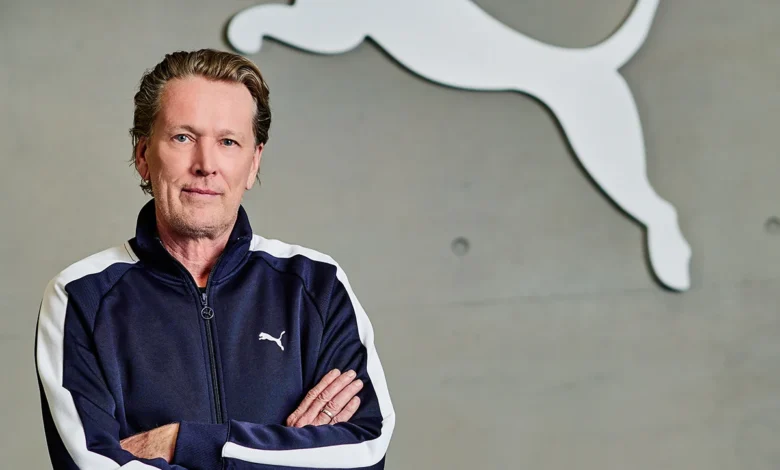
Matthias Baeumer, a stalwart figure within the global athletic footwear and apparel sector and a cornerstone of Puma’s executive leadership team, is stepping down from his role as chief commercial officer (CCO) effective September 30. Baeumer’s departure marks the end of a remarkable tenure spanning nearly 20 years at the German sportswear giant. While his exit brings a chapter of immense stability and institutional knowledge to a close, it also arrives at a critical juncture for the brand as it aggressively pursues a multi-year global turnaround strategy designed to modernize its market position, streamline operations, and reignite consumer excitement worldwide.
According to an official corporate statement released by Puma on Friday, Baeumer’s decision to step down stems from personal reasons. Despite relinquishing his day-to-day executive responsibilities as CCO, Baeumer will maintain a vital connection to the company and the broader sporting ecosystem. He has agreed to transition into an advisory and consulting role for Puma, ensuring that his deep institutional expertise remains accessible to the executive board. Furthermore, Baeumer will continue to serve as Puma’s designated representative on the supervisory board of Borussia Dortmund GmbH & Co. KGaA, the storied German football club in which Puma holds a long-standing corporate stake and partnership.
Puma has announced that a permanent successor for the chief commercial officer position will be revealed in due course. In the interim period, Puma Chief Executive Officer Arthur Hoeld will directly oversee the company’s expansive global sales organization and its network of international subsidiaries, ensuring operational continuity and uninterrupted execution of commercial strategies as the fourth quarter approaches.
Executive Appreciation and Strategic Continuity
The departure of an executive who has spent two decades helping shape a multinational brand inevitably reverberates through the corporate structure. However, Puma’s leadership has emphasized continuity and expressed deep gratitude for Baeumer’s multifaceted contributions to the firm’s evolution.
In the official statement, CEO Arthur Hoeld reflected on Baeumer’s long and impactful journey with the brand. "I would like to thank Matthias for his commitment to the brand in his various roles and for his contribution to the measures as part of our three-year transformation journey," Hoeld stated. Highlighting the cooperative nature of the leadership transition, Hoeld added, "I am very happy that he agreed to continue to support us as a consultant. We wish him all the best in his future endeavors."
The interim management structure sees Puma’s executive board operating with a streamlined core from October 1 onward. Until a permanent chief commercial officer is formally appointed, the management board will consist of CEO Arthur Hoeld, Chief Financial Officer Mark Langer, Chief Brand Officer Maria Valdes, and Chief Operating Officer Andreas Hubert. This experienced executive quartet is tasked with steering the company through its ongoing modernization phase without losing momentum in key global retail markets.
A Two-Decade Evolution: Tracing Baeumer’s Career Trajectory
Matthias Baeumer’s career with Puma is a study in sustained corporate leadership, characterized by steady ascents through various layers of regional and global management. Before entering the athletic apparel industry, Baeumer accumulated valuable professional experience working across different prominent companies in the consumer goods and automotive sectors, honing his expertise in distribution, market strategy, and large-scale operational management.
Baeumer officially joined Puma in 2007, stepping into the role of sales director for Puma Germany and the Benelux region (Belgium, the Netherlands, and Luxembourg). During this initial phase, he was instrumental in fortifying the brand’s footprint in its home European markets, optimizing wholesale relationships, and enhancing brand visibility across competitive retail landscapes.
Demonstrating strong leadership and a sharp commercial acumen, Baeumer was promoted just two years later, in 2009, to the position of general manager for the DACH region—encompassing Germany, Austria, and Switzerland. He held this high-stakes regional leadership post for over a decade. Throughout the 2010s, a period marked by rapid digital disruption and shifting consumer behaviors across Europe, Baeumer successfully navigated the DACH market, maintaining Puma’s competitive relevance against fierce domestic and international rivals.
Prior to his appointment as chief commercial officer, Baeumer expanded his global purview by taking charge of Puma’s worldwide business unit for Teamsport. In this capacity, he oversaw the brand’s extensive portfolio of football club sponsorships, federation partnerships, and technical apparel development, further cementing Puma’s status as a dominant force in global soccer. His deep familiarity with sports marketing and team sponsorships directly informed his continued appointment to the Borussia Dortmund supervisory board.
The Broader Context: A Wave of Leadership Restructuring at Puma
Baeumer’s departure does not occur in a vacuum; rather, it is the latest and most prominent milestone in a sweeping, deliberate restructuring of Puma’s executive ranks over the past several months. Under the guidance of CEO Arthur Hoeld and the broader executive board, the company has been aggressively reshaping its leadership ecosystem to breathe new life into core product categories and accelerate its ongoing transformation journey.
This wave of strategic appointments reflects Puma’s ambition to capture market share in highly contested segments, particularly lifestyle sneakers, performance footwear, and digital commerce. In July, Puma appointed Dusan Hamlin to the newly created role of vice president of e-commerce business. Hamlin, tasked with supercharging the brand’s digital storefronts and omnichannel capabilities, was originally slated to report directly to Baeumer.
Hamlin’s strategic arrival followed closely on the heels of another major talent acquisition. Just one week prior to Hamlin’s announcement, Puma brought in Nike veteran Marcia Dos Santos as vice president of its core business unit. Dos Santos’s appointment was the direct result of a structural reorganization earlier in the year, which saw Puma establish dedicated, specialized teams specifically focused on separating and elevating its distinct sportstyle and core business lines.
As part of this structural overhaul, Puma also named Adidas veteran Bertrand Blanc as vice president of global wholesale in April. Blanc joined Puma after a successful nine-year tenure at Wilson Sporting Goods. Prior to his time at Wilson, Blanc accumulated deep industry expertise by holding senior roles in corporate strategy, key account management, planning, and operations at major athletic competitors Asics and Nike.
Additionally, April marked the appointment of Laurent Fricker—another seasoned veteran of rival powerhouse Adidas—as the new vice president of the sportstyle business unit, tasked with driving innovation and cultural relevance in lifestyle footwear and apparel, exemplified by recent cultural hits like the Puma Speedcat revival.
Analyzing the Implications of Baeumer’s Exit and the Road Ahead
The departure of a chief commercial officer is always a pivotal moment for a publicly traded multinational enterprise. For Puma, the timing requires a careful balancing act. On one hand, losing an executive with nearly 20 years of institutional knowledge, deep regional ties, and extensive sports marketing connections represents a tangible loss of experience. On the other hand, the seamless transition of his duties to CEO Arthur Hoeld and the retention of Baeumer in an advisory capacity serve to mitigate potential disruption.
Market analysts and industry observers view these executive movements as part of a necessary, forward-looking evolution. Puma has been actively working to sharpen its brand identity, create clearer distinctions between its performance-driven athletic gear and its trend-focused lifestyle products, and capture a larger slice of the lucrative direct-to-consumer and e-commerce markets.
By injecting fresh talent from competing giants like Nike, Adidas, and Wilson Sporting Goods into critical vice-presidential roles, Puma has demonstrated a willingness to embrace outside perspectives and modern methodologies. At the same time, maintaining veteran continuity through figures like Hoeld, Langer, Valdes, and Hubert ensures that the brand’s core identity remains intact.
As Matthias Baeumer officially steps down on September 30, Puma closes a significant 20-year chapter defined by regional market dominance, team sports expansion, and foundational commercial growth. With CEO Arthur Hoeld temporarily holding the reins of the global sales organization, and a freshly restructured management board guiding the ship, the athletic brand stands poised to navigate its ongoing three-year transformation journey. The impending announcement of a permanent chief commercial officer will provide the next major signal regarding the long-term commercial trajectory of the company as it prepares for the competitive retail landscape ahead.