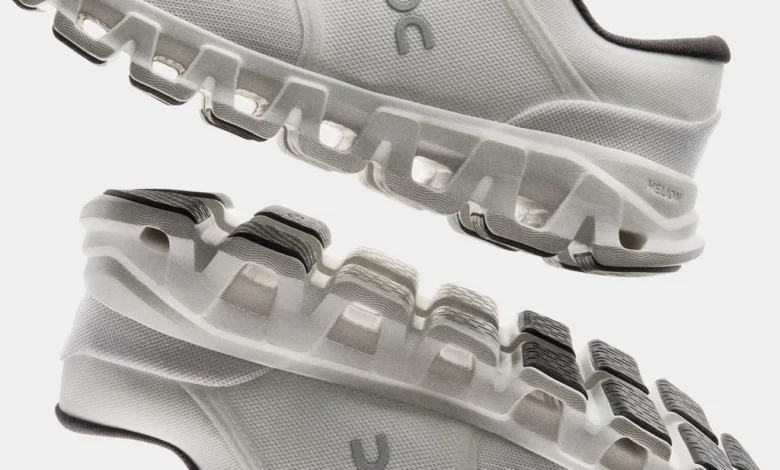
Zurich, Switzerland – July 17, 2026 – Swiss sportswear giant On is dramatically accelerating its rollout of footwear incorporating CleanCloud, an innovative midsole material derived from captured carbon dioxide emissions. The company announced today that it is on track to produce one million pairs of its popular Cloud X 5 model featuring this groundbreaking technology within 2026, a significant four-year advancement on initial scaling projections. This initiative represents a pivotal moment in the athletic footwear industry’s quest to reduce its reliance on fossil fuel-based materials without sacrificing performance.
The midsoles of high-performance athletic shoes have historically been manufactured using EVA (ethylene vinyl acetate) or PU (polyurethane) foams, both of which are petrochemical derivatives. On’s CleanCloud technology directly challenges this paradigm by repurposing industrial carbon emissions as a primary feedstock. This process involves intercepting carbon emissions before they are released into the atmosphere. These captured CO2 molecules are then combined with green hydrogen, produced using renewable energy sources. This reaction forms the basis for e-naphtha, a crucial intermediate chemical that is subsequently transformed into the EVA foam used in On’s footwear. The result is a high-performance cushioning material that effectively transforms a significant environmental liability into a valuable component for athletic shoe production.
Performance Uncompromised: A Molecular Identity
Jean-Philippe Romain, On’s Director of Polymer Science and Engineering, emphasized that the consumer experience remains paramount. "When you step into our new Cloud X 5, you will feel the exact same signature On cushioning, agility, and energy return you expect," Romain stated. "There is absolutely zero compromise on performance. In simple terms, the foam does not care about where its carbons come from."
This assurance is rooted in the fundamental chemistry of the material. The ethylene produced from captured carbon is molecularly identical to the ethylene derived from conventional fossil fuels. Consequently, the resulting EVA foam exhibits the same technical specifications as its petroleum-based counterpart. Its molecular weight, polymer chain length, and melting point are indistinguishable, ensuring that the performance characteristics crucial for athletic footwear are fully maintained. This molecular parity is key to the successful integration of CleanCloud into established manufacturing processes.
A Paradigm Shift in Sustainability: Life Cycle Assessment Insights
While the performance characteristics are identical, the environmental impact is markedly different. To quantify these benefits, On commissioned a comprehensive Life Cycle Assessment (LCA) of the CleanCloud midsole. This rigorous study was conducted by CarbonMinds and independently reviewed by TÜV, adhering to ISO 14040/44/71 standards and following the credit approach aligned with the T&fS (Together for Sustainability) methodology. The findings indicate that manufacturing pathways utilizing CleanCloud result in at least an 80% reduction in carbon emissions compared to conventional EVA production methods.
The strategic focus on the midsole is logical. As the primary cushioning layer, the midsole constitutes more than half of a shoe’s total weight. Innovations in this component therefore offer the most significant potential for reducing the overall environmental footprint of a product. This strategic prioritization underscores On’s commitment to material science as a driver of sustainable change within the industry.

From Audacious Idea to Global Scale: A Supply Chain Revolution
The journey of CleanCloud from a nascent concept to a globally scalable solution is a testament to a "raw innovation mindset" and strategic supply chain collaboration. Romain recalled the initial skepticism surrounding the project: "I remember my very first one-on-one with my manager when he handed me this project and to be completely honest, at first, I thought it was a crazy, silly idea. This initiative came purely from a raw innovation mindset – Can we take a resource that is abundant in the atmosphere and do something positive with it? Can we make the problem part of the solution?"
The rapid acceleration of CleanCloud’s scaling is largely attributed to its nature as a "plug-and-play" solution. By forging direct partnerships with specialized chemical companies, On has engineered a system that integrates seamlessly into existing chemical manufacturing infrastructure. This approach bypasses the need for constructing entirely new production facilities, enabling swift and efficient expansion.
The intricate chemical value chain involves Infinium Energy, based in Abingdon, UK, which is responsible for converting captured CO2 emissions into liquid e-naphtha. This intermediate product is then transferred to Borouge International, a prominent global polymers player headquartered in Vienna, Austria. Borouge International processes the e-naphtha into commercially viable e-EVA pellets, which are then used by On to manufacture the final EVA foam.
The path to securing these crucial partnerships was not without its hurdles. On reportedly faced numerous rejections from traditional industry players who were hesitant to invest in the novel concept. However, Borouge International ultimately recognized the transformative potential and lent its support to the vision. This collaboration allowed On to expedite the transition from concept to commercial reality significantly faster than would have been possible through conventional development cycles.
"We didn’t have a massive business case – we just had a few slides, immense enthusiasm, and a big dream, but by rethinking how a supply chain can collaborate, we have scaled to over a million pairs today," Romain concluded. "The speed at which we went from a single wild prototype to commercial-scale production is incredibly fast for the chemical and footwear industries."
Future Trajectory: Expanding the CleanCloud Footprint
The success of CleanCloud in the Cloud X 5 model positions it as a cornerstone for On’s future sustainability initiatives. The brand has stated its intention to systematically replace traditional EVA midsole units in other styles across its product portfolio with alternatives like CleanCloud. This expansion signifies a broader commitment to embedding circular economy principles and carbon-negative technologies into its core business operations.
The implications of On’s advancements extend beyond the brand itself. This achievement serves as a powerful precedent for the broader athletic footwear and apparel industries, demonstrating that high-performance products can be decoupled from fossil fuel dependence. It highlights the critical role of innovation in material science and supply chain partnerships in driving meaningful environmental progress. As consumer demand for sustainable products continues to grow, and regulatory pressures increase, the adoption of technologies like CleanCloud is likely to accelerate, potentially reshaping the manufacturing landscape of the global sports industry.

Industry Context and Broader Impact
The athletic footwear industry, a multi-billion dollar global market, has long faced scrutiny for its significant environmental footprint, primarily due to its reliance on petroleum-based materials and complex global supply chains. EVA foam, a ubiquitous material in shoe midsoles, contributes substantially to this impact. Recent years have seen a growing imperative for brands to innovate and adopt more sustainable practices, driven by both consumer pressure and a recognition of long-term business risks associated with climate change.
On’s CleanCloud initiative is not an isolated event but part of a broader industry trend towards exploring alternative feedstocks. Companies are investing in bio-based materials, recycled content, and novel chemical recycling processes. However, On’s approach, which directly utilizes captured carbon and integrates into existing chemical infrastructure, offers a particularly compelling pathway for rapid scalability and significant carbon reduction.
The collaboration with companies like Infinium Energy and Borouge International exemplifies a new model of innovation, where established chemical industry players partner with forward-thinking brands to develop and deploy groundbreaking technologies. This cross-sectoral cooperation is crucial for tackling complex environmental challenges that require expertise and infrastructure beyond the scope of a single company.
The successful scaling to one million pairs within a compressed timeframe suggests that the technological and logistical hurdles, once perceived as insurmountable, are being overcome. This rapid advancement could serve as a catalyst for other brands to explore similar carbon-capture utilization (CCU) technologies, potentially creating a more robust market demand for captured CO2 as a resource.
Looking ahead, the continued integration of CleanCloud into On’s product line will provide valuable data on its long-term durability and consumer acceptance in diverse applications. Furthermore, the company’s commitment to transparently sharing its LCA results sets a benchmark for environmental reporting within the industry. As On continues to innovate, its journey with CleanCloud will undoubtedly be closely watched by competitors, material suppliers, and environmental advocates alike, offering a glimpse into the future of sustainable performance footwear.
For further information, visit www.on.com.