Nordic Knots Unveils The Grand Open Collection Translating Iconic Tennis Court Geometry into High-End Interior Textiles

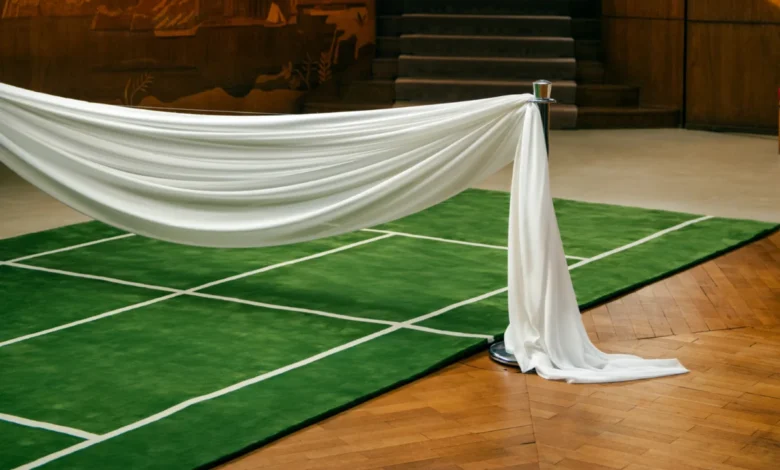
The intersection of professional sports and high-end interior design has reached a new pinnacle this summer with the release of "The Grand Open," a limited-edition rug collection from the Stockholm-based brand Nordic Knots. As a season defined by the high-stakes drama of the Wimbledon Championships and global football tournaments unfolds, the Swedish design house has opted to distill the architectural essence of the tennis court into a series of sophisticated floor coverings. By translating the distinct visual language of grass and clay courts into graphic, tactile home goods, the collection serves as a bridge between the rigorous geometry of the athletic arena and the curated comfort of the domestic sphere.
The Convergence of Athletic Tradition and Interior Minimalism
The Grand Open collection arrives at a time when "courtcore"—a design trend emphasizing the crisp lines, pleated textures, and vibrant yet structured palettes of tennis—is moving from the fashion runways into the architectural interior. Nordic Knots, known for its commitment to functional minimalism and high-quality materials, has utilized the inherent symmetry of the tennis court to create a series of rugs that are both representational and abstract.
The collection features two primary variants: a lush green iteration representing the traditional grass courts of the All England Club and a deep blue variant echoing the contemporary clay surfaces used in professional tours. By stripping away the literal elements of the sport and focusing on the "specifically delimited" lines that define the field of play, the designers have created a product that functions as a piece of floor art without succumbing to the kitsch often associated with sports-themed decor.
Strategic Staging at Eltham Palace: A Study in Swedish Craftsmanship
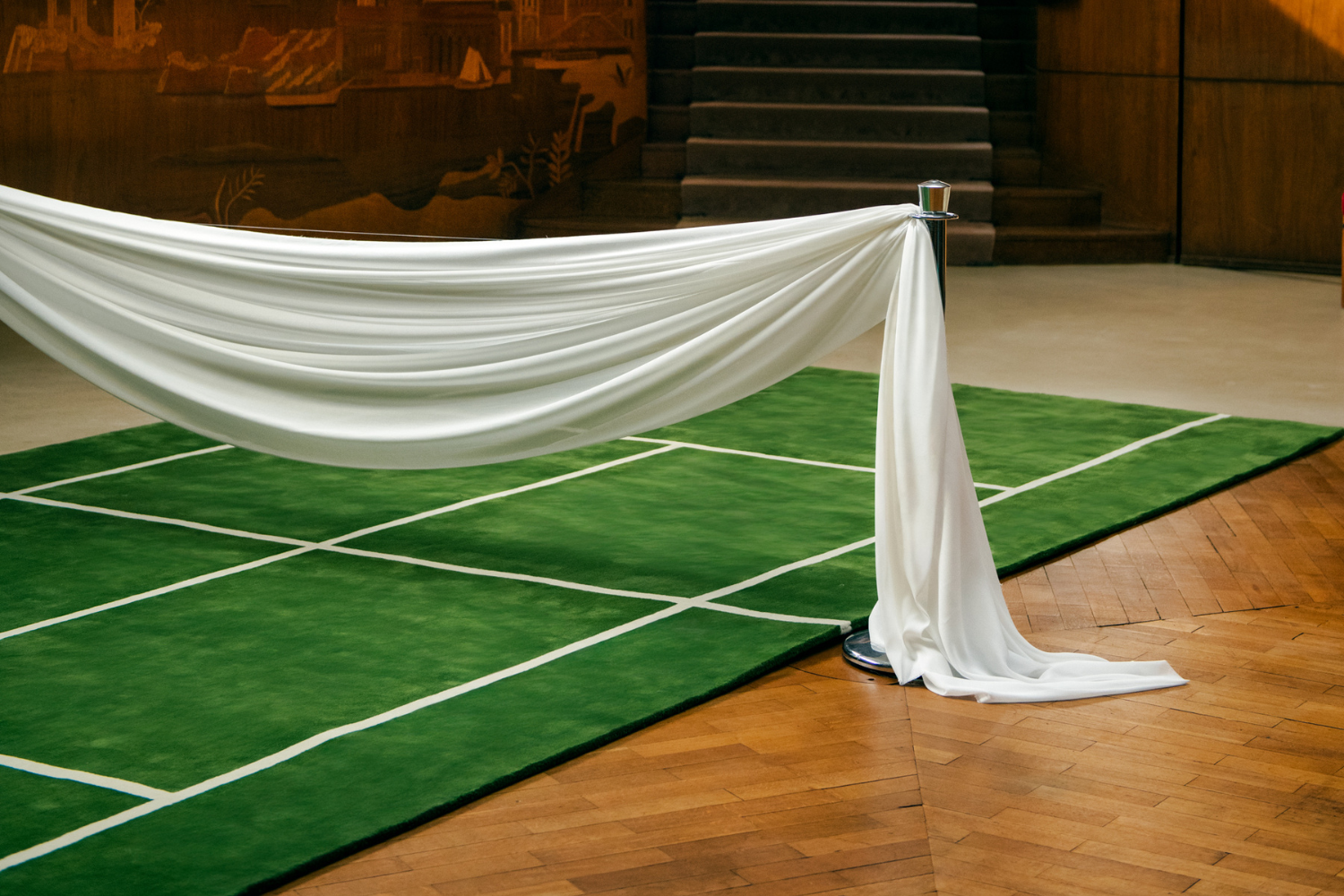
To launch the collection, Nordic Knots chose the historic Eltham Palace in southeast London as its backdrop. This choice was far from arbitrary; the palace represents a unique architectural synthesis of medieval remains and 1930s Art Deco opulence. More importantly, the interior of Eltham Palace was significantly influenced by the Swedish architect Rolf Engströmer, who was commissioned by the Courtauld family to design the entrance hall and other key spaces in the 1930s.
Engströmer’s work at Eltham is characterized by elaborate marquetry and "intarsia" woodworking—a technique of inlaying wood to create complex, pictorial patterns. The juxtaposition of Engströmer’s intricate, historic craftsmanship with the bold, modern geometry of The Grand Open rugs highlights a shared Swedish design lineage. While the rugs offer a straightforward, modern interpretation of space, they are grounded by a level of craftsmanship that mirrors the palace’s historic woodcraft. The choice of venue reinforces the narrative that these rugs are not merely accessories but are architectural elements in their own right.
Technical Specifications and Material Excellence
The Grand Open rugs are manufactured using 100 percent New Zealand wool, a material favored by high-end textile designers for its durability, natural lanolin content, and ability to hold vibrant dyes. Each piece is hand-loomed and features a cut pile construction with a thickness of 14mm.
The technical specifications of the rugs are designed to replicate the sensory experience of the courts they represent:

- Textural Mimicry: The 14mm pile height provides a density that mimics the feel of a perfectly manicured grass court or the compressed surface of a clay court.
- Tonal Variation: Through the use of high-quality wool, the rugs exhibit subtle shifts in color and texture when viewed from different angles, much like the way light interacts with the blades of grass on a professional court during a match.
- Hand-Loomed Precision: The white boundary lines are not printed but are woven into the structure of the rug, ensuring a crisp, permanent geometry that maintains its integrity under heavy foot traffic.
Beyond the floor coverings, the brand has expanded the narrative of the release by producing a highly limited run of branded wooden tennis rackets and yellow tennis balls. These accessories serve as a physical link between the abstract design of the rugs and the literal equipment of the sport, further cementing the collection’s status as a collector’s item.
The Evolution of the Rug as a Representational Medium
The release of The Grand Open highlights a broader trend in the interior design industry: the re-assessment of the rug as a medium for pictorial and representational art. Historically, rugs were dominated by either intricate traditional patterns (such as Persian or Oriental designs) or purely abstract modernist shapes. However, in recent years, designers have begun to treat the floor as a "fifth wall," using it to display images that are spatially referential or even trompe l’oeil in nature.
This shift allows homeowners to introduce narrative elements into a room without the commitment of wall-mounted art. As noted by design critics, the rug is an ideal medium for this experimentation because its boundaries are clearly defined, much like a canvas. Nordic Knots’ exploration of the tennis court follows a similar recent trend where designers have used the swimming pool—with its clear blue depths and tile grids—as a motif for home textiles. These designs capitalize on "aspirational environments," bringing the luxury of private sports facilities into the reach of those living in more modest or urban settings.
Market Analysis and Consumer Appeal
The luxury rug market has seen a steady increase in demand for "story-driven" products. According to recent market reports, the global rugs and carpets market is expected to grow significantly through 2030, driven by a consumer preference for sustainable materials like wool and a desire for unique, limited-edition pieces.

The Grand Open collection appeals to several distinct consumer segments:
- The Design Enthusiast: Attracted to the Swedish minimalism and the architectural connection to Eltham Palace.
- The Sports Aficionado: Those who wish to integrate their passion for tennis into their living environment in a sophisticated, non-obvious way.
- The Urban Dweller: For individuals living in cities where private tennis courts are an unattainable luxury, these rugs offer a symbolic connection to that lifestyle.
By positioning the collection as a "limited edition," Nordic Knots also taps into the growing market for collectible design, where home goods are viewed as investments similar to fine art.
Historical Chronology of Tennis Surface Aesthetics
To understand the impact of the collection, one must look at the history of the surfaces it emulates. Tennis began as "Real Tennis" played on stone courts, but the modern game—Lawn Tennis—was patented in the 1870s, making the green grass court the original standard.
- 1877: The first Wimbledon Championship establishes the grass court as the pinnacle of tennis aesthetics.
- 1890s: The introduction of red clay courts in France offers a slower, more tactical game and a striking color contrast to the green lawns of England.
- 1970s-80s: The emergence of blue hard courts and different colored clay variants (such as the blue clay briefly used at the Madrid Open) expanded the visual palette of the sport.
Nordic Knots has selected the two most iconic colorways—grass green and clay blue—to evoke the history of the "Grand Slam" tournaments. This historical resonance adds a layer of depth to the product that transcends simple interior decoration.

Broader Implications for the Design Industry
The success of collections like The Grand Open suggests a move away from "fast furniture" toward "narrative furniture." Consumers are increasingly looking for pieces that tell a story or connect to a specific cultural moment. In this case, the moment is the global celebration of summer sports, but the execution is timeless enough to outlast the current season.
Furthermore, the collaboration between a Swedish brand and a British heritage site like Eltham Palace underscores the global nature of modern design. It demonstrates how historical architecture can be revitalized and made relevant to contemporary audiences through clever product placement and thematic alignment.
Conclusion: The Democratization of the Private Court
Ultimately, The Grand Open by Nordic Knots offers a unique proposition: the ability to "own" a piece of the tennis court without the exorbitant costs of construction and maintenance. By focusing on the purity of the court’s lines and the quality of New Zealand wool, the collection elevates a sports motif into a high-design statement.
As the boundaries between lifestyle, sports, and home continue to blur, products that can successfully navigate these different worlds are likely to remain at the forefront of the industry. Nordic Knots has not just created a rug; they have captured a specific, aspirational atmosphere and laid it at the feet of the consumer. In doing so, they have proven that the most effective designs are often those that take a familiar sight—like the white lines on a green field—and invite us to see them in an entirely new, interior context.