The Carmen Lúcia Ruby: A Timeless Testament to Love and Legacy at the Smithsonian Institution

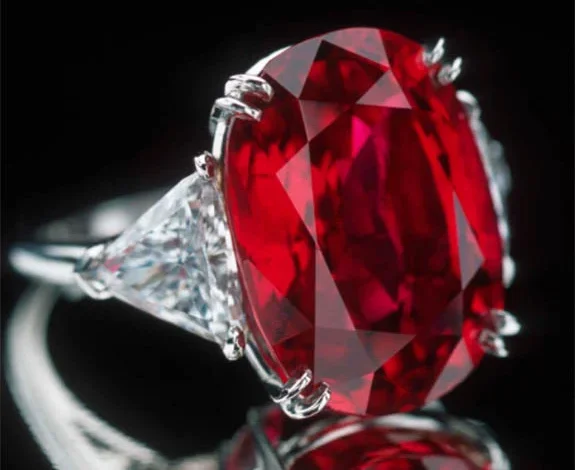
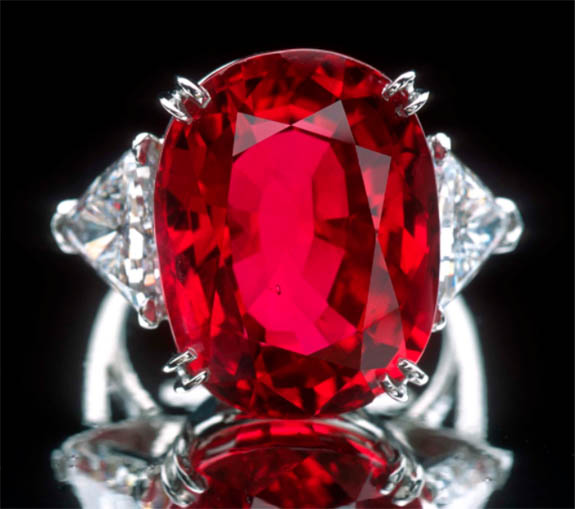
Since its formal unveiling in 2004, the Carmen Lúcia Ruby has served as a centerpiece of the National Gem and Mineral Collection at the Smithsonian’s National Museum of Natural History in Washington, D.C. Weighing 23.10 carats, this extraordinary Burmese gemstone is widely considered one of the finest examples of a faceted ruby in existence. Its deep, saturated red hue—categorized by gemologists as the coveted "pigeon’s blood" color—is the result of precise mineral inclusions and light refraction that define the pinnacle of natural corundum. The stone’s permanent residence in the Janet Annenberg Hooker Hall of Geology, Gems and Minerals offers the public a rare opportunity to view a specimen of such historical and geological significance.
A Geological Marvel from the Mogok Valley
The story of the Carmen Lúcia Ruby begins decades before its arrival in Washington, rooted in the legendary Mogok region of Burma, now Myanmar. Historically, this region has been the world’s most prolific source of high-quality rubies, known for producing stones with a unique fluorescence caused by trace amounts of chromium. The geological conditions in Mogok, characterized by marble-hosted deposits, allow for the formation of rubies with an internal "glow" that is difficult to replicate in stones from other mining jurisdictions.
The Carmen Lúcia Ruby was unearthed in the 1930s. At 23.10 carats, it stands as an outlier in the world of fine jewelry. While diamonds or sapphires can often be found in sizes exceeding 100 carats, rubies are notoriously difficult to find in large sizes without significant internal fractures or inclusions. Most gem-quality rubies discovered today are under two carats; a stone exceeding 20 carats that maintains such high clarity and deep, even saturation is an extreme rarity, making this particular specimen a subject of intense interest for mineralogists and historians alike.
The Tragic Origins of a Philanthropic Gesture
The history of the ring is deeply personal, marked by both aspiration and mourning. The gem is named after Carmen Lúcia Buck, the wife of Dr. Peter Buck, a nuclear physicist and entrepreneur. In 2002, as Carmen underwent treatment for cancer, she became aware that this magnificent, long-sequestered ruby had entered the market. She expressed a desire to acquire the piece as a symbol of her hoped-for recovery.
Following her passing in 2003, Dr. Peter Buck sought a way to honor his wife’s memory. Rather than keeping the ring within a private collection—where it might have remained hidden from public view for decades—he chose to donate it to the Smithsonian. His intention was to create a legacy that would endure beyond his own lifetime, ensuring that the stone could be appreciated by millions of visitors annually. By gifting the gem to the nation, Dr. Buck fulfilled his wife’s dream that the stone would remain a beacon of beauty rather than an object of private luxury.
Chronology of a Legacy
The transition of the Carmen Lúcia Ruby from a private holding to a public treasure followed a definitive timeline:
- 1930s: The ruby is sourced from the Mogok region of Burma.
- Late 20th Century: The stone remains in private hands, known only to a small circle of elite collectors and gem dealers.
- 2002: The stone surfaces on the market; Carmen Lúcia Buck expresses a strong desire to purchase it.
- 2003: Carmen Lúcia Buck passes away. Dr. Peter Buck moves to acquire the stone to honor her memory.
- 2004: The donation is finalized, and the ruby is installed in the National Museum of Natural History.
- 2017–Present: The ruby remains on permanent display, recognized as one of the most important acquisitions in the history of the National Gem Collection.
Dr. Peter Buck: From Submarines to Smithsonian Patronage
The man behind the donation, Dr. Peter Buck, holds a unique place in American economic history. A nuclear physicist by training, his philanthropic capacity was fueled by one of the most successful business ventures in the 20th century. In 1965, Dr. Buck provided a $1,000 loan to a family friend, 18-year-old Fred DeLuca, to open a sandwich shop in Bridgeport, Connecticut. The shop, initially dubbed "Pete’s Super Submarines," was intended to fund DeLuca’s college education.
That modest investment burgeoned into the Subway restaurant chain, a global franchise that has expanded to include over 44,000 locations in more than 100 countries. Dr. Buck’s astute business acumen and his decision to maintain a long-term partnership with the brand propelled him to a net worth estimated in the billions. His ability to translate that success into the preservation of natural history through the Smithsonian donation reflects a broader pattern of high-net-worth individuals supporting public institutions to ensure the survival of rare cultural and natural artifacts.
Comparative Market Analysis and Valuation
While the specific purchase price of the Carmen Lúcia Ruby remains undisclosed, market trends for high-end Burmese rubies provide context for its immense value. In May 2015, the "Sunrise Ruby"—a 25.59-carat Burmese stone—sold at Sotheby’s in Geneva for $30.3 million. This sale set a world record for the highest price per carat ever paid for a ruby. Given the size and quality of the Carmen Lúcia Ruby, it occupies the same tier of the global gemstone market.
The presence of the Carmen Lúcia Ruby at the Smithsonian provides a benchmark for mineralogical excellence. It is displayed in the Janet Annenberg Hooker Hall of Geology, Gems and Minerals alongside legendary stones such as the Hope Diamond and the Logan Sapphire. The proximity of these three gems allows visitors to observe the distinct differences in crystal structure, color, and provenance between the world’s most famous examples of corundum and diamond.
Curator Perspectives and Institutional Impact
Upon the arrival of the ruby in 2004, Dr. Jeffrey Post, the long-standing curator of the National Gem and Mineral Collection, described the acquisition as the most significant addition to the collection in his twenty-year tenure at the time. The Smithsonian’s curators emphasize that the value of such donations lies not merely in the financial appraisal, but in the educational utility of the items.
"It seemed like a really appropriate thing to do, to give it to the nation so people could come and see it," Dr. Buck remarked during the 2004 unveiling. His sentiment underscores a philosophy of public accessibility—rejecting the exclusivity often associated with rare gems. By placing the ruby in a public institution, the donation serves as a permanent safeguard against the volatility of the private art and gem markets.
Implications for Public Collections
The donation of the Carmen Lúcia Ruby illustrates the critical role private philanthropy plays in the growth of national museums. Without the intervention of individuals like Dr. Peter Buck, pieces of such rarity and caliber would likely circulate between private owners, hidden from scientific study and public appreciation.
Furthermore, the stone provides researchers with an opportunity to study high-quality Burmese corundum in a stable, controlled environment. The history of the stone, from the mines of Mogok to the display cases of the Smithsonian, serves as a case study for curators on the importance of provenance. As geopolitical conditions in mining regions fluctuate, the availability of documented, top-tier specimens becomes increasingly vital for the academic community.
Today, the Carmen Lúcia Ruby continues to draw visitors from across the globe, serving as both a geological marvel and a poignant reminder of a personal legacy. It stands as a testament to the idea that the most profound expressions of memory are those that are shared with the public, transforming a private loss into a permanent, accessible piece of natural history.