The Enduring Echoes of Ancient India: Dr. David S. Efurd’s Decades-Long Exploration of Buddhist Cave Monasteries

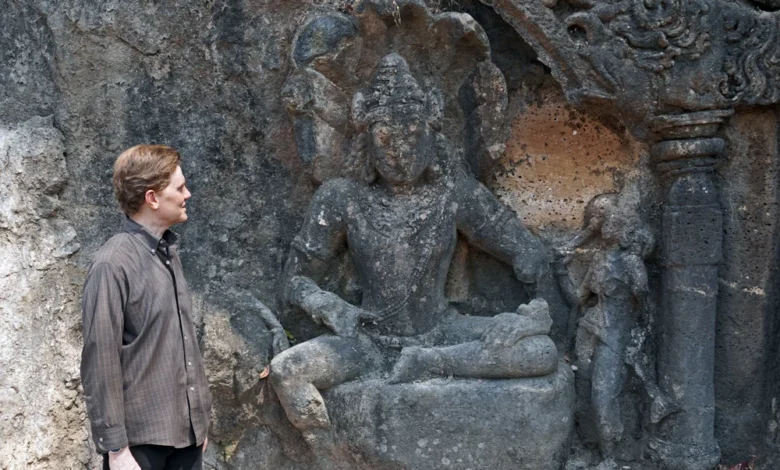
Dr. David S. Efurd, a distinguished art and art history scholar and two-time Fulbright recipient, has dedicated decades to meticulously documenting the ancient Buddhist cave sites of western India. His extensive work, encompassing over 80 sites and more than 10,000 photographs, now forms an invaluable digital archive accessible through Artstor. This remarkable collection offers an unprecedented glimpse into remarkably preserved monasteries, carved directly into volcanic basalt cliff faces, revealing religious art, monumental architecture, and sacred spaces that date back as far as the second century BCE. Efurd’s methodology, deeply rooted in the practice of “slow looking,” emphasizes prolonged, deliberate observation of these sites, transforming them from mere historical relics into vibrant testaments to enduring religious expression and ongoing preservation.

A Lifelong Fascination with Rock-Cut Sanctuaries
Efurd’s deep engagement with early Buddhist monasteries was ignited by Walter Spink, a preeminent authority on the Ajanta caves. Spink’s annual site seminars provided Efurd with an introduction to the magnificent cave complexes of Ajanta and Ellora. However, it was a visit to Pitalkhora, an ancient and somewhat ruined site, that truly captured his imagination. Described as one of the earliest cave sites in western India, dating back to the second or first century BCE, Pitalkhora’s surviving remnants hinted at a grandeur that profoundly captivated Efurd. This initial encounter, occurring approximately a quarter-century ago, marked the beginning of a lifelong scholarly pursuit, leading him to revisit and document these awe-inspiring rock-cut sanctuaries.

The selection of these specific stone cliffs for monastic construction was a multifaceted decision, driven by a confluence of geographical, geological, and religious factors. Western India boasts vast outcroppings of volcanic basalt, known as ghats, providing a durable and abundant material for carving. This stone’s resilience ensured the longevity of the structures, offering vital shelter for monks during the vassa, the annual three-month monsoon season when travel was impractical. Beyond their geological suitability, these sites were strategically positioned. While offering a tranquil environment conducive to meditation and study, they were not isolated. Instead, they were often situated along major trade routes and within accessible distance of villages and cities. This proximity was crucial for fostering the symbiotic relationship between monastic and lay communities in Buddhism, where the laity provided sustenance and the monks offered spiritual guidance and opportunities for merit-making.

Architectural Ingenuity and Celestial Alignments
The builders of these cave monasteries demonstrated remarkable foresight in their consideration of light, integrating it into the very design of these subterranean spaces. A particularly intriguing aspect is the alignment of several caves with celestial events. Walter Spink’s research revealed that two caves at Ajanta, featuring a large circular aperture known as a caitya window, were aligned with the winter solstice. On this specific day, sunlight would stream through the window, illuminating a Buddha image situated on the relic monument within.

A similar phenomenon occurs at Ellora, where a smaller aperture in a cave allows a focused beam of sunlight to illuminate the face of a Buddha in the central hall twice a year. This event, celebrated annually in March as Kirnotsav, or the festival of the sun’s rays, stands as an extraordinary testament to ancient engineering and astronomical knowledge. Even in earlier caves, the play of light transforms the interiors throughout the day, with the period preceding sunset often yielding the most dramatic and evocative visual effects.

Unveiling the Rhythms of Monastic Life
Beyond the monumental and decorative aspects, Efurd’s research delves into the everyday realities of monastic existence. He highlights that these cave sites are not solely defined by their grandest and most ornate structures. Many comprise more modest, modular components where monks lived and performed their duties. Some complexes feature monastic cells arranged around a central hall, while others might consist of only a few cells. These simple rooms, often equipped with rock-cut beds, provided basic accommodation. Inscriptions and rows of low seats suggest the presence of refectories, while cisterns and tanks carved into the rock reveal ingenious water management systems essential for survival after the monsoon.

The artwork within these caves, though evolving over centuries, carries profound symbolic and philosophical weight. Early Buddhist sites often eschewed images of Buddhas, focusing instead on symbolic representations of sanctity, such as railings and fencelike motifs. Sacred symbols like the Triratna, the "triple gem" representing refuge in the Buddha, Dharma, and Sangha, are frequently found. As Buddhism evolved, particularly from the fourth or fifth century CE onwards, depictions of Buddhas and Bodhisattvas became more prevalent.

The artwork also incorporates a rich tapestry of other beings. Mithuna, amorous figural groupings, are common motifs, symbolizing fertility and abundance. The presence of nature spirits, known as yakshas, also appears, signifying their acknowledgment and subordination to the Buddha and acceptance of the Dharma. These artistic choices reflect a complex worldview, integrating auspicious symbols and diverse beings into the sacred landscape of the caves.

The Shifting Sands of Religious Patronage
The role and character of these monasteries evolved significantly as Buddhism’s prominence in India waned. While many early sites continued to be inhabited by Buddhists who undertook renovations and added new imagery, others faced decline. Remote sites, like the Ajanta caves, were eventually abandoned and largely forgotten, save by local populations. More accessible locations, such as Karle, were later appropriated by Hindu communities. Buddhist halls were often repurposed for Brahmanical worship, with some Buddha and Buddhist deity images being incorporated into the Hindu pantheon. This transition underscores the dynamic nature of religious landscapes and the enduring adaptability of these sacred spaces.

The Discipline of "Slow Looking" and Scholarly Practice
Efurd’s research process is characterized by a commitment to "slow looking," a contemplative approach that involves spending extended periods within the caves. This deliberate immersion allows for a deep understanding of the site’s design, layout, spatial qualities, and decorative program. Precise measurements are also crucial, given that rock-cut caves, unlike conventional architecture, do not always adhere to strict plumb lines, and deviations are often imperceptible to the untrained eye.

His photographic practice serves a dual purpose: documenting architectural and sculptural details while also capturing the aesthetic and experiential dimensions of visiting these sites. Photographs can act as historical records and, through careful framing, convey the profound sense of being present within the cave at a specific moment in time.

To date, Efurd has explored approximately 82 sites across India, encompassing Buddhist, Hindu, and Jain rock-cut excavations, as well as sites in Sri Lanka, China, and Korea. He speculates that significant undiscovered sites may still exist in India, with occasional finds of isolated caves or previously unknown lower levels of existing complexes coming to light. The recent discovery of a nagaraja sculpture at Ghatotkacha, uncovered during efforts to improve access, exemplifies how such sites can continue to reveal hidden treasures after centuries.

Encounters with Contemporary Inhabitants and Sacred Spaces
Efurd’s encounters with contemporary inhabitants of these ancient caves have often been marked by profound respect and hospitality. A tradition of gurus and saints residing in these caves persists, and when permitted, Efurd has been invited to share time with these occupants or to photograph areas they deem suitable. He emphasizes his role as a respectful visitor, attuned to their wishes. One particularly memorable experience involved being granted access to a typically off-limits cave housing a colossal sculpture, an honor that underscored the privilege of privileged access to these sacred spaces.

Preservation and Contemporary Reverence
Currently, the vast majority of these caves function as historical sites, managed with a strong emphasis on preservation. India’s deep-seated respect for its religious heritage ensures a balance between protection and the allowance of continued religious expression within these ancient structures. Efurd observes a growing practice of visitors removing their shoes before entering caves, a custom now common at Hindu, Buddhist, and Jain sites alike, reflecting a shared reverence for these sacred environments. While photography is generally permitted at sites managed by the Archaeological Survey of India, restrictions may apply elsewhere. Efurd’s experience indicates that practitioners of various religious traditions are generally welcoming to visitors who demonstrate respect for ongoing rituals and activities.

The Evolving Understanding of Ancient Craftsmanship
The question of whether these caves are experienced more as historical sites or living spiritual spaces elicits a nuanced response from Efurd. Many are protected historical monuments, welcoming both tourists and pilgrims. His scholarly focus often gravitates towards the technical aspects of excavation and architectural execution, yet he is equally mindful of the religious community for whom these spaces were originally conceived. Witnessing visitors performing rituals, engaging in chanting, or participating in ceremonies within these ancient halls offers a profound connection to their enduring spiritual significance.

Unanswered Questions and Future Discoveries
Despite extensive research, much remains to be understood about these ancient monasteries. Efurd believes we are entering an era where the immense care and thoughtfulness invested in their design and execution are finally being fully recognized. Earlier interpretations, often filtered through a Western lens, sometimes overlooked the ingenuity and intentionality behind perceived inconsistencies. However, detailed observation and measurement are increasingly revealing intricate mathematical relationships, proportional systems, and architectural correspondences that underscore the sophisticated design principles employed by their creators. The alignment with the sun, as seen at Ajanta and Ellora, is a prime example. Efurd’s own work on the caitya hall at Karle, investigating its proportional systems and architectural features, exemplifies this ongoing scholarly endeavor. By setting aside preconceived notions and engaging in a close, analytical reading of these sites, researchers can unlock a deeper understanding of the intent and artistry that shaped these ancient sacred spaces.